
Dubai's Population Surpasses 4.8 Million Mark in September 2026
Why it matters
Dubai's population growth is a key indicator of its economic vitality and attractiveness as a global hub.
What happened (in 30 seconds)
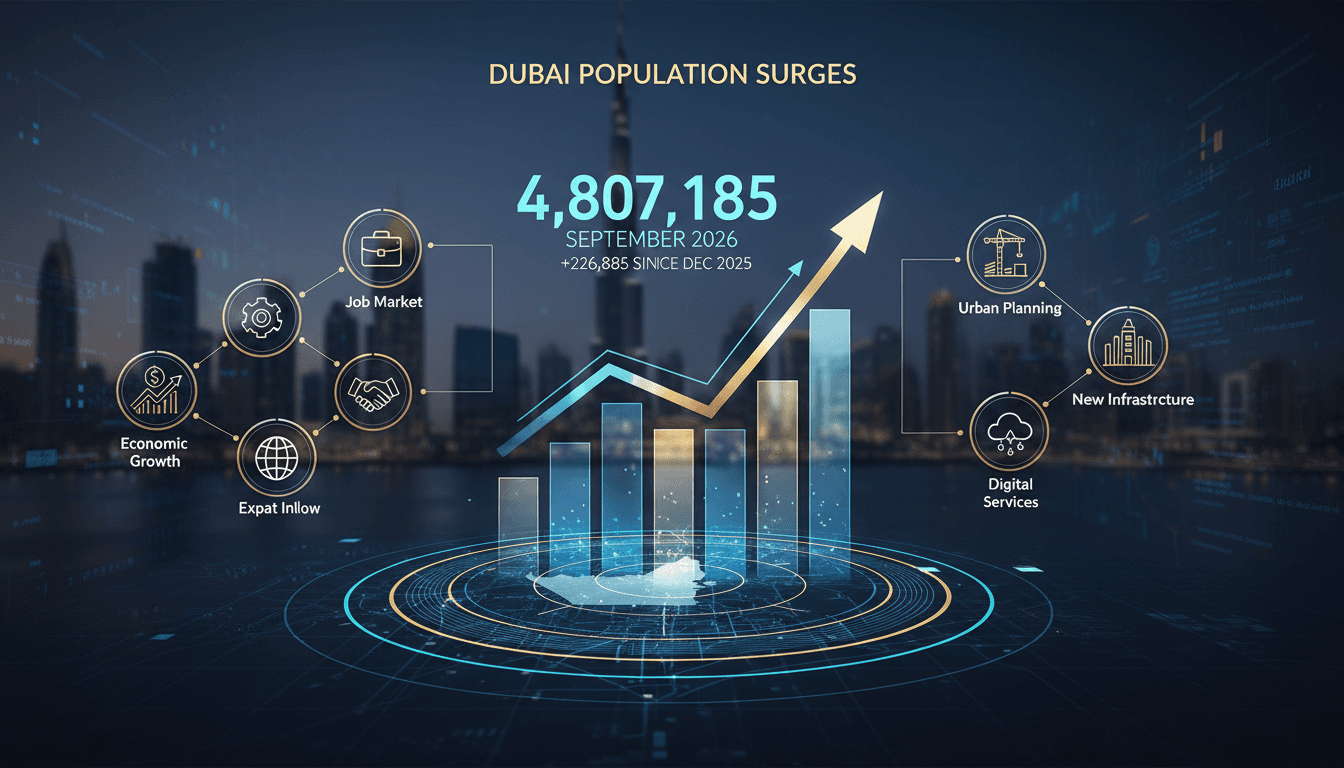
- Dubai's population reached 4,807,185 on September 28, 2026, marking a net increase of 226,885 residents since the start of the year.
- The demographic is predominantly working-age, with the 30-34 age group making up 15.45% of the population, indicating a strong labor force.
- Real-time monitoring systems by Digital Dubai ensure continuous updates on population figures, reflecting ongoing urban development needs.
The context you actually need
- Dubai's growth is driven by economic opportunities, attracting expatriates and families seeking better living conditions and job prospects.
- The emirate's appeal is bolstered by regional stability and a diversified economy, making it a safe haven for investment and employment.
- Population dynamics are reshaping infrastructure demands, with a significant daytime influx of visitors and a growing need for housing and services.
What's really happening
Dubai's population growth is not just a number; it represents a complex interplay of economic, social, and infrastructural factors. The emirate has positioned itself as a global hub for trade, tourism, finance, and technology, which has attracted a steady influx of expatriates. In 2025, the population was recorded at 4,580,300, reflecting a growth of 332,000 residents that year alone. This trend has continued into 2026, with the latest figures showing a population of 4,807,185.
The demographic profile is heavily skewed towards working-age individuals, particularly those aged 30-34, who make up 15.45% of the population. This age group is crucial for the labor market, as they are typically in their prime earning years and contribute significantly to economic productivity. The influx of new families—62,800 in 2025 alone—has also led to a 7.9% growth in households, indicating a rising demand for family housing and related services.
The continuous population updates are facilitated by advanced administrative records and smart systems, rather than traditional census methods. This real-time monitoring allows for more agile urban planning and resource allocation, ensuring that infrastructure keeps pace with population growth. The daytime population often exceeds 6 million, driven by a mix of residents and visitors, which places additional pressure on transport and public services.
As the population grows, so does the demand for housing, education, healthcare, and transportation. The government and private sectors are likely to respond with increased investment in these areas, further stimulating economic activity. The sustained population growth aligns with GDP trends observed in previous periods, suggesting that as more people move to Dubai, the economy will continue to expand.
Who feels it first (and how)
- Real estate developers: Increased demand for housing and commercial spaces.
- Service sector workers: Higher job opportunities in hospitality, retail, and healthcare.
- Transport and logistics companies: Greater need for efficient transport solutions due to rising daytime population.
- Local businesses: Increased consumer spending from a larger population base.
- Government planners: Need for strategic urban planning to accommodate growth.
What to watch next
- Housing market trends: Monitor how the demand for housing evolves and whether prices adjust accordingly.
- Infrastructure investments: Look for announcements regarding new transport and public service projects to support the growing population.
- Economic indicators: Keep an eye on GDP growth rates and employment statistics to gauge the overall economic health in relation to population changes.
Dubai's population is growing rapidly, driven by economic opportunities.
Continued investment in infrastructure and services to accommodate the increasing population.
The long-term sustainability of this growth and its impact on quality of life.
Frequently Asked Questions
- Why it matters?
- Dubai's population growth is a key indicator of its economic vitality and attractiveness as a global hub.
- What happened (in 30 seconds)?
- Dubai's population reached 4,807,185 on September 28, 2026, marking a net increase of 226,885 residents since the start of the year. The demographic is predominantly working-age, with the 30-34 age group making up 15.45% of the population, indicating a strong labor force. Real-time monitoring systems by Digital Dubai ensure continuous updates on population figures, reflecting ongoing urban development needs.
- What's really happening?
- Dubai's population growth is not just a number; it represents a complex interplay of economic, social, and infrastructural factors. The emirate has positioned itself as a global hub for trade, tourism, finance, and technology, which has attracted a steady influx of expatriates. In 2025, the population was recorded at 4,580,300, reflecting a growth of 332,000 residents that year alone. This trend has continued into 2026, with the latest figures showing a population of 4,807,185. The demographic
- Who feels it first (and how)?
- Real estate developers: Increased demand for housing and commercial spaces. Service sector workers: Higher job opportunities in hospitality, retail, and healthcare. Transport and logistics companies: Greater need for efficient transport solutions due to rising daytime population. Local businesses: Increased consumer spending from a larger population base. Government planners: Need for strategic urban planning to accommodate growth.
- What to watch next?
- Housing market trends: Monitor how the demand for housing evolves and whether prices adjust accordingly. Infrastructure investments: Look for announcements regarding new transport and public service projects to support the growing population. Economic indicators: Keep an eye on GDP growth rates and employment statistics to gauge the overall economic health in relation to population changes.
English-language coverage focused on UAE news, government updates, and domestic affairs.
"Emirates 24|7 reflects a mainstream UAE editorial perspective with strong emphasis on official and domestic developments."
— A47 Editor
Dubai population hits 4.8 million in September 2026 - up 226,885 people since January 2026
As of September 2026, Dubai's population has reached 4,807,185, marking an increase of 226,885 residents since January 2026, according to the Dubai Data and Statistics Establishment. This growth reflects the emirate's ongoing appeal as a destination ...
Arabic-language economic and business reporting with strong UAE market relevance.
"Emarat Al Youm business coverage often centers UAE property, banking, consumer issues, and economic policy."
— A47 Editor
عدد سكان دبي يزداد 226.88 ألف نسمة منذ بداية 2026 عدد سكان دبي يزداد 226.88 ألف نسمة منذ بداية 2026
The Dubai Data and Statistics Foundation, part of Dubai Digital, has reported that the total population of Dubai reached 4.807 million as of yesterday, marking an increase of 226,880 residents since the beginning of 2026.
Arabic-language economic and business reporting with strong UAE market relevance.
"Emarat Al Youm business coverage often centers UAE property, banking, consumer issues, and economic policy."
— A47 Editor
عدد سكان دبي يزداد 226.88 ألف نسمة منذ بداية 2026 عدد سكان دبي يزداد 226.88 ألف نسمة منذ بداية 2026
The Dubai Data and Statistics Foundation, part of Dubai Digital, reported that the total population of Dubai has increased by 226,880 since the beginning of 2026, reaching 4.807 million as of Monday afternoon.