
U.S. Consumer Confidence Index Declines to 81.9 Amid Inflation and Energy Pressures
Why it matters
Consumer confidence is a leading indicator of economic health, influencing spending patterns and business investment.
What happened (in 30 seconds)
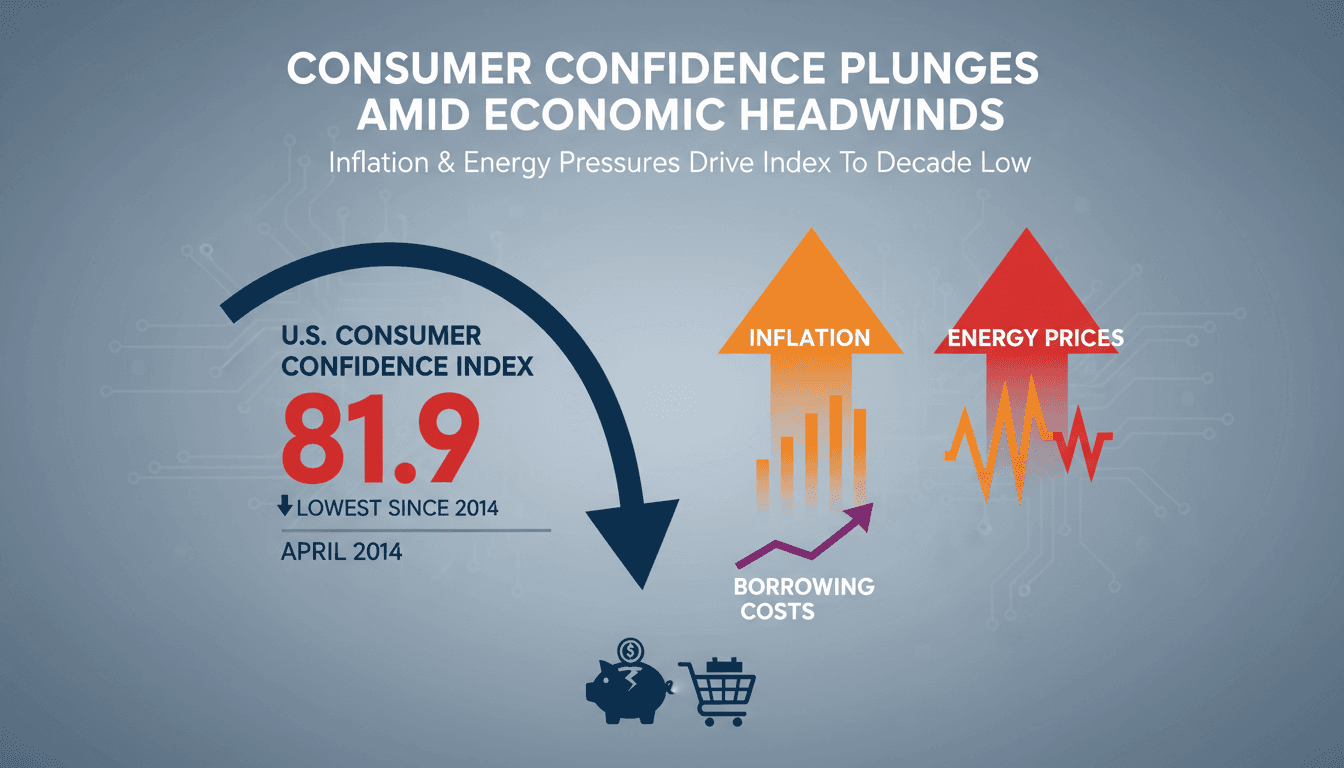
- Consumer Confidence Index dropped to 81.9 in September 2026, the lowest since April 2014.
- Inflation expectations rose to a median of 5.1%, with 68.4% of consumers anticipating higher interest rates.
- Geopolitical tensions and rising fuel costs contributed to a decline in consumer sentiment ahead of the holiday season.
The context you actually need
- Persistent inflation has plagued the U.S. economy since 2021, exacerbated by the U.S.-Iran conflict in 2026, which has driven energy prices higher.
- The Federal Reserve raised interest rates for the first time in three years in mid-September 2026, aiming to combat inflation but increasing borrowing costs for consumers.
- Consumer sentiment is closely tied to economic conditions; a decline in confidence often leads to reduced spending, impacting businesses and the overall economy.
What's really happening
The Consumer Confidence Index (CCI) serves as a barometer for economic sentiment among U.S. households. The recent drop to 81.9 reflects a significant shift in consumer attitudes, driven by a combination of persistent inflation and geopolitical instability. Since 2021, inflation has remained above target levels, eroding household purchasing power and leading to heightened anxiety about financial stability.
The ongoing U.S.-Iran conflict has exacerbated these pressures, particularly through rising fuel costs. As oil prices surge, consumers face higher expenses not only at the pump but also for goods and services that rely on energy for production and transportation. This inflationary environment has led to a median inflation expectation of 5.1%, indicating that consumers anticipate continued price increases over the next year.
In response to these economic pressures, the Federal Reserve's decision to raise interest rates in September 2026 marks a critical moment in U.S. monetary policy. This was the first rate hike in three years, aimed at curbing inflation but also resulting in increased borrowing costs for consumers. As interest rates rise, the cost of loans, mortgages, and credit cards will likely increase, further constraining consumer spending.
The decline in the Present Situation Index and Expectations Index within the CCI highlights a growing pessimism about current business conditions and future economic prospects. Consumers are expressing concerns about high prices, fuel costs, and labor market uncertainties, which collectively contribute to a more cautious approach to spending. With the holiday season approaching, this sentiment could translate into reduced consumer spending, impacting retailers and the broader economy.
As consumer confidence wanes, businesses may face challenges in maintaining sales growth, leading to potential layoffs or reduced hiring. This creates a feedback loop where decreased consumer spending further dampens economic activity, potentially leading to a recession if the trend continues.
Who feels it first (and how)
- Retailers: Anticipate lower sales volumes during the holiday season, impacting inventory and staffing decisions.
- Consumers: Households facing higher prices and borrowing costs may delay or reduce discretionary spending.
- Small businesses: Often reliant on consumer spending, they may experience cash flow issues if confidence continues to decline.
- Energy sector: Higher fuel prices can lead to increased operational costs, affecting profitability and pricing strategies.
What to watch next
- Retail sales data: Monitor upcoming reports for signs of consumer spending trends during the holiday season, which could indicate broader economic health.
- Federal Reserve announcements: Future interest rate decisions will be crucial in shaping consumer borrowing costs and spending behavior.
- Geopolitical developments: Changes in the U.S.-Iran conflict or other global tensions could impact energy prices and consumer sentiment.
Consumer confidence has dropped significantly, reflecting economic anxiety.
Reduced consumer spending will impact retail sales and economic growth.
The long-term effects of the Federal Reserve's interest rate hikes on consumer behavior remain to be seen.
Frequently Asked Questions
- Why it matters?
- Consumer confidence is a leading indicator of economic health, influencing spending patterns and business investment.
- What happened (in 30 seconds)?
- Consumer Confidence Index dropped to 81.9 in September 2026, the lowest since April 2014. Inflation expectations rose to a median of 5.1%, with 68.4% of consumers anticipating higher interest rates. Geopolitical tensions and rising fuel costs contributed to a decline in consumer sentiment ahead of the holiday season.
- What's really happening?
- The Consumer Confidence Index (CCI) serves as a barometer for economic sentiment among U.S. households. The recent drop to 81.9 reflects a significant shift in consumer attitudes, driven by a combination of persistent inflation and geopolitical instability. Since 2021, inflation has remained above target levels, eroding household purchasing power and leading to heightened anxiety about financial stability. The ongoing U.S.-Iran conflict has exacerbated these pressures, particularly through risi
- Who feels it first (and how)?
- Retailers: Anticipate lower sales volumes during the holiday season, impacting inventory and staffing decisions. Consumers: Households facing higher prices and borrowing costs may delay or reduce discretionary spending. Small businesses: Often reliant on consumer spending, they may experience cash flow issues if confidence continues to decline. Energy sector: Higher fuel prices can lead to increased operational costs, affecting profitability and pricing strategies.
- What to watch next?
- Retail sales data: Monitor upcoming reports for signs of consumer spending trends during the holiday season, which could indicate broader economic health. Federal Reserve announcements: Future interest rate decisions will be crucial in shaping consumer borrowing costs and spending behavior. Geopolitical developments: Changes in the U.S.-Iran conflict or other global tensions could impact energy prices and consumer sentiment.
Stock market news, investing ideas, and trading analysis.
"TheStreet provides market news and retail-investor-focused analysis."
— A47 Editor
Inflation frustration boils over as consumer confidence takes an unexpected turn ahead of the holidays
Consumer confidence experienced a decline during the summer months but showed an unexpected rebound in September, as indicated by the Consumer Confidence Index. This shift comes at a crucial time as the holiday season approaches, raising questions ab...
Global business headlines with AI angles.
"General business outlet that frequently covers AI."
— A47 Editor
Inflationary Pressures Keep Growing. Consumer Confidence Is Dropping Further.
The Conference Board Consumer Confidence Index showed a notable decline in September, reflecting growing inflationary pressures that have negatively impacted consumer sentiment. This drop is attributed to fears surrounding rising prices and economic ...
Covers blockchain, cryptocurrency news, project analysis, and market insights.
"CoinDesk is a well-established cryptocurrency and blockchain news provider, offering comprehensive insights, market data, and industry research."
— A47 Editor
Live updates: Bitcoin turns lower as rates rise, consumer confidence plunges
Bitcoin's price has turned lower amid rising U.S. Treasury yields and a significant drop in consumer confidence, as indicated by the Conference Board's Consumer Confidence Index, which fell to its lowest level in over a decade in September.