
Oil Prices Stabilize as Middle East Crude Exports Near Pre-War Levels
Why it matters
The stabilization of oil prices signals a potential easing of supply concerns, which can influence global economic conditions.
What happened (in 30 seconds)
- Oil prices steadied after a sharp decline, with West Texas Intermediate near $89 per barrel and Brent near $103.
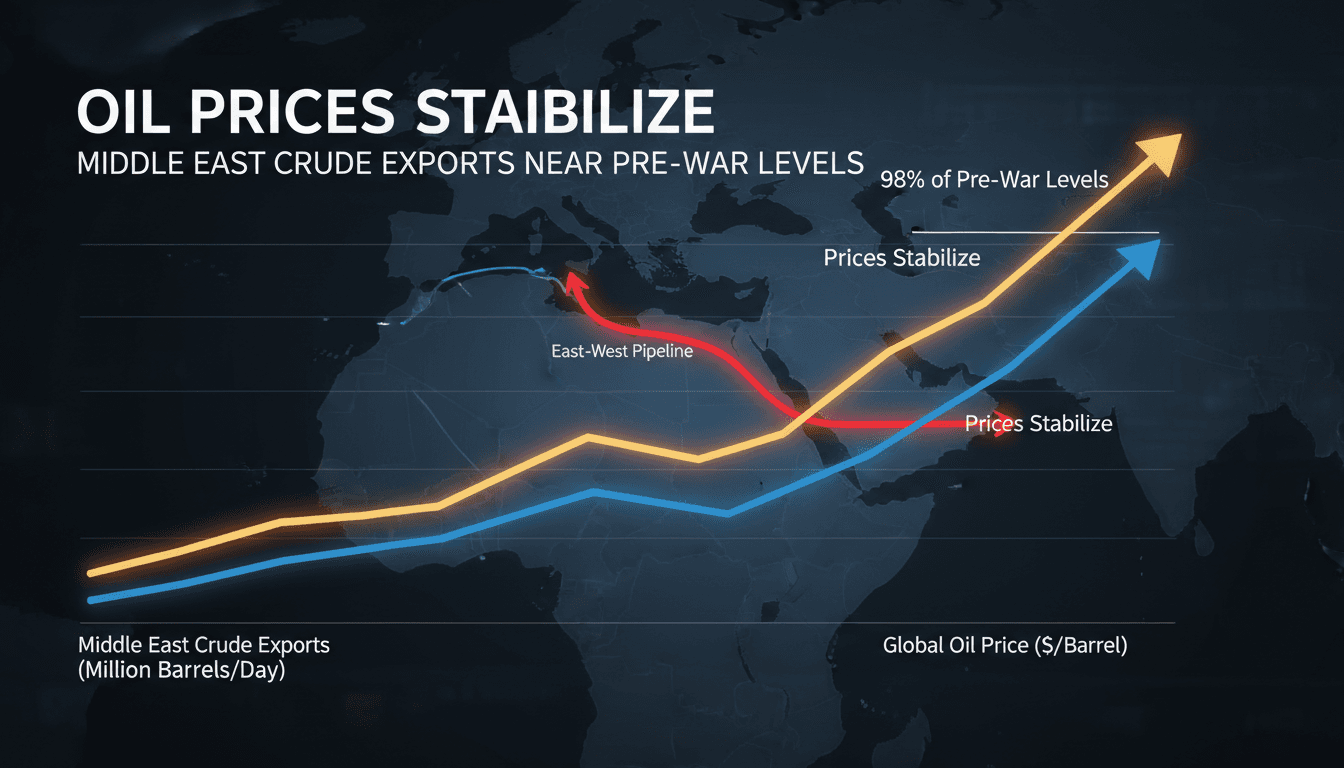
- Middle East crude exports rebounded to 17.5 million barrels per day, reaching 98% of pre-war levels.
- Saudi Arabia's East-West pipeline resumed operations, facilitating exports that bypass the Strait of Hormuz.
The context you actually need
- Ongoing conflict: The US-Israeli conflict with Iran, which began in February 2026, disrupted oil flows and prompted alternative export routes.
- Infrastructure recovery: Saudi Arabia's restoration of the East-West pipeline has been crucial in increasing supply and stabilizing prices.
- Geopolitical risks: Despite the recovery, prices remain elevated due to ongoing geopolitical tensions and inefficient shipping logistics.
What's really happening
On September 30, 2026, oil markets experienced a notable stabilization after a significant price drop, primarily driven by a resurgence in crude exports from the Middle East. The region's exports reached 17.5 million barrels per day, which is 98% of the levels seen before the onset of conflict. This rebound is largely attributed to Saudi Arabia's strategic decision to restore operations on its East-West pipeline, which allows for the transportation of oil without passing through the vulnerable Strait of Hormuz.
The East-West pipeline's resumption has enabled Saudi Arabia to increase loadings at the Red Sea port of Yanbu, effectively bypassing the Strait of Hormuz, a critical chokepoint for global oil shipments. This development has alleviated immediate supply concerns that had been exacerbated by the ongoing US-Israeli conflict with Iran, which has disrupted traditional oil flows and led to heightened market volatility.
Despite the positive supply news, oil prices remain elevated. West Texas Intermediate (WTI) traded near $89 per barrel after a 3.5% decline, while Brent settled around $103. Analysts note that while the market is adjusting to improved supply visibility, prices are still influenced by geopolitical risks and the inefficiencies of current shipping methods, such as costly ship-to-ship transfers.
The broader implications of this stabilization extend beyond immediate price adjustments. The recovery of oil exports is a critical indicator of regional stability and economic resilience. For countries like the UAE, which are actively working to develop alternative export routes and expand storage capacities, this stabilization could mitigate long-term fuel price volatility and enhance energy security in the region.
As the situation evolves, the interplay between geopolitical tensions and market dynamics will continue to shape oil prices and supply strategies. The ongoing efforts by Gulf states to develop bypass strategies and improve infrastructure will be essential in maintaining stability in the face of potential future disruptions.
Who feels it first (and how)
- Businesses reliant on oil: Companies in transportation, manufacturing, and logistics may see fluctuations in operational costs.
- Consumers: Individuals who depend on fuel for personal vehicles or heating may experience changes in fuel prices.
- Investors: Stakeholders in energy markets will be closely monitoring price movements and geopolitical developments.
What to watch next
- Geopolitical developments: Continued tensions in the Middle East could impact supply and pricing, making it essential to monitor diplomatic negotiations.
- Infrastructure investments: Watch for announcements regarding new pipelines or storage facilities that could further stabilize supply.
- Market reactions: Observe how oil prices respond to changes in export volumes and any disruptions in shipping logistics.
Oil prices have stabilized following a sharp decline due to increased Middle East exports.
Continued geopolitical tensions will keep prices elevated despite supply recovery.
The long-term impact of infrastructure developments on regional energy security remains to be seen.
Frequently Asked Questions
- Why it matters?
- The stabilization of oil prices signals a potential easing of supply concerns, which can influence global economic conditions.
- What happened (in 30 seconds)?
- Oil prices steadied after a sharp decline, with West Texas Intermediate near $89 per barrel and Brent near $103. Middle East crude exports rebounded to 17.5 million barrels per day, reaching 98% of pre-war levels. Saudi Arabia's East-West pipeline resumed operations, facilitating exports that bypass the Strait of Hormuz.
- What's really happening?
- On September 30, 2026, oil markets experienced a notable stabilization after a significant price drop, primarily driven by a resurgence in crude exports from the Middle East. The region's exports reached 17.5 million barrels per day, which is 98% of the levels seen before the onset of conflict. This rebound is largely attributed to Saudi Arabia's strategic decision to restore operations on its East-West pipeline, which allows for the transportation of oil without passing through the vulnerable S
- Who feels it first (and how)?
- Businesses reliant on oil: Companies in transportation, manufacturing, and logistics may see fluctuations in operational costs. Consumers: Individuals who depend on fuel for personal vehicles or heating may experience changes in fuel prices. Investors: Stakeholders in energy markets will be closely monitoring price movements and geopolitical developments.
- What to watch next?
- Geopolitical developments: Continued tensions in the Middle East could impact supply and pricing, making it essential to monitor diplomatic negotiations. Infrastructure investments: Watch for announcements regarding new pipelines or storage facilities that could further stabilize supply. Market reactions: Observe how oil prices respond to changes in export volumes and any disruptions in shipping logistics.
Global markets, investing, and macroeconomics from a premier financial newsroom.
"Bloomberg is respected for in-depth financial reporting and data-driven analysis."
— A47 Editor
Latest Oil Market News and Analysis for Sept. 30
Oil prices have stabilized following a significant drop, as Saudi Arabia has resumed oil flows through a pipeline that circumvents the Strait of Hormuz, bringing supply levels close to pre-war conditions. This development comes after a period of heig...
Markets desk coverage, trading insights, and investor updates.
"WSJ’s markets reporting provides in-depth analysis and context for investors."
— A47 Editor
Oil Prices Fall as Gulf Crude Exports Recover
Oil prices have fallen as Saudi Arabia's East-West pipeline has resumed operations, allowing for a quicker recovery in crude exports than anticipated. This development follows a period of disruptions caused by recent attacks that had previously halte...
U.S. business news, corporate developments, and economy.
"The Wall Street Journal is respected for deep financial and economic reporting with a center-right editorial perspective."
— A47 Editor
Oil Prices Fall as Gulf Crude Exports Recover
Oil prices have declined as Saudi Arabia's East-West pipeline has resumed operations, allowing for a faster than expected recovery in crude exports. This development follows a period of disruptions caused by recent attacks that had previously halted ...
UAE-based English-language newspaper covering regional politics, economics, and global affairs.
"The National reflects Emirati policy perspectives while maintaining international editorial standards."
— A47 Editor
Oil flows through Strait of Hormuz rise on Saudi pivot as Red Sea traffic plunges
Oil flows through the Strait of Hormuz have increased as Saudi Arabia pivots its crude oil exports, redirecting approximately 60 million barrels to Oman’s Sohar port while reducing shipments to Europe. This shift comes amid ongoing geopolitical tensi...
U.S. business news, corporate developments, and economy.
"The Wall Street Journal is respected for deep financial and economic reporting with a center-right editorial perspective."
— A47 Editor
Oil Prices Pare Gains After Saudi Pipeline Reopens
Oil prices have seen a reduction in earlier gains following the reopening of a key Saudi Arabian pipeline, which had been offline due to recent attacks. The state supplier's decision to restore operations is significant as it directly impacts the flo...
Markets desk coverage, trading insights, and investor updates.
"WSJ’s markets reporting provides in-depth analysis and context for investors."
— A47 Editor
Oil Prices Pare Gains After Saudi Pipeline Reopens
Oil prices have seen a reduction in earlier gains following the reopening of a key Saudi Arabian pipeline, which had been offline due to recent attacks. The state supplier's decision to restore operations is significant as it directly impacts the flo...