
UAE Fuel Prices Increased by Up to 16.6 Percent Effective October 1, 2026
Why it matters
The adjustments reflect ongoing volatility in global energy markets, directly affecting consumer spending and inflation.
What happened (in 30 seconds)
- On October 1, 2026, the UAE Fuel Price Follow-up Committee raised retail fuel prices across all grades.
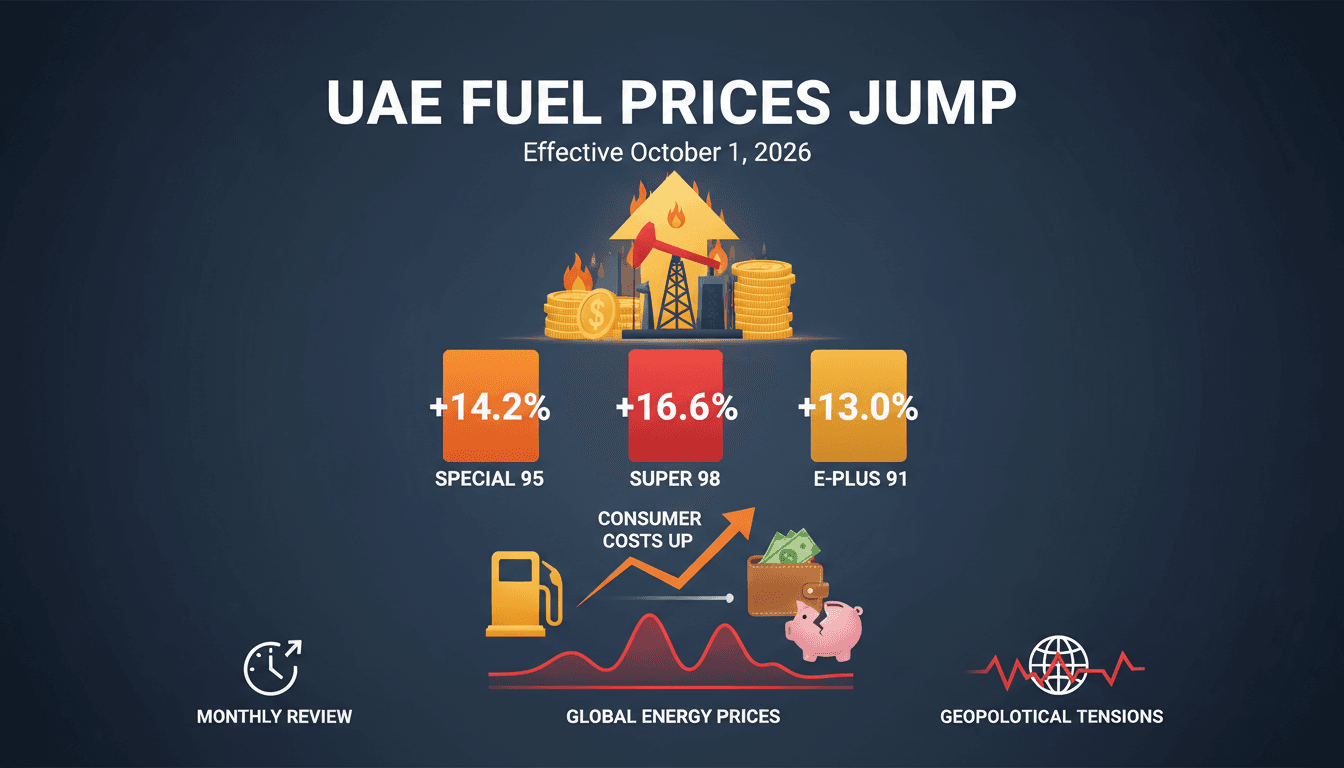
- Increases range from 11.6% for diesel to 16.6% for E-Plus 91 petrol, marking the third consecutive monthly rise.
- A 60-litre tank of petrol now costs approximately AED 36 more than in September, impacting household budgets.
The context you actually need
- The UAE has linked fuel prices to global market averages since 2015, adjusting monthly based on crude oil benchmarks.
- Recent geopolitical tensions, particularly between the US and Iran, have driven Brent crude prices above $100 per barrel, influencing local pricing.
- The October adjustments follow previous increases in August and September, indicating a trend of rising fuel costs amid sustained market pressures.
What's really happening
The recent fuel price hikes in the UAE are a direct response to fluctuations in the global energy market, particularly the rising costs of crude oil. The UAE Fuel Price Follow-up Committee, which oversees these adjustments, bases its pricing on a formula that incorporates global oil prices and distribution costs. This mechanism was established in 2015 to ensure that domestic prices reflect international market conditions.
In September 2026, the committee approved new tariffs that saw Super 98 petrol rise from AED 3.80 to AED 4.40 per litre, a 15.8% increase, while Special 95 and E-Plus 91 saw increases of 16% and 16.6%, respectively. Diesel prices also rose by 11.6%. These adjustments are significant, as they represent the third consecutive month of price increases, indicating a persistent trend rather than a temporary spike.
The underlying cause of these price hikes is the sustained elevation in Brent crude prices, which have remained above $100 per barrel due to geopolitical tensions in the Gulf region. The ongoing US-Iran tensions have led to concerns about supply disruptions, further exacerbating the situation. As a result, the UAE's fuel pricing mechanism is responding to these external pressures, which are likely to continue influencing local prices.
The immediate impact of these increases is felt at the pump, where motorists in Dubai reported long queues as they rushed to refuel before the new prices took effect. The cost of filling a 60-litre tank of Special 95 petrol now stands at AED 256.80, compared to AED 221.40 in September. This increase not only affects individual consumers but also has broader implications for the economy, as higher fuel prices can lead to increased transportation costs, which may subsequently drive up the prices of goods and services.
Despite the rising prices, the UAE government has not announced any additional subsidies or interventions, indicating a commitment to the current pricing mechanism. This approach aligns with the broader strategy of allowing market forces to dictate fuel prices, which can lead to more stable long-term pricing but may also expose consumers to volatility in the short term.
Who feels it first (and how)
- Motorists: Increased fuel costs directly impact daily commuting expenses.
- Transport and logistics sectors: Higher fuel prices can lead to increased operational costs, affecting pricing for goods.
- Households: Rising fuel prices contribute to overall inflation, impacting disposable income and spending habits.
What to watch next
- Global oil prices: Continued fluctuations in Brent crude prices will directly influence future fuel price adjustments in the UAE.
- Geopolitical developments: Any escalation in tensions in the Gulf region could lead to further supply disruptions and price increases.
- Consumer spending trends: Watch for shifts in consumer behavior as rising fuel costs may lead to reduced discretionary spending.
Fuel prices will continue to be adjusted monthly based on global market conditions.
Further increases in fuel prices if geopolitical tensions persist and crude oil prices remain elevated.
The long-term impact on consumer behavior and overall economic growth in the UAE.
Frequently Asked Questions
- Why it matters?
- The adjustments reflect ongoing volatility in global energy markets, directly affecting consumer spending and inflation.
- What happened (in 30 seconds)?
- On October 1, 2026, the UAE Fuel Price Follow-up Committee raised retail fuel prices across all grades. Increases range from 11.6% for diesel to 16.6% for E-Plus 91 petrol, marking the third consecutive monthly rise. A 60-litre tank of petrol now costs approximately AED 36 more than in September, impacting household budgets.
- What's really happening?
- The recent fuel price hikes in the UAE are a direct response to fluctuations in the global energy market, particularly the rising costs of crude oil. The UAE Fuel Price Follow-up Committee, which oversees these adjustments, bases its pricing on a formula that incorporates global oil prices and distribution costs. This mechanism was established in 2015 to ensure that domestic prices reflect international market conditions. In September 2026, the committee approved new tariffs that saw Super 98 p
- Who feels it first (and how)?
- Motorists: Increased fuel costs directly impact daily commuting expenses. Transport and logistics sectors: Higher fuel prices can lead to increased operational costs, affecting pricing for goods. Households: Rising fuel prices contribute to overall inflation, impacting disposable income and spending habits.
- What to watch next?
- Global oil prices: Continued fluctuations in Brent crude prices will directly influence future fuel price adjustments in the UAE. Geopolitical developments: Any escalation in tensions in the Gulf region could lead to further supply disruptions and price increases. Consumer spending trends: Watch for shifts in consumer behavior as rising fuel costs may lead to reduced discretionary spending.
Jordanian news and regional updates.
"Roya News is a Jordanian outlet focused on breaking news and local affairs."
— A47 Editor
الإمارات ترفع أسعار المحروقات.. 16% للبنزين و11% للديزل
The Fuel Price Monitoring Committee in the United Arab Emirates has announced an increase in fuel prices, with gasoline rising by 16% and diesel by 11%. This decision reflects ongoing adjustments in the energy sector within the country.
Sports reporting with a focus on Saudi and regional competitions.
"Okaz sports coverage is broad and audience-friendly, with strong attention to Saudi teams and leagues."
— A47 Editor
الإمارات: رفع أسعار الوقود بنسب تصل إلى 16.6%
The United Arab Emirates has announced an increase in fuel prices for October 2026, with rates rising between 11.6% and 16.6%. The price of Super 98 gasoline will rise from $1.03 (3.80 AED) per liter in September to $1.20 (4.40 AED) in October, marki...
UAE-based English-language newspaper covering regional politics, economics, and global affairs.
"The National reflects Emirati policy perspectives while maintaining international editorial standards."
— A47 Editor
UAE petrol prices to rise by about 16% in October
Petrol prices in the United Arab Emirates are set to increase by approximately 16% in October, marking a significant rise that will impact consumers and businesses alike. This adjustment comes amid ongoing economic pressures and fluctuating global oi...