
U.S. Diesel Prices Hit Record Highs Due to Middle East and Ukraine Conflicts
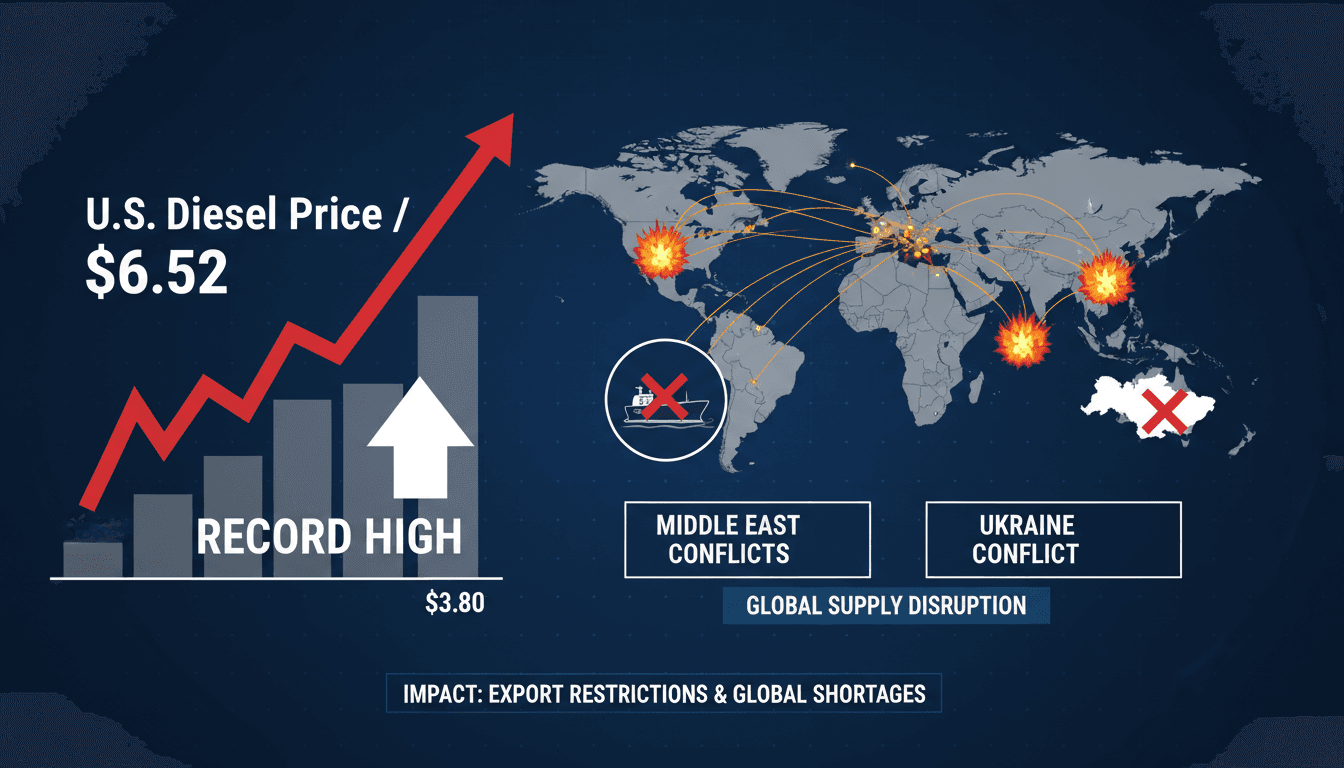
Rising diesel prices could impact your transportation costs, food prices, and overall economic stability.
Why it matters
The surge in diesel prices reflects broader geopolitical tensions that could disrupt global supply chains and increase costs across various sectors.
What happened (in 30 seconds)
- Diesel prices in the U.S. hit a record high of $6.52 per gallon in late September 2026, driven by conflicts in the Middle East and Ukraine.
- The Trump administration is considering an export ban on U.S. diesel to alleviate domestic supply issues, which could have global repercussions.
- Global diesel supply has been severely disrupted, with Middle Eastern exports dropping to one-quarter of prewar levels due to ongoing conflicts.
The context you actually need
- Prior to the Iran conflict, the Middle East accounted for 19% of global diesel exports, with North America and Russia contributing 15% and 11%, respectively.
- The U.S.-Iran war has damaged key refineries and disrupted shipments, while Ukrainian strikes on Russian facilities have further constrained supply.
- Analysts warn that an export ban could lead to global shortages, particularly affecting markets in Latin America and Asia, while also forcing U.S. refiners to cut production.
What's really happening
The recent spike in diesel prices is a direct consequence of geopolitical instability in the Middle East and Eastern Europe. The Iran conflict has significantly impacted the Persian Gulf's refining capabilities, which previously supplied a substantial portion of the world's diesel. With the war causing damage to refineries and disrupting shipping routes through critical chokepoints like the Strait of Hormuz, diesel exports from the region have plummeted to just 25% of their prewar levels.
Simultaneously, the ongoing conflict in Ukraine has led to strikes on Russian refineries, further tightening global supply. Russia's own export ban has exacerbated the situation, leaving many countries scrambling for alternatives. As a result, U.S. diesel prices have surged by 70% since the onset of the Iran war, reaching an all-time high of $6.52 per gallon.
In response to these pressures, the Trump administration is contemplating an export ban on U.S. diesel. While this move aims to stabilize domestic prices and ensure supply for American consumers, it carries significant risks. Energy experts warn that such a ban could backfire, forcing U.S. refiners to reduce crude processing by up to 1.9 million barrels per day. This reduction would not only raise prices for diesel but also for gasoline and jet fuel, creating a ripple effect across the economy.
Moreover, the potential for a U.S. export ban raises concerns about global fuel shortages, particularly in regions like Latin America and Asia, which rely heavily on U.S. diesel. The administration is also considering voluntary caps or restrictions as an alternative to a full ban, but the effectiveness of these measures remains uncertain.
In summary, the interplay of geopolitical tensions, domestic policy considerations, and market dynamics is creating a complex landscape for diesel prices. As the situation evolves, the implications for consumers, businesses, and global markets will be profound.
Who feels it first (and how)
- Farmers: Increased diesel prices raise operational costs for transportation and machinery.
- Transport and logistics companies: Higher fuel costs directly impact shipping rates and profitability.
- Consumers: Rising diesel prices can lead to increased costs for goods and services, particularly food.
- Global importers: Countries reliant on U.S. diesel may face shortages and inflated prices.
What to watch next
- U.S. policy decisions on diesel exports: Any restrictions could significantly impact domestic supply and global markets.
- Geopolitical developments in the Middle East and Ukraine: Ongoing conflicts will continue to influence global diesel supply and pricing.
- Market reactions from refiners and consumers: Watch for shifts in production levels and consumer behavior in response to rising prices.
Diesel prices have reached an all-time high due to geopolitical tensions.
An export ban could lead to higher prices for other fuels and global shortages.
The long-term effectiveness of any U.S. policy changes on diesel exports.
Frequently Asked Questions
- Why it matters?
- The surge in diesel prices reflects broader geopolitical tensions that could disrupt global supply chains and increase costs across various sectors.
- What happened (in 30 seconds)?
- Diesel prices in the U.S. hit a record high of $6.52 per gallon in late September 2026, driven by conflicts in the Middle East and Ukraine. The Trump administration is considering an export ban on U.S. diesel to alleviate domestic supply issues, which could have global repercussions. Global diesel supply has been severely disrupted, with Middle Eastern exports dropping to one-quarter of prewar levels due to ongoing conflicts.
- What's really happening?
- The recent spike in diesel prices is a direct consequence of geopolitical instability in the Middle East and Eastern Europe. The Iran conflict has significantly impacted the Persian Gulf's refining capabilities, which previously supplied a substantial portion of the world's diesel. With the war causing damage to refineries and disrupting shipping routes through critical chokepoints like the Strait of Hormuz, diesel exports from the region have plummeted to just 25% of their prewar levels. Simu
- Who feels it first (and how)?
- Farmers: Increased diesel prices raise operational costs for transportation and machinery. Transport and logistics companies: Higher fuel costs directly impact shipping rates and profitability. Consumers: Rising diesel prices can lead to increased costs for goods and services, particularly food. Global importers: Countries reliant on U.S. diesel may face shortages and inflated prices.
- What to watch next?
- U.S. policy decisions on diesel exports: Any restrictions could significantly impact domestic supply and global markets. Geopolitical developments in the Middle East and Ukraine: Ongoing conflicts will continue to influence global diesel supply and pricing. Market reactions from refiners and consumers: Watch for shifts in production levels and consumer behavior in response to rising prices.
Markets desk coverage, trading insights, and investor updates.
"WSJ’s markets reporting provides in-depth analysis and context for investors."
— A47 Editor
Why Are Diesel Prices Soaring and What Would a U.S. Export Ban Do?
Diesel prices in the U.S. have surged to record highs, exceeding $6.50 per gallon, primarily due to ongoing conflicts in the Middle East and Ukraine, which have disrupted global diesel supplies. This situation has prompted President Trump to consider...
U.S. business news, corporate developments, and economy.
"The Wall Street Journal is respected for deep financial and economic reporting with a center-right editorial perspective."
— A47 Editor
Why Are Diesel Prices Soaring and What Would a U.S. Export Ban Do?
Diesel prices in the U.S. have surged to record highs, exceeding $6.50 per gallon, primarily due to ongoing conflicts in the Middle East and Ukraine, which have disrupted global diesel supplies. This situation has prompted President Trump to consider...
Stock market news, investing ideas, and trading analysis.
"TheStreet provides market news and retail-investor-focused analysis."
— A47 Editor
Diesel, gas prices jump in September: Now what?
Diesel and gas prices surged in September, driven by ongoing geopolitical tensions in the Middle East, particularly the conflict involving Iran. This spike in fuel prices raises concerns about the economic impact on consumers and businesses alike.