
France Unveils 2027 Budget with €54 Billion Savings Amid Rising Bond Yields
Why it matters
France's budgetary decisions are critical as they influence EU fiscal policies and investor confidence across Europe.
What happened (in 30 seconds)
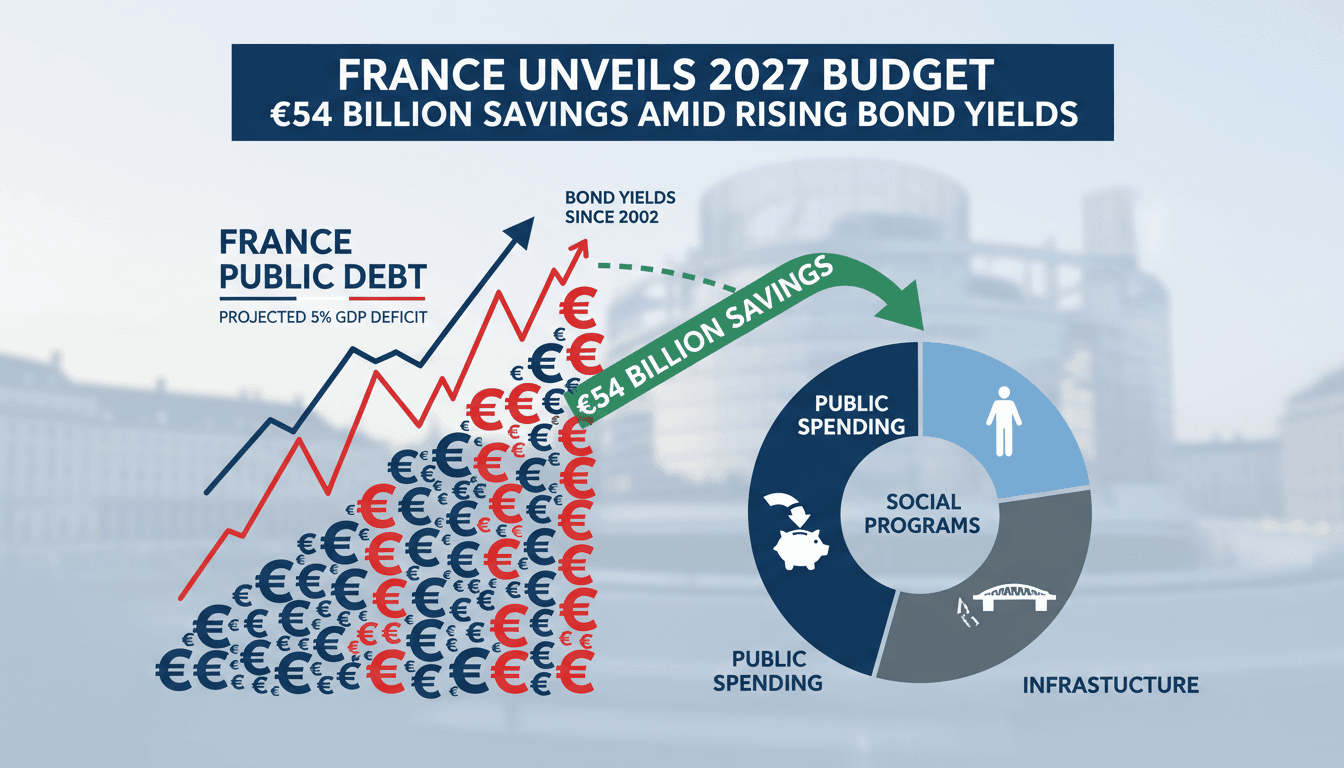
- On October 1, 2026, France unveiled its 2027 budget, aiming for €54 billion in savings to address soaring public debt.
- Prime Minister Sébastien Lecornu announced €43 billion in new measures, focusing on defense while freezing most other spending.
- Bond yields surged to 4.96%, the highest since 2002, reflecting investor anxiety over France's fiscal health.
The context you actually need
- Debt levels are alarming, with France's public debt reaching 119% of GDP by Q2 2026, a post-WWII high.
- Political instability has plagued France since the 2024 snap elections, complicating fiscal governance and investor confidence.
- Rising interest costs are a direct consequence of maturing low-rate pandemic bonds, pressuring the government to act decisively.
What's really happening
The French government's recent budget presentation is a response to a confluence of economic pressures that have escalated in recent years. The COVID-19 pandemic led to unprecedented spending, which, combined with the energy crisis, has left France grappling with a staggering public debt that now stands at 119% of GDP. This figure is not just a statistic; it represents a significant burden on future generations and a potential risk to France's economic stability.
As the government prepares for the 2027 presidential election, the urgency to rein in spending has intensified. Prime Minister Sébastien Lecornu's announcement of €54 billion in savings is not merely a fiscal strategy; it is a political maneuver aimed at restoring investor confidence and demonstrating fiscal responsibility. The proposed budget includes €43 billion in new measures, which strategically preserve defense spending while imposing freezes on most other ministerial budgets. This approach reflects a prioritization of national security over other public services, a decision likely influenced by both domestic and international pressures.
The immediate market reaction was telling: bond yields surged to 4.96%, the highest level since 2002. This spike indicates that investors are wary of France's ability to manage its debt effectively, especially in light of the upcoming elections. The government has emphasized its commitment to maintaining a solid sovereign signature, but the rising yields suggest that confidence is fragile. Investors are closely monitoring the situation, particularly as the budget moves to a divided parliament for approval, where political negotiations could further complicate fiscal strategies.
The structural implications of these budget cuts extend beyond immediate savings. They signal a shift in how France may approach public spending in the future, potentially leading to a more austere fiscal environment. This could affect various sectors, from social services to infrastructure, as the government seeks to balance its books while navigating the complexities of a politically fragmented landscape.
Who feels it first (and how)
- Investors: Increased bond yields may lead to higher borrowing costs and reduced investment in French assets.
- Public Sector Employees: Budget freezes could result in stagnant wages and reduced funding for public services.
- Defense Contractors: Continued investment in defense may benefit this sector, while others face cuts.
- Households: While no broad tax increases are planned, the overall economic environment may still affect disposable income.
What to watch next
- Parliamentary Approval: The budget's passage through a divided parliament will be crucial; any significant changes could alter fiscal projections.
- Bond Market Reactions: Continued fluctuations in bond yields will indicate investor sentiment and confidence in France's fiscal strategy.
- Economic Growth Indicators: Watch for GDP growth rates and employment figures, as these will reflect the broader impact of austerity measures on the economy.
France's public debt is at a record high of 119% of GDP.
Increased scrutiny from investors and potential volatility in bond markets as the budget is debated.
The long-term effects of austerity measures on public services and economic growth.
Frequently Asked Questions
- Why it matters?
- France's budgetary decisions are critical as they influence EU fiscal policies and investor confidence across Europe.
- What happened (in 30 seconds)?
- On October 1, 2026, France unveiled its 2027 budget, aiming for €54 billion in savings to address soaring public debt. Prime Minister Sébastien Lecornu announced €43 billion in new measures, focusing on defense while freezing most other spending. Bond yields surged to 4.96%, the highest since 2002, reflecting investor anxiety over France's fiscal health.
- What's really happening?
- The French government's recent budget presentation is a response to a confluence of economic pressures that have escalated in recent years. The COVID-19 pandemic led to unprecedented spending, which, combined with the energy crisis, has left France grappling with a staggering public debt that now stands at 119% of GDP. This figure is not just a statistic; it represents a significant burden on future generations and a potential risk to France's economic stability. As the government prepares for
- Who feels it first (and how)?
- Investors: Increased bond yields may lead to higher borrowing costs and reduced investment in French assets. Public Sector Employees: Budget freezes could result in stagnant wages and reduced funding for public services. Defense Contractors: Continued investment in defense may benefit this sector, while others face cuts. Households: While no broad tax increases are planned, the overall economic environment may still affect disposable income.
- What to watch next?
- Parliamentary Approval: The budget's passage through a divided parliament will be crucial; any significant changes could alter fiscal projections. Bond Market Reactions: Continued fluctuations in bond yields will indicate investor sentiment and confidence in France's fiscal strategy. Economic Growth Indicators: Watch for GDP growth rates and employment figures, as these will reflect the broader impact of austerity measures on the economy.
24/7 international news from a French perspective in multiple languages.
"France 24 is viewed as a globally focused outlet with balanced coverage and a European perspective."
— A47 Editor
France demands belt-tightening in 2027 budget as investors sour on its debt
France has introduced its 2027 budget bill, which includes unpopular measures aimed at reducing the national deficit and addressing concerns from bond investors ahead of the presidential election. The proposed legislation is expected to face signific...
Global political, business, and cultural coverage from WSJ international desks.
"The Wall Street Journal offers extensive international reporting with a reputation for financial insight and a center-right editorial stance."
— A47 Editor
France Is Ground Zero in the Global Bond Rout
The French government is preparing to implement significant budget cuts next year, aiming to reduce spending by tens of billions of euros in response to investor concerns regarding the country's fiscal health. This move comes amid a backdrop of risin...
Markets desk coverage, trading insights, and investor updates.
"WSJ’s markets reporting provides in-depth analysis and context for investors."
— A47 Editor
France Is Ground Zero in the Global Bond Rout
The French government is planning to implement significant spending cuts in 2027, aiming to alleviate investor concerns amid rising borrowing costs and fiscal pressures. This strategy comes as France grapples with a national deficit and a challenging...