
UK Diesel Prices Hit Record £2 per Litre Amid Middle East Supply Disruptions
Why it matters
The surge in diesel prices reflects broader geopolitical tensions that can disrupt supply chains and inflate costs across various sectors.
What happened (in 30 seconds)
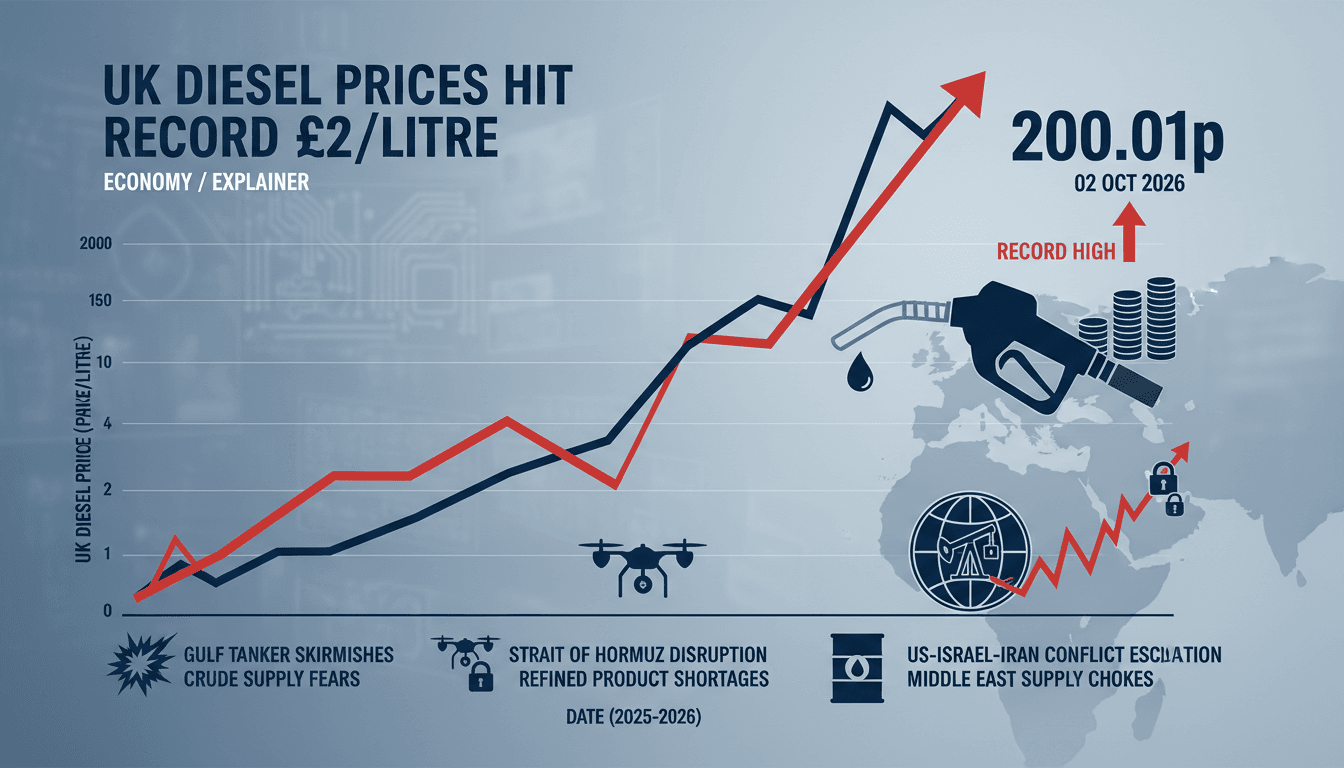
- Record prices: On 2 October 2026, the average diesel price in the UK reached 200.01 pence per litre, marking a 40.5% increase since February.
- Geopolitical impact: The price spike is linked to supply disruptions caused by the US-Israel conflict with Iran, affecting crude flows from the Gulf.
- Government response: UK transport minister Keir Mather reassured the public of no diesel shortage while discussions on emergency reserve releases are ongoing.
The context you actually need
- Historical highs: The current diesel price surpasses the previous peak of 199.09 pence from June 2022, indicating a troubling trend for consumers.
- Supply chain vulnerabilities: The UK imports about 30% of its diesel from the US and relies heavily on European sources, making it susceptible to international disruptions.
- Inflationary pressures: Rising fuel costs are expected to contribute to overall inflation, with projections suggesting potential increases in consumer prices.
What's really happening
The recent spike in diesel prices is a direct consequence of geopolitical instability in the Middle East, particularly the US-Israel military actions against Iran that began in late February 2026. This conflict has severely disrupted crude oil and refined product supplies, especially through the critical Strait of Hormuz, a vital transit route for global oil shipments. Prior to this, the Russia-Ukraine conflict had already constrained diesel exports from Russia, which accounted for 10-15% of global supplies.
As a result, the UK has faced a significant supply crunch, with the RAC reporting that diesel prices have surged to an average of 200.01 pence per litre by early October. This price increase is not just a local issue; it reflects a broader trend of rising fuel costs across Europe, with petrol prices also climbing to an average of 174.1 pence per litre.
The UK government has emphasized its commitment to maintaining fuel supply resilience, highlighting that it has 42 days of diesel reserves. However, the situation remains precarious, as European nations, including France, have proposed releasing emergency reserves to stabilize the market. The International Energy Agency (IEA) is also involved in discussions about coordinated reserve releases, which could mitigate some of the immediate pressures.
Despite these reassurances, the volatility in Brent crude prices—falling 2.5% to $99.78 per barrel amid reserve discussions—indicates that the market remains sensitive to geopolitical developments. Analysts from Capital Economics have warned that if the situation escalates, diesel prices could potentially reach £3 per litre, further exacerbating inflationary pressures that could rise to 5% in a scenario involving a US export ban.
Who feels it first (and how)
- Motorists: Increased fuel costs directly impact daily commuting and travel expenses.
- Haulage firms: Rising diesel prices lead to higher operational costs, affecting logistics and delivery services.
- Small businesses: Companies reliant on transportation for goods face squeezed margins and potential price hikes for consumers.
- Low-income households: Vulnerable populations may struggle more with increased transportation costs, impacting their overall budget.
What to watch next
- Emergency reserve releases: Monitor discussions among European nations and the IEA regarding potential reserve releases, as this could stabilize prices.
- Geopolitical developments: Keep an eye on the US-Israel conflict and its implications for oil supply, as further escalations could lead to more price volatility.
- Inflation trends: Watch for updates on inflation rates, particularly in relation to fuel costs, as this will affect consumer purchasing power and economic stability.
Diesel prices have reached a record high of 200.01 pence per litre.
Continued geopolitical tensions will keep fuel prices volatile and may lead to further increases.
The long-term impact on inflation and consumer behavior remains uncertain as the situation evolves.
Frequently Asked Questions
- Why it matters?
- The surge in diesel prices reflects broader geopolitical tensions that can disrupt supply chains and inflate costs across various sectors.
- What happened (in 30 seconds)?
- Record prices: On 2 October 2026, the average diesel price in the UK reached 200.01 pence per litre, marking a 40.5% increase since February. Geopolitical impact: The price spike is linked to supply disruptions caused by the US-Israel conflict with Iran, affecting crude flows from the Gulf. Government response: UK transport minister Keir Mather reassured the public of no diesel shortage while discussions on emergency reserve releases are ongoing.
- What's really happening?
- The recent spike in diesel prices is a direct consequence of geopolitical instability in the Middle East, particularly the US-Israel military actions against Iran that began in late February 2026. This conflict has severely disrupted crude oil and refined product supplies, especially through the critical Strait of Hormuz, a vital transit route for global oil shipments. Prior to this, the Russia-Ukraine conflict had already constrained diesel exports from Russia, which accounted for 10-15% of glo
- Who feels it first (and how)?
- Motorists: Increased fuel costs directly impact daily commuting and travel expenses. Haulage firms: Rising diesel prices lead to higher operational costs, affecting logistics and delivery services. Small businesses: Companies reliant on transportation for goods face squeezed margins and potential price hikes for consumers. Low-income households: Vulnerable populations may struggle more with increased transportation costs, impacting their overall budget.
- What to watch next?
- Emergency reserve releases: Monitor discussions among European nations and the IEA regarding potential reserve releases, as this could stabilize prices. Geopolitical developments: Keep an eye on the US-Israel conflict and its implications for oil supply, as further escalations could lead to more price volatility. Inflation trends: Watch for updates on inflation rates, particularly in relation to fuel costs, as this will affect consumer purchasing power and economic stability.
UK and international business news, economics, and corporate coverage.
"The Guardian’s business section covers finance and markets with a progressive editorial tone."
— A47 Editor
UK diesel price hits record high of £2 a litre
The average price of diesel in the UK has surged to a record high of £2 per litre, driven by significant disruptions in global oil supplies due to the ongoing US-Israel conflict with Iran. This increase marks a 40.5% rise since late February 2026, in...
Corporate news, economic trends, and markets with UK and global scope.
"BBC News is widely regarded as reputable and impartial, with a public service mandate."
— A47 Editor
Why UK diesel prices have breached the £2 per litre mark
The average price of diesel in the UK has reached an unprecedented high of 200.01p per litre, as reported by the RAC. This surge is largely attributed to ongoing disruptions in global oil supplies, particularly influenced by geopolitical tensions in ...
Stock market news, investing ideas, and trading analysis.
"TheStreet provides market news and retail-investor-focused analysis."
— A47 Editor
Diesel, gas prices jump in September: Now what?
Diesel and gas prices surged in September, driven by ongoing geopolitical tensions in the Middle East, particularly the conflict involving Iran. This spike in fuel prices raises concerns about the economic impact on consumers and businesses alike.
United Kingdom-focused news including local politics, business, and social issues.
"BBC News is widely regarded as a reputable international news organization, known for its impartial tone and public service mandate."
— A47 Editor
Diesel sees biggest monthly fall in 26 years. What's happening to fuel prices?
Diesel prices have experienced their largest monthly decline in 26 years, following an initial surge triggered by the US-Israel conflict with Iran. As peace talks progress, fuel costs are now decreasing, reflecting a shift in market sentiment.