
Saudi banks increase treasury bond holdings to SR676 billion by August 2026
Why it matters
This surge in treasury bond investments reflects banks' confidence in government securities, impacting liquidity and investment strategies across the region.
What happened (in 30 seconds)
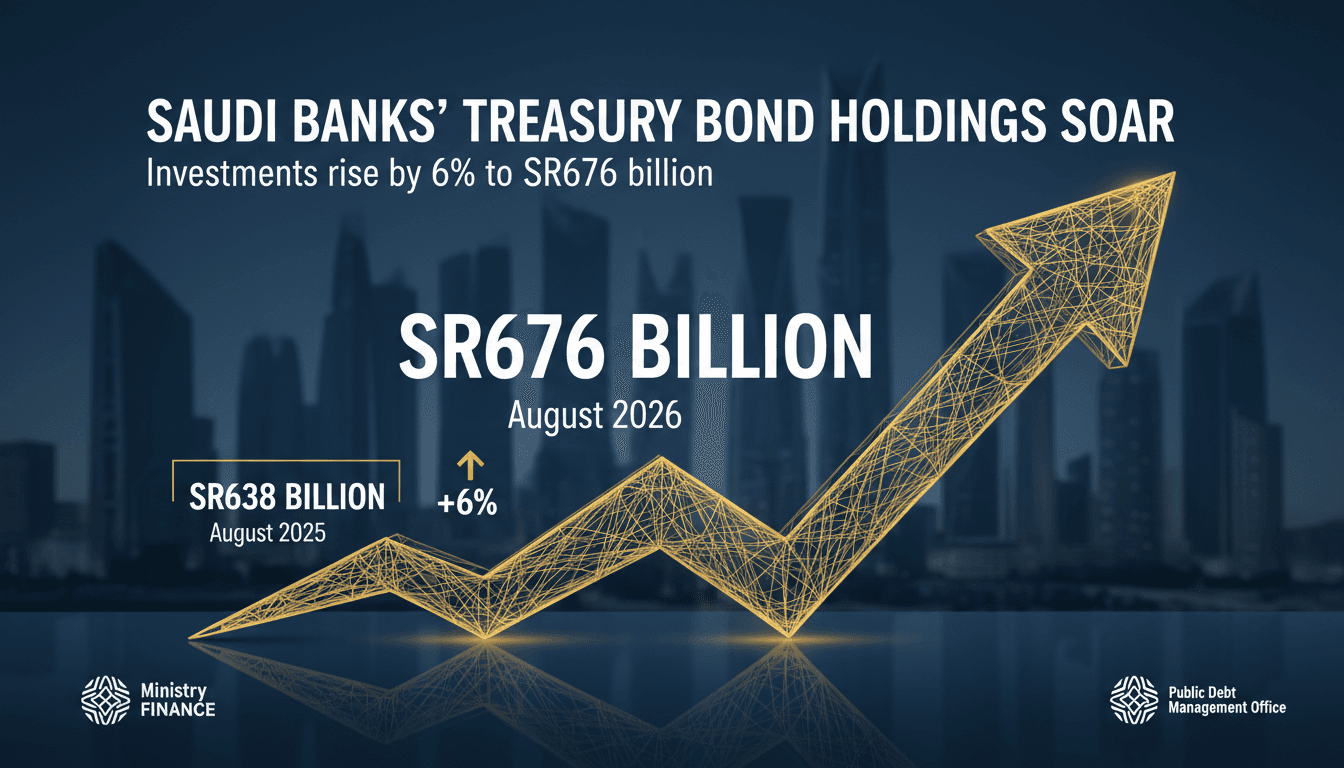
- Saudi banks’ treasury bond investments increased by 6% to SR676 billion by the end of August 2026.
- Total public sector claims rose to SR953.1 billion, with treasury bonds making up 71% of this figure.
- Year-on-year growth in treasury bond holdings reached SR38.7 billion, indicating strong demand for government securities.
The context you actually need
- Treasury bonds are long-term debt instruments issued by the Saudi Ministry of Finance, reflecting the government's borrowing needs.
- SAMA's data methodology includes internationally issued government bonds and sukuk, excluding central bank bills, aligning with international standards.
- Public sector claims have seen a significant increase, rising from SR871.3 billion in August 2025 to SR953.1 billion in August 2026, indicating a robust banking sector.
What's really happening
The recent surge in Saudi banks' treasury bond holdings to SR676 billion by the end of August 2026 is a clear indicator of the banking sector's strategic positioning in response to both domestic and global economic conditions. This 6% month-on-month increase, alongside a matching annual rise, underscores a growing confidence in government securities as a stable investment avenue.
The Saudi Central Bank (SAMA) reported that treasury bonds now constitute 71% of total bank claims on the public sector, which reached SR953.1 billion. This allocation reflects banks' preference for low-risk assets amid fluctuating market conditions and a global economic landscape characterized by uncertainty. The Ministry of Finance's issuance of these bonds is primarily aimed at financing public projects and managing national debt, which in turn supports economic growth.
The increase in treasury bond investments can also be attributed to the broader economic strategy of the Kingdom, which emphasizes diversification and stability. As the government continues to implement Vision 2030 initiatives, the demand for treasury bonds is likely to remain strong, as they provide a reliable source of funding for various development projects.
Moreover, the rise in public sector claims from SR871.3 billion in August 2025 to SR953.1 billion in August 2026 indicates a healthy appetite for government debt, which can be seen as a vote of confidence in the government's fiscal management. This trend may also reflect a shift in investor sentiment, where banks are increasingly favoring government securities over riskier assets, especially in a climate of rising interest rates and inflationary pressures.
As banks continue to bolster their treasury bond portfolios, this could lead to tighter liquidity in the market, as funds are redirected from other investment opportunities. This shift may impact sectors reliant on bank financing, as banks prioritize government securities over private sector lending.
Who feels it first (and how)
- Banking sector: Increased treasury bond holdings may lead to reduced liquidity for private sector loans.
- Investors: Those seeking stable returns may benefit from the growing demand for government securities.
- Public sector projects: Increased funding through treasury bonds could accelerate government initiatives and infrastructure projects.
What to watch next
- Interest rate trends: Monitoring changes in interest rates will be crucial, as they directly affect the attractiveness of treasury bonds.
- Government fiscal policies: Any shifts in government spending or debt management strategies could influence future bond issuance.
- Market liquidity: Observing how this bond surge impacts overall market liquidity will provide insights into potential credit availability for businesses.
Treasury bond investments reached SR676 billion by August 2026.
Continued growth in public sector claims and treasury bond investments as the government pursues its fiscal strategies.
The long-term impact on private sector lending and market liquidity as banks prioritize government securities.
Frequently Asked Questions
- Why it matters?
- This surge in treasury bond investments reflects banks' confidence in government securities, impacting liquidity and investment strategies across the region.
- What happened (in 30 seconds)?
- Saudi banks’ treasury bond investments increased by 6% to SR676 billion by the end of August 2026. Total public sector claims rose to SR953.1 billion, with treasury bonds making up 71% of this figure. Year-on-year growth in treasury bond holdings reached SR38.7 billion, indicating strong demand for government securities.
- What's really happening?
- The recent surge in Saudi banks' treasury bond holdings to SR676 billion by the end of August 2026 is a clear indicator of the banking sector's strategic positioning in response to both domestic and global economic conditions. This 6% month-on-month increase, alongside a matching annual rise, underscores a growing confidence in government securities as a stable investment avenue. The Saudi Central Bank (SAMA) reported that treasury bonds now constitute 71% of total bank claims on the public se
- Who feels it first (and how)?
- Banking sector: Increased treasury bond holdings may lead to reduced liquidity for private sector loans. Investors: Those seeking stable returns may benefit from the growing demand for government securities. Public sector projects: Increased funding through treasury bonds could accelerate government initiatives and infrastructure projects.
- What to watch next?
- Interest rate trends: Monitoring changes in interest rates will be crucial, as they directly affect the attractiveness of treasury bonds. Government fiscal policies: Any shifts in government spending or debt management strategies could influence future bond issuance. Market liquidity: Observing how this bond surge impacts overall market liquidity will provide insights into potential credit availability for businesses.
English-language reporting on Saudi politics, policy, and society.
"Saudi Gazette reflects mainstream Saudi institutional perspectives."
— A47 Editor
Saudi banks’ investments in treasury bonds surge 6% to SR676 billion in August
Investments by Saudi banks in treasury bonds rose to SR676 billion by the end of August 2026, reflecting a 6% increase from the previous month and an annual rise of 6%, as reported by the Saudi Central Bank (SAMA). This growth indicates that local ba...
English-language reporting focused on Saudi Arabia and regional affairs.
"Saudi Gazette provides English-language coverage that often aligns with mainstream Saudi news priorities."
— A47 Editor
Saudi banks’ investments in treasury bonds surge 6% to SR676 billion in August
Investments by Saudi banks in treasury bonds rose to SR676 billion by the end of August 2026, reflecting a 6% increase from the previous month and an annual rise of 6%, as reported by the Saudi Central Bank (SAMA). This growth indicates that local ba...
Sports reporting with a focus on Saudi and regional competitions.
"Okaz sports coverage is broad and audience-friendly, with strong attention to Saudi teams and leagues."
— A47 Editor
بزيادة 6%..ارتفاع استثمارات البنوك السعودية بسندات الخزينة إلى 676 مليار
Saudi banks have increased their investments in treasury bonds to 676 billion riyals by the end of August 2026, marking a growth of approximately 5.1 billion riyals from the previous month. Year-on-year, investments in treasury bonds rose by 6%, equi...
Sports reporting with a focus on Saudi and regional competitions.
"Okaz sports coverage is broad and audience-friendly, with strong attention to Saudi teams and leagues."
— A47 Editor
6 % نمو لمطلوبات المصارف من القطاع الخاص خلال 30 يوماً
The Saudi Central Bank (SAMA) reported a 6% annual growth in the private sector's bank liabilities, reaching approximately 3.29 trillion riyals in August 2026, alongside a 0.9% monthly increase. Additionally, the bank's net foreign assets rose by 7.2...