
Hurricane Isaias Causes Significant Oil Production Shut-ins in US Gulf Amid Middle East Tensions
Why it matters
The significant reduction in US Gulf oil production amid geopolitical tensions is likely to impact global oil prices and supply stability.
What happened (in 30 seconds)
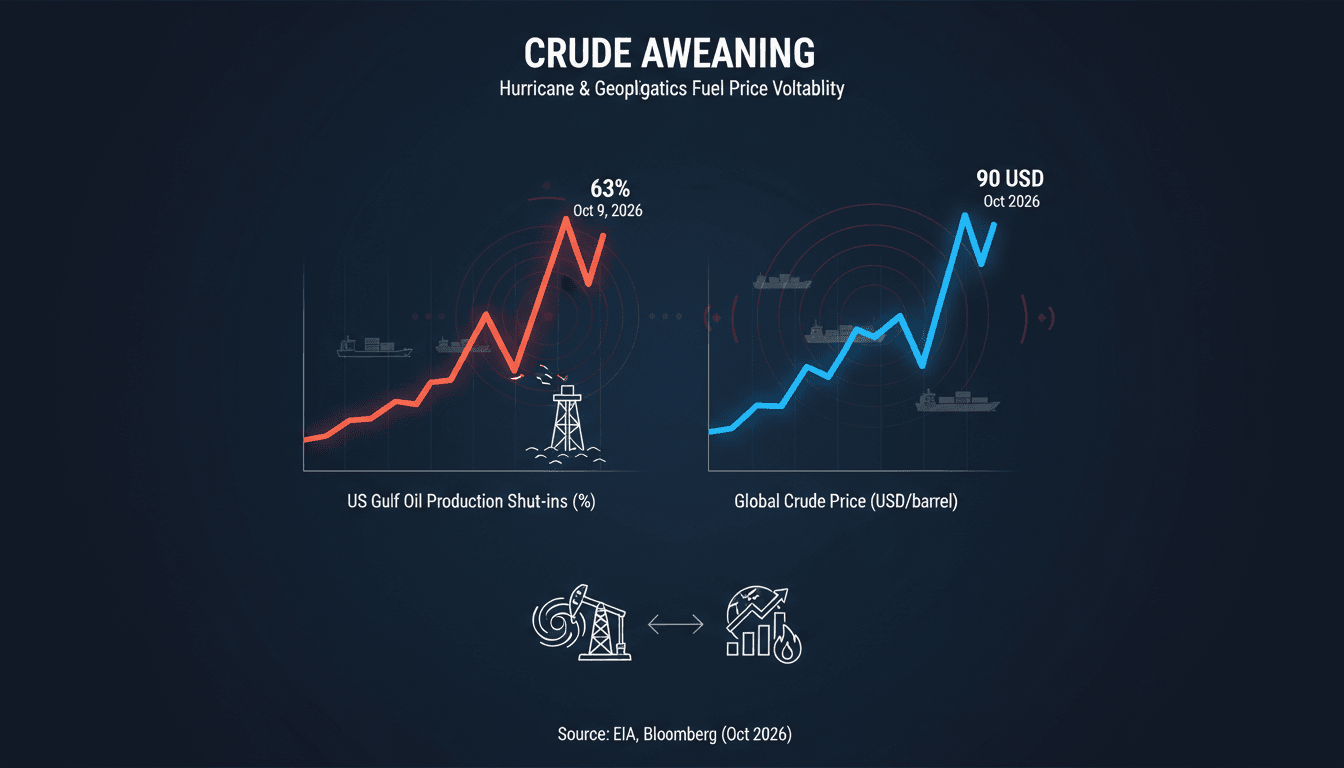
- Hurricane Isaias forced approximately 63% of US Gulf oil production offline, impacting 1.28-1.3 million barrels per day.
- Brent crude prices rose to $104.72 per barrel, while WTI settled at $91.85, reflecting a weekly gain amid supply concerns.
- Geopolitical tensions from Houthi attacks on Saudi Arabia compounded the supply disruption, increasing market volatility.
The context you actually need
- Prior volatility in oil markets stemmed from escalating Middle East tensions, including Houthi attacks and US sanctions on Iranian oil.
- Hurricane Isaias was the first named storm of the 2026 Atlantic hurricane season, leading to precautionary evacuations and production shut-ins.
- US-Iran diplomatic signals added uncertainty to the market, with earlier pressure on prices easing as the storm approached.
What's really happening
Hurricane Isaias made landfall on October 9, 2026, leading to a significant disruption in oil production in the Gulf of Mexico. As the storm approached, oil companies, including major players like BP, Shell, and Chevron, began evacuating personnel and shutting down operations to ensure safety. By October 8-9, reports indicated that approximately 63% of Gulf production was offline, with some assessments suggesting that the figure could be as high as 72%. This disruption coincided with heightened geopolitical risks, particularly from Houthi attacks on Saudi Arabian targets and threats to shipping routes in the Strait of Hormuz.
The combination of these factors created a perfect storm for oil prices. Brent crude, a global benchmark, settled at $104.72 per barrel, marking a 2.41% increase for the week, while West Texas Intermediate (WTI) rose to $91.85, up 0.81%. The market's reaction was driven by supply fears, which overshadowed earlier pressures from US-Iran diplomatic discussions that had suggested a potential easing of tensions.
The implications of this disruption extend beyond immediate price increases. The Gulf Coast's refining and export infrastructure faced additional challenges due to forecasts of heavy rain and flooding, which could further strain operations. Additionally, US authorities maintained sanctions on Iranian oil networks, indicating that geopolitical tensions would continue to influence market dynamics.
As oil prices rise, the broader economic landscape may also feel the impact. Import-dependent regions, such as Dubai and the UAE, could experience increased fuel costs, affecting everything from transportation to consumer goods. The energy sector may see a boost in revenues, but the overall economic implications could lead to inflationary pressures in various sectors.
Who feels it first (and how)
- Oil producers: Companies like BP, Shell, and Chevron face immediate operational challenges and potential revenue losses.
- Consumers: Individuals relying on oil for transportation and energy may see increased costs at the pump and in utility bills.
- Import-dependent regions: Areas like Dubai may experience heightened fuel costs, impacting local economies and consumer spending.
What to watch next
- Hurricane recovery efforts: Monitor how quickly oil companies can resume production and the impact on supply levels.
- Geopolitical developments: Keep an eye on Houthi activities and US-Iran relations, as these will influence market stability.
- Global oil demand trends: Watch for shifts in demand as prices fluctuate, particularly in regions heavily reliant on oil imports.
Hurricane Isaias caused significant production shut-ins in the US Gulf, impacting global oil prices.
Continued geopolitical tensions will keep oil prices volatile in the near term.
The long-term effects on global oil supply chains and consumer prices remain to be seen.
Frequently Asked Questions
- Why it matters?
- The significant reduction in US Gulf oil production amid geopolitical tensions is likely to impact global oil prices and supply stability.
- What happened (in 30 seconds)?
- Hurricane Isaias forced approximately 63% of US Gulf oil production offline, impacting 1.28-1.3 million barrels per day. Brent crude prices rose to $104.72 per barrel, while WTI settled at $91.85, reflecting a weekly gain amid supply concerns. Geopolitical tensions from Houthi attacks on Saudi Arabia compounded the supply disruption, increasing market volatility.
- What's really happening?
- Hurricane Isaias made landfall on October 9, 2026, leading to a significant disruption in oil production in the Gulf of Mexico. As the storm approached, oil companies, including major players like BP, Shell, and Chevron, began evacuating personnel and shutting down operations to ensure safety. By October 8-9, reports indicated that approximately 63% of Gulf production was offline, with some assessments suggesting that the figure could be as high as 72%. This disruption coincided with heightened
- Who feels it first (and how)?
- Oil producers: Companies like BP, Shell, and Chevron face immediate operational challenges and potential revenue losses. Consumers: Individuals relying on oil for transportation and energy may see increased costs at the pump and in utility bills. Import-dependent regions: Areas like Dubai may experience heightened fuel costs, impacting local economies and consumer spending.
- What to watch next?
- Hurricane recovery efforts: Monitor how quickly oil companies can resume production and the impact on supply levels. Geopolitical developments: Keep an eye on Houthi activities and US-Iran relations, as these will influence market stability. Global oil demand trends: Watch for shifts in demand as prices fluctuate, particularly in regions heavily reliant on oil imports.
UAE-based English-language newspaper covering regional politics, economics, and global affairs.
"The National reflects Emirati policy perspectives while maintaining international editorial standards."
— A47 Editor
Oil posts weekly gain as Hurricane Isaias rips through US Gulf coast
Oil prices experienced a weekly gain as Hurricane Isaias impacted the US Gulf coast, causing disruptions in oil production and refining activities in the region. The storm's effects raised concerns about supply stability, which typically influences m...
Oil, metals, and agriculture: supply/demand headlines, OPEC chatter, inventories, and price action.
"Solid tape for energy and metals traders tracking macro and micro catalysts."
— A47 Editor
Oil rises 4% on revived Middle East worries, Hurricane Isaias supply disruption
Oil prices have risen by 4% due to renewed concerns over geopolitical tensions in the Middle East and disruptions caused by Hurricane Isaias. These factors have contributed to a volatile market environment, impacting supply chains and pricing stabili...
U.S. business news, corporate developments, and economy.
"The Wall Street Journal is respected for deep financial and economic reporting with a center-right editorial perspective."
— A47 Editor
Brent Gains More Than 4% on U.S.-Iran Tensions, Hurricane Isaias
Brent crude prices surged by more than 4% as traders reacted to escalating tensions between the U.S. and Iran, alongside concerns regarding shipping risks in the Persian Gulf and disruptions to U.S. offshore production due to Hurricane Isaias.
Global political, business, and cultural coverage from WSJ international desks.
"The Wall Street Journal offers extensive international reporting with a reputation for financial insight and a center-right editorial stance."
— A47 Editor
Brent Gains More Than 4% on U.S.-Iran Tensions, Hurricane Isaias
Brent crude prices surged over 4% as traders reacted to escalating tensions between the U.S. and Iran, alongside concerns regarding offshore production disruptions due to Hurricane Isaias. The price increase reflects heightened risks in Persian Gulf ...