
Nikkei Stock Average Drops 0.7 Percent Amid Geopolitical Tensions and Earnings Anticipation
What happened
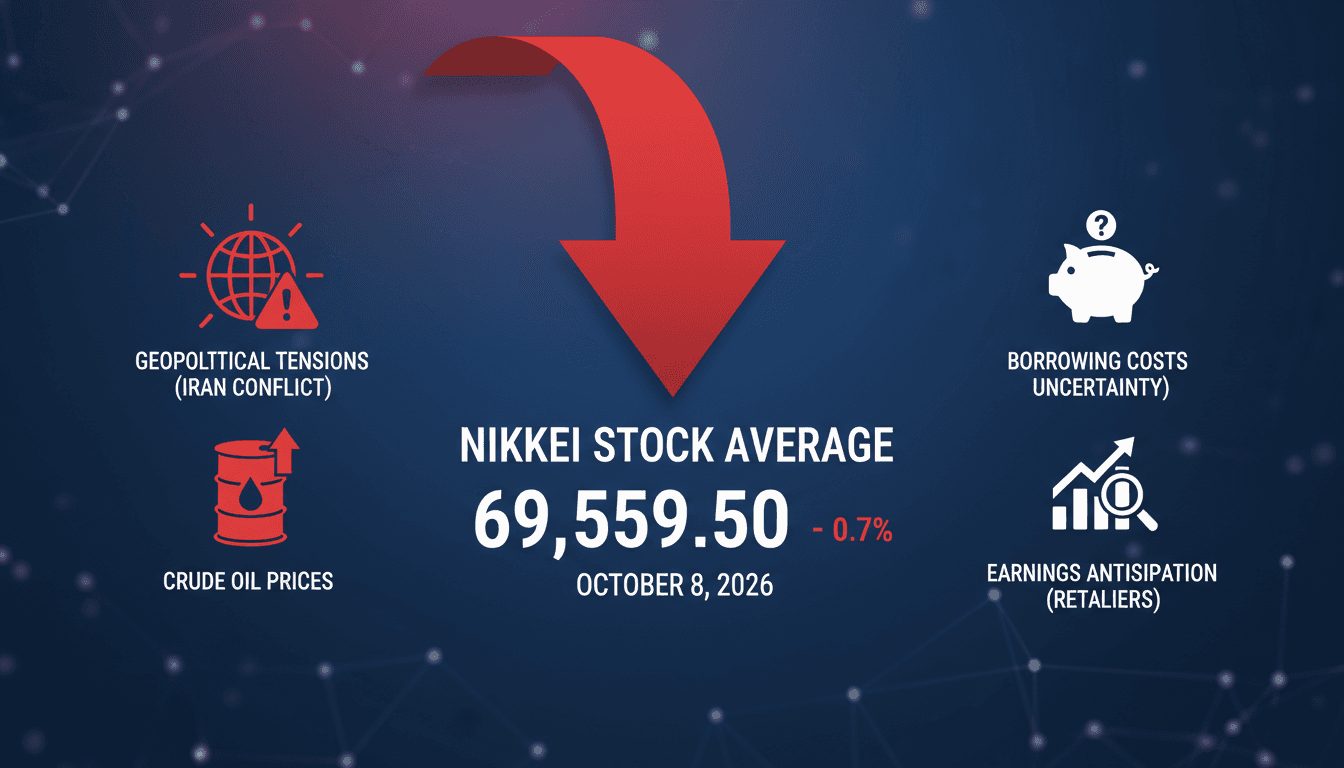
The Nikkei Stock Average fell 0.7 percent to 69,559.50 on October 8, 2026, driven by declines in machinery manufacturers and trading houses.
The Context
- Geopolitical tensions: Ongoing conflicts in the Middle East, particularly involving Iran, are creating uncertainty in global markets.
- Interest rates: Investors are cautious due to concerns over borrowing costs and interest rate trajectories, affecting risk appetite.
- Earnings focus: Market participants are closely watching upcoming quarterly earnings reports from major retailers like Fast Retailing and Seven & i Holdings.
The Number
— This is the current level of the Nikkei Stock Average after the decline, highlighting the sensitivity of Japanese equities to global economic conditions.
Takeaway
Expect continued volatility in the Japanese market as geopolitical developments and corporate earnings unfold.
Markets desk coverage, trading insights, and investor updates.
"WSJ’s markets reporting provides in-depth analysis and context for investors."
— A47 Editor
Nikkei Falls 0.7%, Dragged by Machinery Makers, Trading Houses
The Nikkei index fell by 0.7% in early trading, primarily influenced by declines in machinery makers and trading houses, amid ongoing uncertainty regarding borrowing costs and geopolitical tensions related to the Iran conflict.
Global markets, investing, and macroeconomics from a premier financial newsroom.
"Bloomberg is respected for in-depth financial reporting and data-driven analysis."
— A47 Editor
Japanese Stocks Fall as Inflation Fears Hit Cyclical Shares
Japanese stocks declined for the second consecutive day, following a broader selloff on Wall Street, as persistent high oil prices reignited inflation fears and pressured equities that were previously near record highs.
Markets desk coverage, trading insights, and investor updates.
"WSJ’s markets reporting provides in-depth analysis and context for investors."
— A47 Editor
Luxury Industry Likely to Have Slowed in 3Q
European stock indexes experienced a rise in opening trade, reflecting a recovery as they caught up with gains in U.S. stocks. This movement comes after a period of mixed performances influenced by various economic factors, including inflation concer...