
IEA Members Commit to Emergency Reserve Releases Amid Middle East Supply Risks
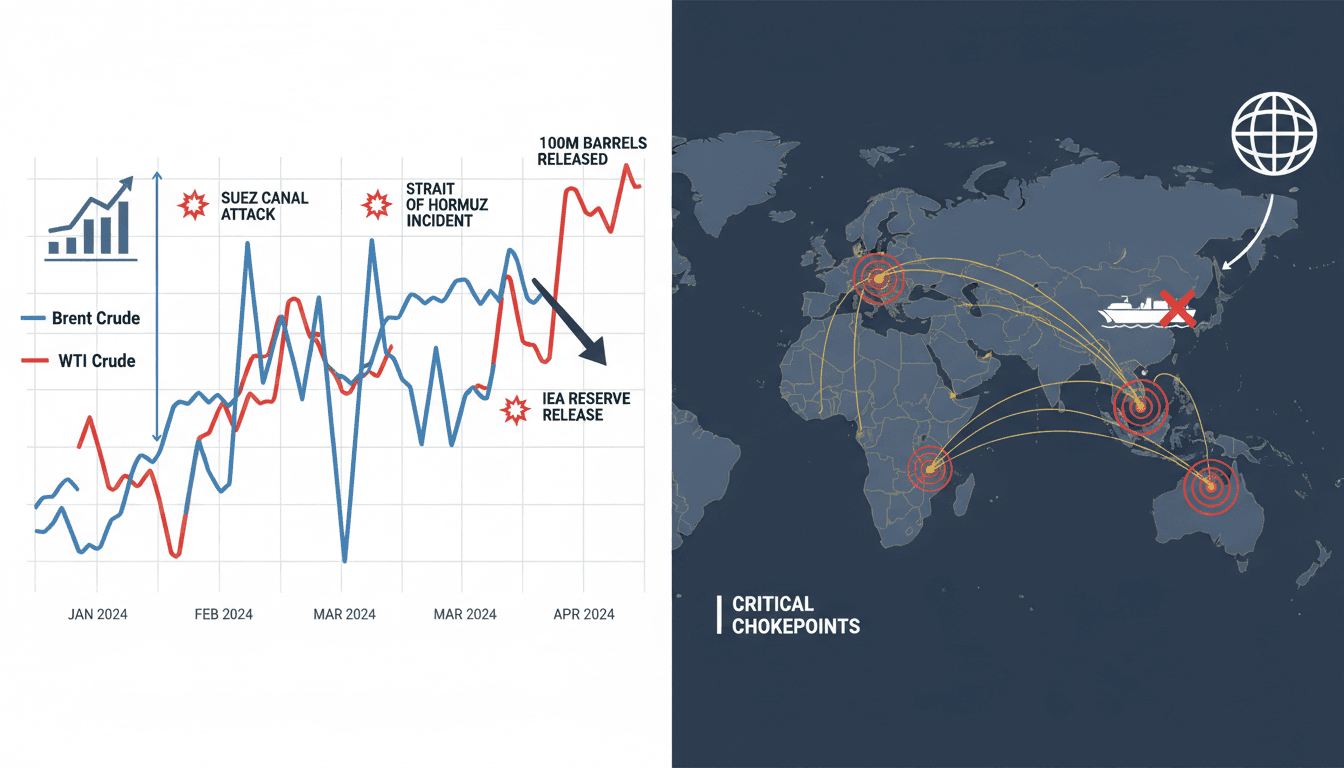
Why it matters
The International Energy Agency's (IEA) decision to release emergency reserves reflects ongoing geopolitical tensions that directly impact global oil prices.
What happened (in 30 seconds)
- Brent crude fluctuated on October 15, 2026, settling near $106 per barrel as IEA members pledged to release emergency reserves.
- West Texas Intermediate (WTI) futures rose sharply by 3% due to significant U.S. crude inventory draws.
- Geopolitical risks escalated with confirmed attacks on shipping in the Strait of Hormuz, raising concerns over oil supply stability.
The context you actually need
- Brent prices have surged over 70% year-to-date, driven by persistent Middle East conflicts and shipping attacks.
- The IEA's reserve release aims to alleviate diesel shortages and stabilize prices amid ongoing supply uncertainties.
- U.S. sanctions discussions regarding shadow fleet vessels add complexity to the oil supply landscape, influencing market dynamics.
What's really happening
On October 15, Brent crude oil prices settled at $105.92 per barrel, reflecting a complex interplay of geopolitical tensions and market responses. The IEA's commitment to releasing 100 million barrels from emergency reserves, including over 20 million barrels of diesel, is a strategic move to counteract the heightened supply risks stemming from the Strait of Hormuz and the Black Sea. This decision comes in the wake of confirmed attacks on shipping routes, which have raised alarms about the security of oil flows from the Persian Gulf.
The divergence in market behavior is notable; while Brent prices remained relatively stable, West Texas Intermediate (WTI) futures surged to $97.97 per barrel, buoyed by an unexpected 8.6 million barrel draw in U.S. crude inventories reported by the Energy Information Administration (EIA). This draw significantly exceeded analyst expectations of just 288,000 barrels, indicating stronger domestic demand and tighter supply conditions in the U.S. market.
The geopolitical backdrop is critical. U.S. Central Command confirmed that an Iranian projectile struck a container ship in the Strait of Hormuz, intensifying fears of disruptions in one of the world's most vital oil transit chokepoints. The ongoing discussions about easing sanctions on certain shadow fleet tankers could provide some relief to the market, but they also introduce uncertainty regarding compliance and enforcement.
As the IEA's stock releases aim to ease diesel tightness into 2027, the market remains on edge. U.S. officials have indicated that any adjustments to sanctions will not benefit sanctioned producers, which complicates the landscape further. Regional authorities, including those in Singapore, have condemned the attacks in Hormuz as violations of international law, highlighting the broader implications of these tensions on global trade and security.
Who feels it first (and how)
- Consumers in the UAE: Higher refined fuel costs could lead to increased transportation and logistics expenses.
- Businesses reliant on oil: Companies in sectors like transportation and manufacturing may face rising operational costs.
- Investors in energy markets: Fluctuating oil prices create volatility, impacting investment strategies and returns.
What to watch next
- IEA reserve releases: Monitor the effectiveness of these releases in stabilizing diesel prices and overall market conditions.
- Geopolitical developments: Keep an eye on tensions in the Strait of Hormuz and any potential escalations that could disrupt oil supply.
- U.S. inventory reports: Future EIA reports on crude inventories will provide insights into domestic supply-demand dynamics and price movements.
Brent crude prices are influenced by geopolitical tensions and supply chain disruptions.
Continued volatility in oil prices as geopolitical risks persist and market responses evolve.
The long-term impact of IEA reserve releases on global oil supply and pricing stability.
Frequently Asked Questions
- Why it matters?
- The International Energy Agency's (IEA) decision to release emergency reserves reflects ongoing geopolitical tensions that directly impact global oil prices.
- What happened (in 30 seconds)?
- Brent crude fluctuated on October 15, 2026, settling near $106 per barrel as IEA members pledged to release emergency reserves. West Texas Intermediate (WTI) futures rose sharply by 3% due to significant U.S. crude inventory draws. Geopolitical risks escalated with confirmed attacks on shipping in the Strait of Hormuz, raising concerns over oil supply stability.
- What's really happening?
- On October 15, Brent crude oil prices settled at $105.92 per barrel, reflecting a complex interplay of geopolitical tensions and market responses. The IEA's commitment to releasing 100 million barrels from emergency reserves, including over 20 million barrels of diesel, is a strategic move to counteract the heightened supply risks stemming from the Strait of Hormuz and the Black Sea. This decision comes in the wake of confirmed attacks on shipping routes, which have raised alarms about the secur
- Who feels it first (and how)?
- Consumers in the UAE: Higher refined fuel costs could lead to increased transportation and logistics expenses. Businesses reliant on oil: Companies in sectors like transportation and manufacturing may face rising operational costs. Investors in energy markets: Fluctuating oil prices create volatility, impacting investment strategies and returns.
- What to watch next?
- IEA reserve releases: Monitor the effectiveness of these releases in stabilizing diesel prices and overall market conditions. Geopolitical developments: Keep an eye on tensions in the Strait of Hormuz and any potential escalations that could disrupt oil supply. U.S. inventory reports: Future EIA reports on crude inventories will provide insights into domestic supply-demand dynamics and price movements.
Global markets, investing, and macroeconomics from a premier financial newsroom.
"Bloomberg is respected for in-depth financial reporting and data-driven analysis."
— A47 Editor
Latest Oil Market News and Analysis for Oct. 15
Oil prices have shown resilience amid renewed attacks in the Middle East, which have raised concerns about supply stability that had only recently recovered to near pre-Iran War levels. This situation is exacerbated by geopolitical tensions involving...
Oil, metals, and agriculture: supply/demand headlines, OPEC chatter, inventories, and price action.
"Solid tape for energy and metals traders tracking macro and micro catalysts."
— A47 Editor
Oil prices settle mixed, focus on US-Russia diesel deal, Saudi Yemen attacks
Oil prices have settled in a mixed manner as attention shifts to a recent diesel supply deal between the U.S. and Russia, alongside ongoing attacks in Yemen impacting Saudi Arabia. The deal, announced by former President Trump, involves Russia supply...
Global political, business, and cultural coverage from WSJ international desks.
"The Wall Street Journal offers extensive international reporting with a reputation for financial insight and a center-right editorial stance."
— A47 Editor
Oil Ends Mixed as Traders Weigh Middle East Risks, Russian Diesel Supplies
Oil prices ended mixed as traders assessed ongoing supply risks in the Middle East against the potential increase in Russian diesel exports. The market remains sensitive to geopolitical tensions, particularly in regions like Iran and the Strait of Ho...