
IEA Projects Global Diesel Supply Constraints Through Mid-2027 Due to Middle East and Russian Disruptions
Why it matters
The ongoing diesel supply squeeze threatens to elevate inflation and slow economic growth globally.
What happened (in 30 seconds)
- IEA Report: On October 14, 2026, the International Energy Agency projected that global diesel supplies will remain constrained through mid-2027 due to conflicts in the Middle East and Russia.
- Price Surge: Diesel prices exceeded $200 per barrel in key markets, with a significant year-on-year drop in global diesel exports of 700,000 barrels per day in September 2026.
- G7 Response: In response to the crisis, G7 nations agreed to accelerate emergency stock releases, prioritizing diesel to mitigate the impact.
The context you actually need
- Conflict Impact: The escalation of conflicts in the Middle East and Ukraine has severely disrupted refinery operations and product exports, exacerbating existing vulnerabilities in global refining capacity.
- Demand Resilience: Despite a broader decline in oil demand, diesel demand remains relatively inelastic, supported by government measures, leading to sustained high prices.
- Future Projections: The IEA forecasts a modest surplus only in Q1 2027, with significant inventory rebuilding unlikely before the second half of 2027.
What's really happening
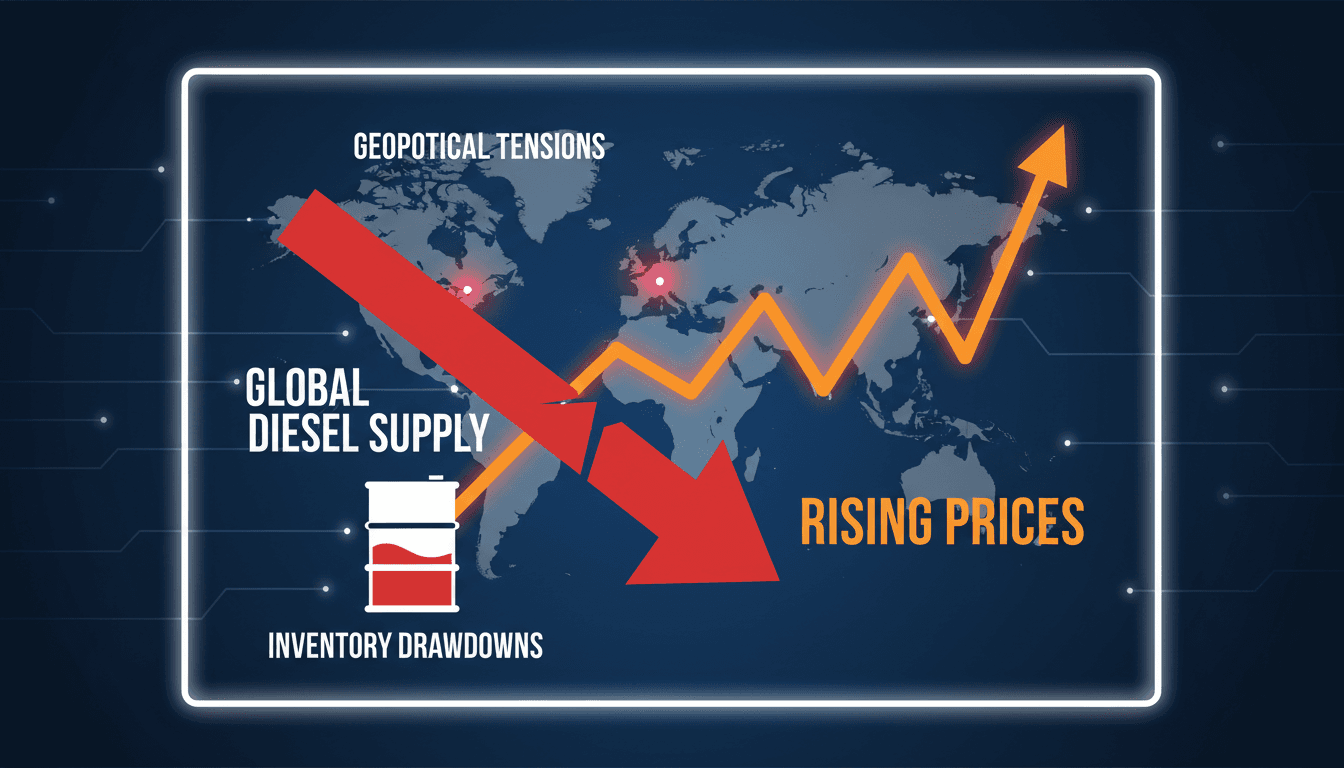
The IEA's October report highlights a critical moment in the global diesel market, driven by a combination of geopolitical tensions and structural vulnerabilities in refining capacity. The ongoing conflicts in the Middle East, particularly the Iran war, have severely damaged energy infrastructure and restricted vital shipping routes like the Strait of Hormuz. Concurrently, Ukrainian drone strikes on Russian refineries have further curtailed product exports, leading to a combined year-on-year decline of 1.3 million barrels per day in diesel and gasoil exports from these regions.
As a result, global diesel supplies are projected to remain tight well into 2027. The IEA reported a significant drop in refinery throughput, which, while expected to recover seasonally, is insufficient to offset the accumulated deficits. This has led to record wholesale prices, with diesel exceeding $200 per barrel in Singapore and approaching $220 in Europe and the United States. The refining margins have surged to nearly $95 per barrel, reflecting the high costs of production amid constrained supply.
Despite a contraction in overall oil demand—forecasted to decline by 2.6 million barrels per day in 2026—diesel demand has shown resilience. This is largely due to government support measures aimed at stabilizing the economy and ensuring essential services continue to operate. The IEA's projections indicate that while there may be a modest surplus in early 2027, meaningful inventory rebuilding is unlikely until the latter half of the year.
The G7 nations have responded to this crisis by prioritizing diesel in their emergency stock releases, reflecting the urgency of the situation. However, even with these measures, markets have only seen partial price easing from September peaks, with prices remaining nearly double pre-conflict levels. The pressure on refinery profitability in Europe and Asia is compounded by higher tanker freight costs, further complicating the landscape for diesel supply and pricing.
Who feels it first (and how)
- Transportation Sector: Companies relying on diesel for logistics and freight will face increased operational costs.
- Consumers: Individuals dependent on diesel-powered vehicles may experience higher fuel prices, impacting daily commuting expenses.
- Importers: Businesses importing goods that require diesel for transportation will see elevated costs, potentially leading to higher retail prices.
- Regional Economies: Areas heavily reliant on diesel for economic activities, such as agriculture and construction, will feel the pinch of rising costs and supply constraints.
What to watch next
- Price Trends: Monitor diesel price fluctuations in key markets to gauge the impact on transportation and logistics costs.
- G7 Actions: Watch for further announcements from G7 nations regarding strategic petroleum stock releases and their effectiveness in stabilizing the market.
- Geopolitical Developments: Stay informed on developments in the Middle East and Ukraine, as any escalation or resolution could significantly impact global diesel supply dynamics.
Diesel supply constraints will persist into mid-2027 due to geopolitical tensions.
Prices will remain elevated, impacting transportation and logistics costs globally.
The effectiveness of G7 stock releases in mitigating supply shortages and stabilizing prices.
Frequently Asked Questions
- Why it matters?
- The ongoing diesel supply squeeze threatens to elevate inflation and slow economic growth globally.
- What happened (in 30 seconds)?
- IEA Report: On October 14, 2026, the International Energy Agency projected that global diesel supplies will remain constrained through mid-2027 due to conflicts in the Middle East and Russia. Price Surge: Diesel prices exceeded $200 per barrel in key markets, with a significant year-on-year drop in global diesel exports of 700,000 barrels per day in September 2026. G7 Response: In response to the crisis, G7 nations agreed to accelerate emergency stock releases, prioritizing diesel to mitigate th
- What's really happening?
- The IEA's October report highlights a critical moment in the global diesel market, driven by a combination of geopolitical tensions and structural vulnerabilities in refining capacity. The ongoing conflicts in the Middle East, particularly the Iran war, have severely damaged energy infrastructure and restricted vital shipping routes like the Strait of Hormuz. Concurrently, Ukrainian drone strikes on Russian refineries have further curtailed product exports, leading to a combined year-on-year dec
- Who feels it first (and how)?
- Transportation Sector: Companies relying on diesel for logistics and freight will face increased operational costs. Consumers: Individuals dependent on diesel-powered vehicles may experience higher fuel prices, impacting daily commuting expenses. Importers: Businesses importing goods that require diesel for transportation will see elevated costs, potentially leading to higher retail prices. Regional Economies: Areas heavily reliant on diesel for economic activities, such as agriculture and const
- What to watch next?
- Price Trends: Monitor diesel price fluctuations in key markets to gauge the impact on transportation and logistics costs. G7 Actions: Watch for further announcements from G7 nations regarding strategic petroleum stock releases and their effectiveness in stabilizing the market. Geopolitical Developments: Stay informed on developments in the Middle East and Ukraine, as any escalation or resolution could significantly impact global diesel supply dynamics.
English-language digital publication covering business, politics, technology, and current affairs.
"The Arabian Post mixes original and syndicated-style coverage with a broad regional and global business-news orientation."
— A47 Editor
IEA projects prolonged diesel supply squeeze through 2027
The International Energy Agency (IEA) has projected that global diesel supplies will remain severely constrained through 2027, primarily due to ongoing conflicts disrupting refinery operations and fuel exports from the Middle East and Russia. This si...
Global business headlines with AI angles.
"General business outlet that frequently covers AI."
— A47 Editor
Global Conflicts Show No Signs of Abating. The IEA Now Expects Diesel Supplies to Remain Tight in 2027.
Global diesel supplies are projected to remain tight through 2027, as the International Energy Agency (IEA) reported a significant drop in global exports by 700,000 barrels per day compared to the previous year. This decline is attributed to ongoing ...
Sports reporting with a focus on Saudi and regional competitions.
"Okaz sports coverage is broad and audience-friendly, with strong attention to Saudi teams and leagues."
— A47 Editor
وكالة الطاقة الدولية: أزمة الديزل مستمرة حتى النصف الثاني من 2027
The International Energy Agency (IEA) has warned that global diesel market pressures will persist until the second half of 2027, driven by energy supply disruptions, demand outpacing supply, and the impacts of the war in Iran on international shippin...
U.S. business news, corporate developments, and economy.
"The Wall Street Journal is respected for deep financial and economic reporting with a center-right editorial perspective."
— A47 Editor
Global Diesel Squeeze to Drag Into 2027, IEA Says
The International Energy Agency (IEA) has reported a significant decline in global diesel supply, dropping by 1.7 million barrels per day in the third quarter of 2026, primarily due to disruptions caused by the ongoing conflict in Iran, which has aff...