
IEA Governing Board to Exceed 400 Million Barrel Emergency Oil Stock Release Target
Why it matters
This action aims to alleviate tightness in global oil markets, which directly impacts energy prices and economic stability.
What happened (in 30 seconds)
- IEA Governing Board announced an acceleration of oil stock releases, exceeding the initial 400 million barrel target.
- 330 million barrels have already been released, with an additional 100 million barrels, including over 20 million of diesel, set for timely release.
- Global oil prices reacted, with Brent crude rising to $106.20 per barrel following the announcement.
The context you actually need
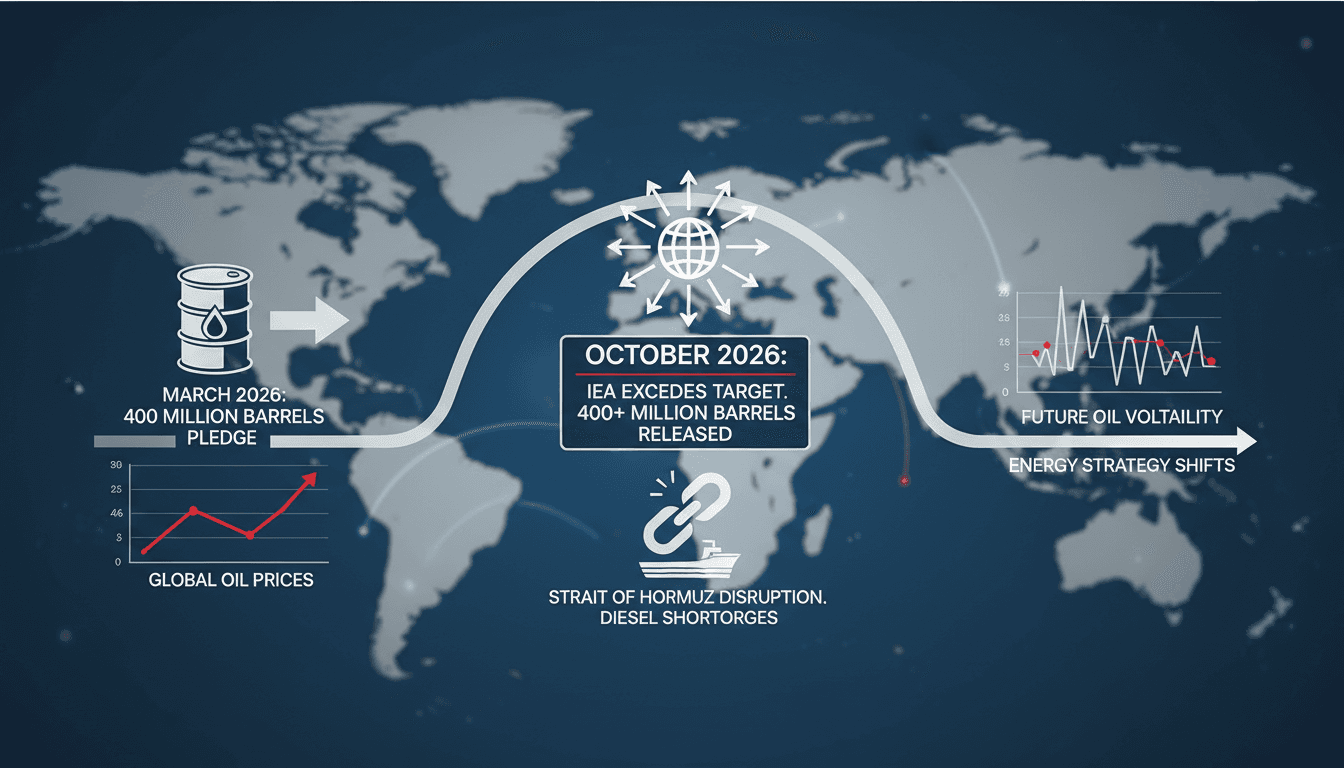
- The March 2026 pledge was a response to the Strait of Hormuz crisis, which has caused ongoing volatility in energy prices.
- The G7's recent agreement to accelerate diesel releases and the U.S. lifting sanctions on Russia are also influencing global supply dynamics.
- IEA member nations are encouraged to increase production and refining capacity to stabilize the market further.
What's really happening
The International Energy Agency (IEA) has taken decisive action to address the ongoing tightness in global oil markets, particularly concerning diesel supplies. The coordinated release of emergency oil stocks, initially set at 400 million barrels in March 2026, is now projected to exceed that target as member nations respond to persistent supply disruptions caused by geopolitical tensions, notably the ongoing conflict involving Iran. This situation has significantly impacted energy flows through the Strait of Hormuz, a critical chokepoint for global oil transport.
As of October 15, 2026, the IEA reported that 330 million barrels have already been released, with plans to expedite the remaining 100 million barrels. This includes over 20 million barrels of diesel, which is particularly crucial given the current market conditions. The IEA's actions are not merely reactive; they are part of a broader strategy to stabilize energy prices that have remained elevated and volatile for months. The board's encouragement for member nations with production capabilities to ramp up output reflects an understanding that immediate supply increases are necessary to mitigate price spikes.
The implications of this coordinated release extend beyond immediate price adjustments. By stabilizing diesel and crude oil prices, the IEA aims to provide relief to various sectors reliant on these fuels, from transportation to manufacturing. The recent rise in Brent crude prices to $106.20 per barrel indicates that while the release may help, market reactions can still lead to fluctuations. The IEA's strategy also aligns with recent G7 discussions, which emphasize the need for collective action in addressing energy supply challenges.
Moreover, the lifting of U.S. sanctions on Russia has opened additional avenues for diesel supply, further complicating the landscape. This multifaceted approach underscores the interconnectedness of global energy markets and the necessity for coordinated responses to crises. As the IEA continues to monitor market conditions, the focus will remain on ensuring that supply meets demand, particularly in light of the ongoing geopolitical tensions that threaten to disrupt energy flows.
Who feels it first (and how)
- Consumers: Higher fuel prices may impact transportation and household energy costs.
- Businesses: Industries reliant on diesel, such as logistics and manufacturing, will face increased operational costs.
- Governments: National energy policies may shift in response to fluctuating prices and supply concerns.
What to watch next
- Global oil price trends: Monitor Brent and WTI prices for indications of market stability or volatility.
- IEA member responses: Watch for announcements from member nations regarding production increases and stock releases.
- Geopolitical developments: Keep an eye on the Iran conflict and other geopolitical factors that could further disrupt energy supplies.
The IEA has committed to exceeding the 400 million barrel release target.
Continued fluctuations in global oil prices as markets react to supply changes.
The long-term impact of geopolitical tensions on global energy stability.
Frequently Asked Questions
- Why it matters?
- This action aims to alleviate tightness in global oil markets, which directly impacts energy prices and economic stability.
- What happened (in 30 seconds)?
- IEA Governing Board announced an acceleration of oil stock releases, exceeding the initial 400 million barrel target. 330 million barrels have already been released, with an additional 100 million barrels, including over 20 million of diesel, set for timely release. Global oil prices reacted, with Brent crude rising to $106.20 per barrel following the announcement.
- What's really happening?
- The International Energy Agency (IEA) has taken decisive action to address the ongoing tightness in global oil markets, particularly concerning diesel supplies. The coordinated release of emergency oil stocks, initially set at 400 million barrels in March 2026, is now projected to exceed that target as member nations respond to persistent supply disruptions caused by geopolitical tensions, notably the ongoing conflict involving Iran. This situation has significantly impacted energy flows through
- Who feels it first (and how)?
- Consumers: Higher fuel prices may impact transportation and household energy costs. Businesses: Industries reliant on diesel, such as logistics and manufacturing, will face increased operational costs. Governments: National energy policies may shift in response to fluctuating prices and supply concerns.
- What to watch next?
- Global oil price trends: Monitor Brent and WTI prices for indications of market stability or volatility. IEA member responses: Watch for announcements from member nations regarding production increases and stock releases. Geopolitical developments: Keep an eye on the Iran conflict and other geopolitical factors that could further disrupt energy supplies.
UAE-based English-language newspaper covering regional politics, economics, and global affairs.
"The National reflects Emirati policy perspectives while maintaining international editorial standards."
— A47 Editor
IEA oil supply pledge to exceed target as it boosts release of remaining stocks
The International Energy Agency (IEA) has announced that it will exceed its oil supply pledge by increasing the release of remaining stocks, a move aimed at addressing ongoing supply challenges. This decision comes amid geopolitical tensions that hav...
Key macro releases (CPI, jobs, PMIs), surprise indexes, and market implications.
"Great for data-print awareness and instant read-through to rates and risk assets."
— A47 Editor
IEA to speed up oil stocks release including over 20 million barrels of diesel
The International Energy Agency (IEA) has announced plans to expedite the release of over 20 million barrels of diesel from strategic oil stocks. This decision comes amid rising concerns over diesel supply shortages and escalating prices, which have ...
Global markets, investing, and macroeconomics from a premier financial newsroom.
"Bloomberg is respected for in-depth financial reporting and data-driven analysis."
— A47 Editor
IEA Agrees to Release of Outstanding 100 Million Oil Barrels
The International Energy Agency (IEA) has announced that its member countries have agreed to release an outstanding 100 million barrels of oil, a move stemming from an intervention in March aimed at stabilizing soaring fuel prices. This decision refl...