
Brent Crude Oil Surges to $110 per Barrel Amid Geopolitical Tensions
Why it matters
The spike in oil prices signals escalating geopolitical tensions that threaten global supply chains and consumer costs.
What happened (in 30 seconds)
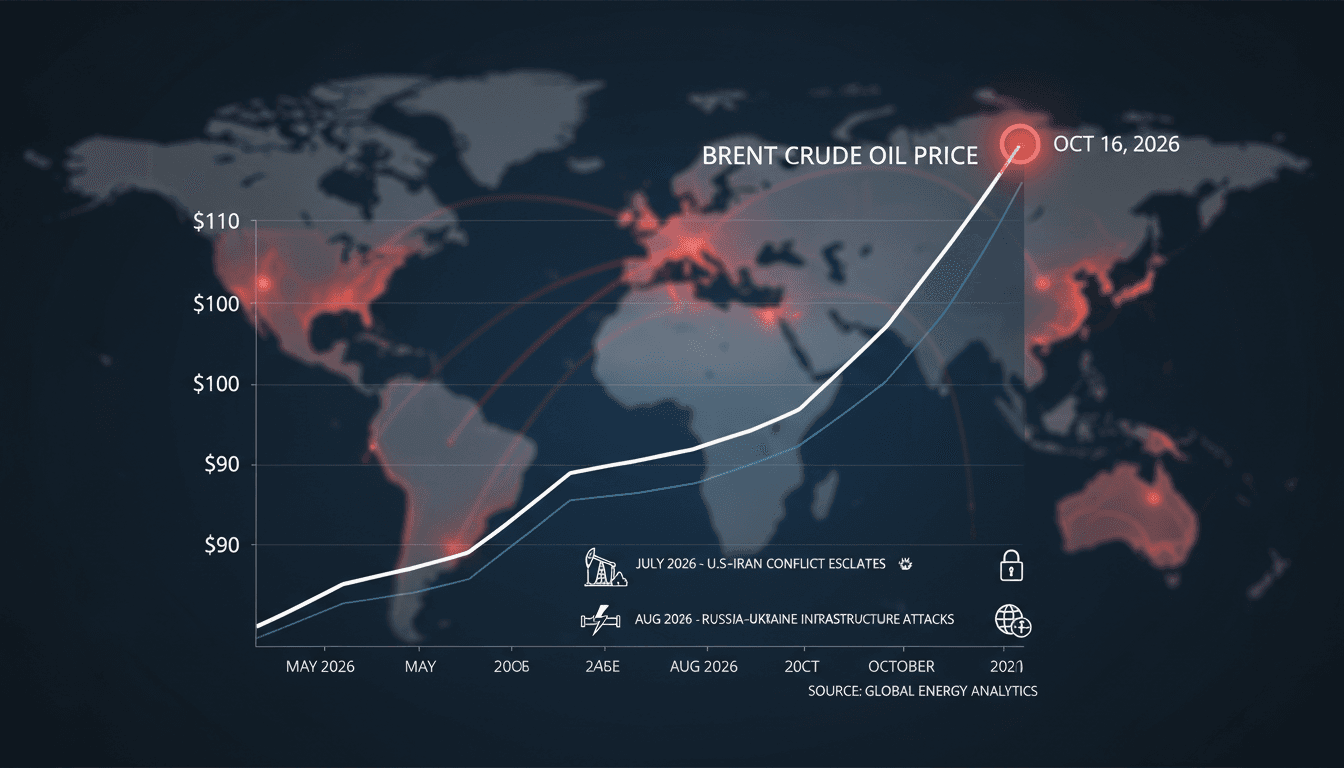
- Brent crude oil reached $110 per barrel on October 16, 2026, marking the highest price since May.
- Geopolitical tensions in the Middle East and Ukraine have disrupted oil supplies, driving prices upward.
- Gasoline and diesel costs have surged globally, with U.S. prices averaging $4.33 and $6.32 per gallon, respectively.
The context you actually need
- Ongoing conflicts: The U.S.-Iran conflict and Russia-Ukraine war have intensified, leading to significant disruptions in oil supply.
- Market reactions: Oil traders are responding to heightened risks, with futures markets reflecting these concerns through price increases.
- Consumer impact: The rise in oil prices translates directly to higher costs for consumers, affecting everything from transportation to goods pricing.
What's really happening
On October 16, 2026, Brent crude futures surged by 3.7% to settle at $109.86, while West Texas Intermediate (WTI) rose by 3.5% to $101.41. This price increase is primarily driven by escalating geopolitical tensions, particularly the ongoing U.S.-Iran conflict, which has now entered its eighth month. The conflict has seen a series of military operations and retaliatory strikes that have disrupted oil supply routes, particularly in the Strait of Hormuz, a critical chokepoint for global oil shipments.
In addition to the Middle East tensions, the Russia-Ukraine war has intensified, with recent drone strikes on Russian refineries and missile threats impacting energy infrastructure. These developments have raised alarms among oil traders, leading to a spike in futures prices as they anticipate further disruptions. The market's reaction is not just a reflection of current events but also a response to the potential for future supply shortages, which traders are keenly aware of.
The International Energy Agency (IEA) has responded to these rising prices by agreeing to release over 20 million barrels of fuel, while the U.S. Department of Energy has offered up to 17 million barrels from the Strategic Petroleum Reserve. However, Treasury Secretary Scott Bessent has indicated that any relief in prices will depend on the resolution of the Iran conflict, suggesting that the current high prices may persist if tensions continue.
As a result, consumers are already feeling the pinch. In the U.S., gasoline prices have averaged $4.33 per gallon, while diesel has reached $6.32 per gallon. Since March, cumulative extra consumer spending on fuel has been estimated at $135 billion, highlighting the significant economic impact of these rising oil prices. The situation is further complicated by increased shipping insurance premiums and logistics costs, which are likely to affect various sectors, including aviation and import-dependent industries.
Who feels it first (and how)
- Consumers: Higher fuel prices directly impact daily commuting and transportation costs.
- Logistics companies: Increased fuel costs lead to higher operational expenses, affecting shipping rates.
- Aviation sector: Airlines face rising fuel costs, which may lead to increased ticket prices.
- Import-dependent businesses: Companies relying on imported goods will see higher costs passed on to consumers.
What to watch next
- Geopolitical developments: Monitor the U.S.-Iran and Russia-Ukraine conflicts for any signs of escalation or resolution, as these will directly impact oil supply.
- Market responses: Watch for fluctuations in oil futures prices, which can indicate trader sentiment regarding future supply risks.
- Consumer spending trends: Keep an eye on how rising fuel costs affect consumer behavior and spending in other sectors.
Oil prices are currently elevated due to geopolitical tensions.
Continued volatility in oil prices as conflicts evolve and supply risks remain.
The timeline for resolution of the Iran conflict and its impact on global oil supply.
Frequently Asked Questions
- Why it matters?
- The spike in oil prices signals escalating geopolitical tensions that threaten global supply chains and consumer costs.
- What happened (in 30 seconds)?
- Brent crude oil reached $110 per barrel on October 16, 2026, marking the highest price since May. Geopolitical tensions in the Middle East and Ukraine have disrupted oil supplies, driving prices upward. Gasoline and diesel costs have surged globally, with U.S. prices averaging $4.33 and $6.32 per gallon, respectively.
- What's really happening?
- On October 16, 2026, Brent crude futures surged by 3.7% to settle at $109.86, while West Texas Intermediate (WTI) rose by 3.5% to $101.41. This price increase is primarily driven by escalating geopolitical tensions, particularly the ongoing U.S.-Iran conflict, which has now entered its eighth month. The conflict has seen a series of military operations and retaliatory strikes that have disrupted oil supply routes, particularly in the Strait of Hormuz, a critical chokepoint for global oil shipmen
- Who feels it first (and how)?
- Consumers: Higher fuel prices directly impact daily commuting and transportation costs. Logistics companies: Increased fuel costs lead to higher operational expenses, affecting shipping rates. Aviation sector: Airlines face rising fuel costs, which may lead to increased ticket prices. Import-dependent businesses: Companies relying on imported goods will see higher costs passed on to consumers.
- What to watch next?
- Geopolitical developments: Monitor the U.S.-Iran and Russia-Ukraine conflicts for any signs of escalation or resolution, as these will directly impact oil supply. Market responses: Watch for fluctuations in oil futures prices, which can indicate trader sentiment regarding future supply risks. Consumer spending trends: Keep an eye on how rising fuel costs affect consumer behavior and spending in other sectors.
Capitol Hill news, legislation, and policy insight.
"The Hill specializes in U.S. politics and policy, with a focus on Capitol Hill developments and a reputation for insider reporting."
— A47 Editor
Oil reaches $110 per barrel
Oil prices have surged to $110 per barrel, marking the highest level since May, driven by ongoing geopolitical tensions stemming from the U.S.-Iran and Russia-Ukraine conflicts. This escalation reflects the volatile nature of the oil market amid inte...
Global business headlines with AI angles.
"General business outlet that frequently covers AI."
— A47 Editor
Geopolitical Tensions Keep Rising. Oil is Now Hovering Around $110 a Barrel.
Geopolitical tensions have escalated significantly, with Iran intensifying its attacks against tankers in the Strait of Hormuz, while Russia and Ukraine continue to target energy infrastructure. Oil prices have surged to around $110 a barrel as a dir...
Global markets, investing, and macroeconomics from a premier financial newsroom.
"Bloomberg is respected for in-depth financial reporting and data-driven analysis."
— A47 Editor
Brent Oil Taps $110 for First Time Since May as Risks Swirl
Brent oil prices surged to $110 a barrel for the first time since May, driven by diminishing prospects for supply relief and increasing trader speculation on higher prices ahead of the weekend. This rise reflects ongoing volatility in the oil market ...