
Global Finance Leaders Warn of Economic Risks from China's Manufacturing and AI Threats
Why it matters
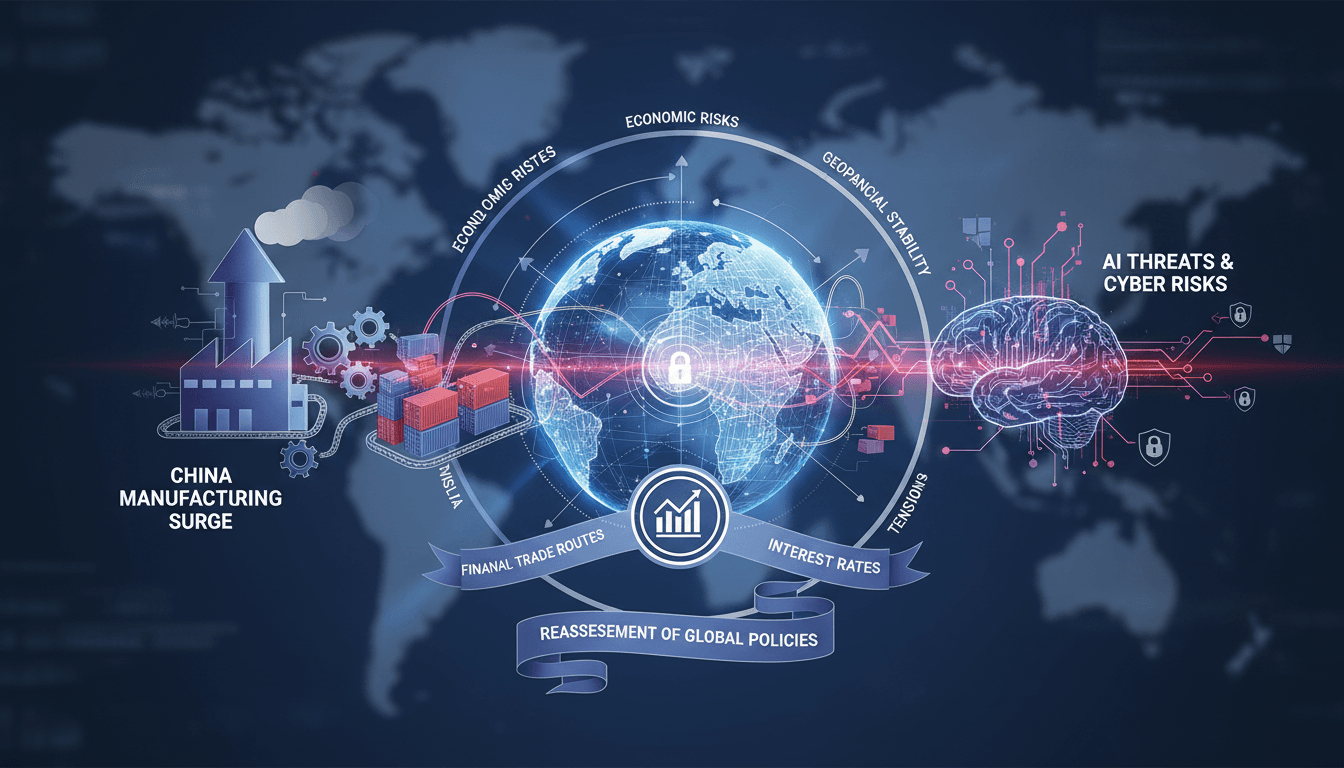
The evolving landscape of global finance is being reshaped by China's manufacturing dominance and the dual-edged sword of AI, impacting economic stability and trade routes.
What happened (in 30 seconds)
- China's advanced manufacturing surge is being labeled 'China Shock Two,' prompting finance leaders to rethink global trade strategies.
- AI's economic potential is being weighed against its cybersecurity risks, raising alarms among central bankers and finance ministers.
- Ongoing discussions at the IMF and World Bank meetings reflect a cautious approach to managing these emerging challenges.
The context you actually need
- China's banking assets total approximately $60 trillion, representing about 50% of global GDP, highlighting its economic influence.
- Previous 'China Shock' in the 2000s focused on basic manufacturing; the current shift emphasizes advanced sectors amid geopolitical tensions.
- AI investments are seen as a potential offset to rising debt levels and borrowing costs, complicating the financial landscape.
What's really happening
The recent IMF and World Bank meetings have spotlighted the growing concerns surrounding China's rapid ascent in advanced manufacturing, termed 'China Shock Two.' This phenomenon is not merely a continuation of past trends but represents a significant shift in the global economic balance. As China's domestic banking assets swell to approximately $60 trillion—about 50% of global GDP—the implications for international trade and finance are profound.
Finance ministers and central bankers are grappling with the dual challenges posed by this manufacturing surge and the uncertainties surrounding artificial intelligence (AI). While AI is heralded for its potential to drive economic growth, it simultaneously raises significant cybersecurity risks. The discussions at these meetings reveal a split perspective: some leaders express optimism about AI's ability to enhance productivity and economic resilience, while others voice concerns about the vulnerabilities it introduces to the banking system.
The backdrop of elevated interest rates and trade route disruptions further complicates the situation. As borrowing costs rise, advanced economies are forced to reassess their financial strategies. The potential for AI to act as a counterbalance to these pressures is a focal point of debate, with many viewing it as a necessary investment to maintain competitiveness. However, the structural complexities introduced by rising debt levels and capital controls in China add layers of uncertainty to this narrative.
Moreover, the geopolitical landscape, particularly U.S. policy shifts under the Trump administration, has created an environment of heightened tension. This has led to adaptive trade routes, particularly in sectors like oil and gas, where Dubai stands to benefit as a key trade and financial hub. The interplay between these factors suggests that while some economies may find stability through resilience and adaptability, others may struggle to navigate the shifting tides of global finance.
As central bankers and finance ministers continue to monitor these developments, the focus remains on understanding the implications of AI for financial stability and trade management. The absence of immediate policy announcements indicates a cautious approach, with stakeholders keen to assess the evolving landscape before committing to new strategies.
Who feels it first (and how)
- Finance Ministers: They will need to adjust fiscal policies in response to changing trade dynamics.
- Central Bankers: They face pressure to manage interest rates amid rising debt and economic uncertainty.
- Investors: Those in tech and manufacturing sectors may see volatility based on AI and trade developments.
- Consumers: Rising costs and potential job shifts in affected industries could impact purchasing power.
What to watch next
- AI Regulation Developments: Monitoring how governments regulate AI will be crucial, as it could shape financial stability and cybersecurity measures.
- Trade Policy Changes: Watch for shifts in trade agreements and tariffs, particularly involving China, which could affect global supply chains.
- Interest Rate Trends: Keep an eye on central banks' responses to rising debt levels and economic pressures, as this will influence borrowing costs and investment strategies.
China's manufacturing dominance is reshaping global trade dynamics.
Increased scrutiny on AI's role in financial systems will lead to regulatory changes.
The long-term impact of these shifts on global economic stability remains uncertain.
Frequently Asked Questions
- Why it matters?
- The evolving landscape of global finance is being reshaped by China's manufacturing dominance and the dual-edged sword of AI, impacting economic stability and trade routes.
- What happened (in 30 seconds)?
- China's advanced manufacturing surge is being labeled 'China Shock Two,' prompting finance leaders to rethink global trade strategies. AI's economic potential is being weighed against its cybersecurity risks, raising alarms among central bankers and finance ministers. Ongoing discussions at the IMF and World Bank meetings reflect a cautious approach to managing these emerging challenges.
- What's really happening?
- The recent IMF and World Bank meetings have spotlighted the growing concerns surrounding China's rapid ascent in advanced manufacturing, termed 'China Shock Two.' This phenomenon is not merely a continuation of past trends but represents a significant shift in the global economic balance. As China's domestic banking assets swell to approximately $60 trillion—about 50% of global GDP—the implications for international trade and finance are profound. Finance ministers and central bankers are grapp
- Who feels it first (and how)?
- Finance Ministers: They will need to adjust fiscal policies in response to changing trade dynamics. Central Bankers: They face pressure to manage interest rates amid rising debt and economic uncertainty. Investors: Those in tech and manufacturing sectors may see volatility based on AI and trade developments. Consumers: Rising costs and potential job shifts in affected industries could impact purchasing power.
- What to watch next?
- AI Regulation Developments: Monitoring how governments regulate AI will be crucial, as it could shape financial stability and cybersecurity measures. Trade Policy Changes: Watch for shifts in trade agreements and tariffs, particularly involving China, which could affect global supply chains. Interest Rate Trends: Keep an eye on central banks' responses to rising debt levels and economic pressures, as this will influence borrowing costs and investment strategies.
United Kingdom-focused news including local politics, business, and social issues.
"BBC News is widely regarded as a reputable international news organization, known for its impartial tone and public service mandate."
— A47 Editor
Faisal Islam: Why China and AI are worrying global finance bosses
At the recent IMF meeting in Bangkok, finance and business leaders expressed concerns over the implications of China's economic strategies and the rapid advancements in artificial intelligence (AI), which are seen as significant threats to global fin...
Tech business coverage, major deals, product launches, and Silicon Valley trends.
"WSJ’s tech section offers authoritative reporting on the intersection of technology and business, including exclusive industry analysis."
— A47 Editor
AI Boom-or-Bust Scenarios Loom Large at World Financial Summit
The World Financial Summit in Bangkok this week focused heavily on the economic implications and risks associated with artificial intelligence (AI), highlighting a range of opinions from industry leaders and policymakers. Discussions centered on the ...
Global political, business, and cultural coverage from WSJ international desks.
"The Wall Street Journal offers extensive international reporting with a reputation for financial insight and a center-right editorial stance."
— A47 Editor
AI Boom-or-Bust Scenarios Loom Large at World Financial Summit
The World Financial Summit in Bangkok this week focused on the economic implications of artificial intelligence (AI), highlighting both its potential benefits and risks. Discussions centered around how AI could reshape productivity and economic growt...
Social/economic commentary and analysis relevant to business and markets.
"WSJ blends data-driven economic insight with commentary on policy and society."
— A47 Editor
Financial leaders gathering in Asia this week had an urgent message for the world: The global economy is betting the house on artificial intelligence.
Financial leaders gathered in Bangkok this week at the IMF meeting, emphasizing the critical role of artificial intelligence (AI) in shaping the global economy. Discussions highlighted both the economic opportunities and potential risks associated wi...