
Brent Crude Oil Prices Hit $110 per Barrel Amid Geopolitical Tensions
Why it matters
The surge in Brent crude oil prices reflects significant geopolitical tensions that threaten global supply chains and economic stability.
What happened (in 30 seconds)
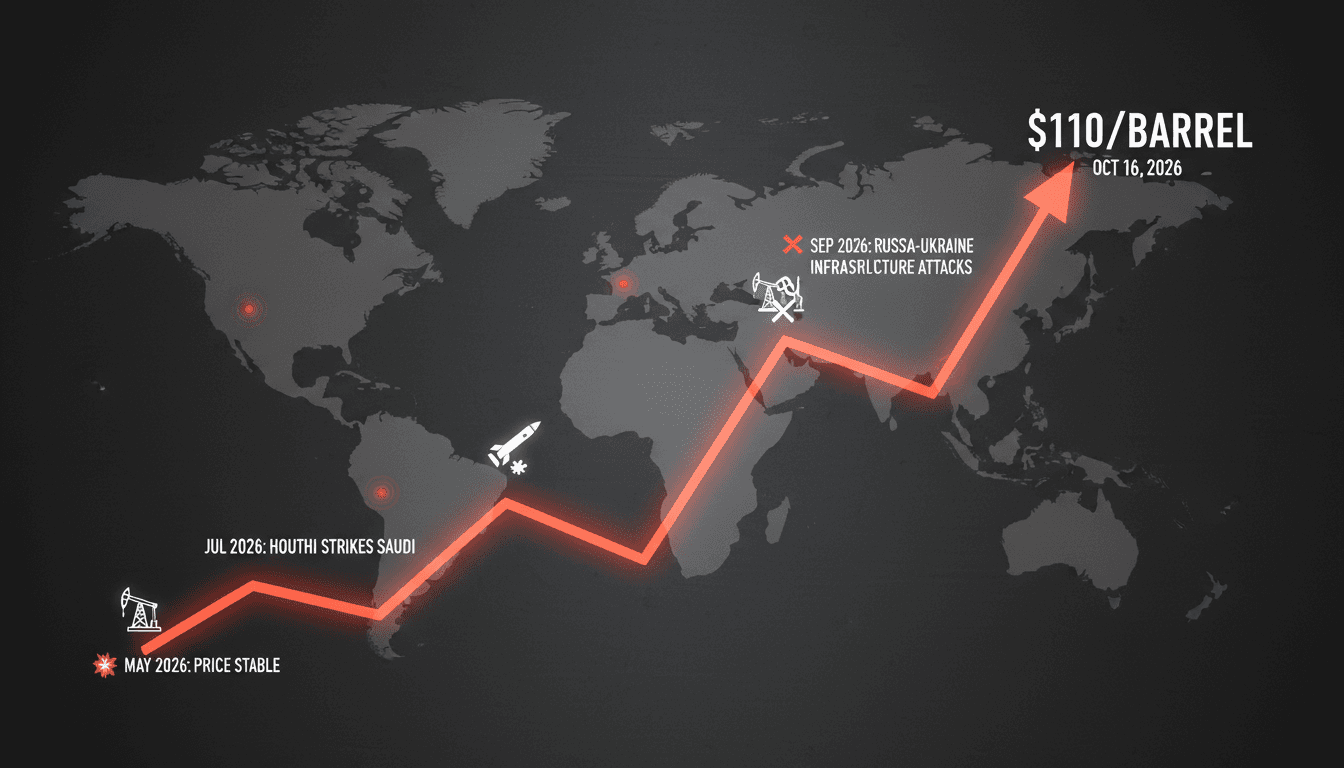
- Brent crude oil prices surged to $110 per barrel on October 16, 2026, the highest level since May.
- Geopolitical tensions in the Middle East and ongoing conflicts in Ukraine have intensified supply risks.
- U.S. lawmakers are responding with measures to restrict Russian diesel imports and release oil from the Strategic Petroleum Reserve.
The context you actually need
- The U.S.-Iran conflict has been ongoing for nearly eight months, contributing to instability in oil markets.
- Houthi rebels have increased attacks on Saudi Arabian infrastructure, raising concerns about supply disruptions.
- The Russia-Ukraine war continues to impact energy infrastructure, with both sides targeting oil facilities.
What's really happening
On October 16, 2026, Brent crude futures rose by 3.7% to settle at $109.86 per barrel, driven by a confluence of geopolitical events. This marked the highest price since May 19, 2026, as the market reacted to rumors of imminent attacks on Saudi oil infrastructure and reports of potential Iranian pre-emptive strikes. Concurrently, Ukrainian forces have been targeting Russian refineries, further complicating the energy landscape.
The International Energy Agency (IEA) has responded to these supply concerns by accelerating the release of emergency oil stocks. The U.S. government has also stepped in, offering up to 17 million barrels from the Strategic Petroleum Reserve (SPR) to stabilize prices. However, legislative efforts to secure additional diesel supplies from Russia have faced significant opposition, complicating the U.S. energy strategy.
The backdrop of these developments is a market already strained by the ongoing U.S.-Iran conflict, which has seen oil prices spike above $120 per barrel earlier in the year before a temporary ceasefire allowed prices to dip below $80. The renewed hostilities, particularly the Houthi strikes on Saudi Arabia, have reignited fears of supply disruptions in a region critical to global oil flows.
As prices rise, consumers are likely to feel the pinch at the pump. Gasoline prices in the U.S. have already climbed to approximately $4.33 per gallon, while diesel prices have surged to $6.32 per gallon. Analysts estimate that Americans are spending $135 billion more on fuel year-over-year, highlighting the direct impact of these geopolitical tensions on everyday life.
The volatility in oil markets is expected to persist, especially with the U.S. midterm elections approaching, as geopolitical risk premiums remain high. The interplay of these factors creates a complex environment for oil traders and consumers alike, with prices likely to remain elevated as long as these conflicts continue.
Who feels it first (and how)
- Consumers: Higher fuel prices lead to increased transportation and energy costs.
- Transport sector: Airlines and shipping companies face rising operational costs, potentially leading to higher ticket prices and shipping fees.
- Energy companies: Oil producers may benefit from higher prices, but operational risks increase with geopolitical instability.
- Governments: Increased fuel prices can lead to inflationary pressures, impacting economic policy decisions.
What to watch next
- Geopolitical developments: Monitor any escalations in the Middle East or Ukraine that could further disrupt oil supplies.
- U.S. legislative actions: Watch for new bills aimed at managing energy imports and domestic production strategies.
- Market reactions: Keep an eye on oil futures and consumer price indices to gauge the broader economic impact of rising oil prices.
Brent crude oil prices have surged to $110 per barrel due to geopolitical tensions.
Continued volatility in oil prices as geopolitical risks persist.
The long-term impact on global economic growth and consumer behavior.
Frequently Asked Questions
- Why it matters?
- The surge in Brent crude oil prices reflects significant geopolitical tensions that threaten global supply chains and economic stability.
- What happened (in 30 seconds)?
- Brent crude oil prices surged to $110 per barrel on October 16, 2026, the highest level since May. Geopolitical tensions in the Middle East and ongoing conflicts in Ukraine have intensified supply risks. U.S. lawmakers are responding with measures to restrict Russian diesel imports and release oil from the Strategic Petroleum Reserve.
- What's really happening?
- On October 16, 2026, Brent crude futures rose by 3.7% to settle at $109.86 per barrel, driven by a confluence of geopolitical events. This marked the highest price since May 19, 2026, as the market reacted to rumors of imminent attacks on Saudi oil infrastructure and reports of potential Iranian pre-emptive strikes. Concurrently, Ukrainian forces have been targeting Russian refineries, further complicating the energy landscape. The International Energy Agency (IEA) has responded to these supply
- Who feels it first (and how)?
- Consumers: Higher fuel prices lead to increased transportation and energy costs. Transport sector: Airlines and shipping companies face rising operational costs, potentially leading to higher ticket prices and shipping fees. Energy companies: Oil producers may benefit from higher prices, but operational risks increase with geopolitical instability. Governments: Increased fuel prices can lead to inflationary pressures, impacting economic policy decisions.
- What to watch next?
- Geopolitical developments: Monitor any escalations in the Middle East or Ukraine that could further disrupt oil supplies. U.S. legislative actions: Watch for new bills aimed at managing energy imports and domestic production strategies. Market reactions: Keep an eye on oil futures and consumer price indices to gauge the broader economic impact of rising oil prices.
Capitol Hill news, legislation, and policy insight.
"The Hill specializes in U.S. politics and policy, with a focus on Capitol Hill developments and a reputation for insider reporting."
— A47 Editor
Oil reaches $110 per barrel
Oil prices have surged to $110 per barrel, marking the highest level since May, driven by ongoing geopolitical tensions stemming from the U.S.-Iran and Russia-Ukraine conflicts. This escalation reflects the volatile nature of the oil market amid inte...
Global business headlines with AI angles.
"General business outlet that frequently covers AI."
— A47 Editor
Geopolitical Tensions Keep Rising. Oil is Now Hovering Around $110 a Barrel.
Geopolitical tensions have escalated significantly, with Iran intensifying its attacks against tankers in the Strait of Hormuz, while Russia and Ukraine continue to target energy infrastructure. Oil prices have surged to around $110 a barrel as a dir...
Global markets, investing, and macroeconomics from a premier financial newsroom.
"Bloomberg is respected for in-depth financial reporting and data-driven analysis."
— A47 Editor
Brent Oil Taps $110 for First Time Since May as Risks Swirl
Brent oil prices surged to $110 a barrel for the first time since May, driven by diminishing prospects for supply relief and increasing trader speculation on higher prices ahead of the weekend. This rise reflects ongoing volatility in the oil market ...