
Oil Prices Rise Amid Middle East Conflicts and Russian Supply Disruptions
Why it matters
Elevated oil prices can lead to increased inflation and higher costs for consumers and businesses worldwide.
What happened (in 30 seconds)
- Crude futures surged on October 16, 2026, with WTI settling at $101.41 per barrel, a 3.5% increase.
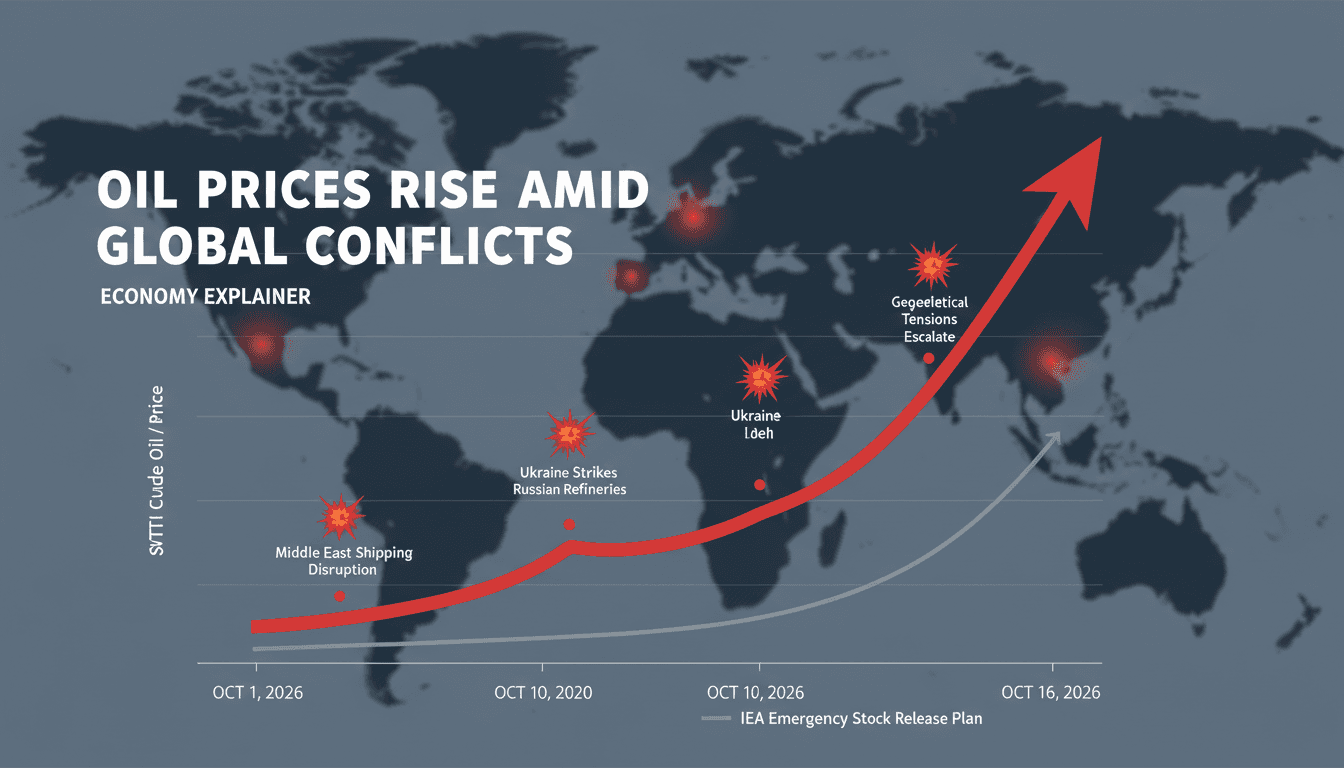
- Geopolitical tensions in the Middle East and renewed Ukrainian strikes on Russian refineries fueled market volatility.
- IEA's emergency stock releases failed to suppress prices, indicating persistent supply concerns.
The context you actually need
- Ongoing conflicts in the Middle East, particularly involving Iran and shipping disruptions in the Strait of Hormuz, are heightening supply risks.
- The Russia-Ukraine war continues to impact energy infrastructure, with Ukraine targeting Russian refineries, further straining supply chains.
- IEA's coordinated releases of over 300 million barrels since March 2026 have not alleviated market fears, as low global inventories persist.
What's really happening
On October 16, 2026, crude oil prices experienced a significant uptick, driven by a combination of geopolitical tensions and supply chain disruptions. The front-month West Texas Intermediate (WTI) crude settled at $101.41 per barrel, marking a 3.5% increase and the highest close in a month. Brent crude also saw a notable rise, closing at $109.86, its highest since May 19.
The surge in prices can be attributed to ongoing conflicts in the Middle East, particularly the heightened risks associated with shipping security through the Strait of Hormuz. Iranian actions against shipping routes have raised alarms among traders, leading to increased buying activity despite the International Energy Agency's (IEA) announcement to accelerate the release of emergency crude and diesel stocks.
Additionally, the situation in Ukraine remains volatile, with renewed military strikes targeting Russian energy infrastructure, including key refineries like the Ryazan facility. This has compounded existing supply concerns, as the market grapples with the implications of a potential escalation in the conflict. Analysts have noted that the IEA's efforts to release approximately 100 million barrels of crude and diesel have had limited immediate impact on prices, as the market remains focused on the uncertainties surrounding energy transportation security and infrastructure risks.
The overall sentiment in the market is one of sustained bullishness, with traders factoring in a risk premium due to the ongoing geopolitical tensions. The combination of these factors has created a complex environment where prices are likely to remain elevated, particularly if no de-escalation occurs in the Middle East or Ukraine.
Who feels it first (and how)
- Consumers: Higher fuel prices will directly impact transportation and heating costs.
- Businesses: Companies reliant on oil for logistics and production will face increased operational costs.
- Investors: Those in energy stocks may see volatility and potential gains, while others may suffer from inflationary pressures.
- Governments: Increased fuel prices can lead to public discontent and pressure on policymakers to address inflation.
What to watch next
- Geopolitical developments: Monitor any changes in the Middle East or Ukraine that could impact supply chains and prices.
- IEA stock releases: Future announcements regarding emergency stock releases may influence market sentiment and price stability.
- Global inventory levels: Keep an eye on crude oil inventory reports, as low levels could sustain upward pressure on prices.
Oil prices are currently elevated due to geopolitical tensions and supply concerns.
Prices will remain volatile, influenced by ongoing conflicts and market sentiment.
The long-term impact of IEA stock releases on price stabilization remains uncertain.
Frequently Asked Questions
- Why it matters?
- Elevated oil prices can lead to increased inflation and higher costs for consumers and businesses worldwide.
- What happened (in 30 seconds)?
- Crude futures surged on October 16, 2026, with WTI settling at $101.41 per barrel, a 3.5% increase. Geopolitical tensions in the Middle East and renewed Ukrainian strikes on Russian refineries fueled market volatility. IEA's emergency stock releases failed to suppress prices, indicating persistent supply concerns.
- What's really happening?
- On October 16, 2026, crude oil prices experienced a significant uptick, driven by a combination of geopolitical tensions and supply chain disruptions. The front-month West Texas Intermediate (WTI) crude settled at $101.41 per barrel, marking a 3.5% increase and the highest close in a month. Brent crude also saw a notable rise, closing at $109.86, its highest since May 19. The surge in prices can be attributed to ongoing conflicts in the Middle East, particularly the heightened risks associated
- Who feels it first (and how)?
- Consumers: Higher fuel prices will directly impact transportation and heating costs. Businesses: Companies reliant on oil for logistics and production will face increased operational costs. Investors: Those in energy stocks may see volatility and potential gains, while others may suffer from inflationary pressures. Governments: Increased fuel prices can lead to public discontent and pressure on policymakers to address inflation.
- What to watch next?
- Geopolitical developments: Monitor any changes in the Middle East or Ukraine that could impact supply chains and prices. IEA stock releases: Future announcements regarding emergency stock releases may influence market sentiment and price stability. Global inventory levels: Keep an eye on crude oil inventory reports, as low levels could sustain upward pressure on prices.
Markets desk coverage, trading insights, and investor updates.
"WSJ’s markets reporting provides in-depth analysis and context for investors."
— A47 Editor
Crude Futures Rise on Persistent Supply Jitters
Crude oil futures have risen as the market reacts to ongoing supply concerns stemming from geopolitical tensions in the Middle East and Ukraine's renewed attacks on Russian refineries. This uptick in prices reflects a shift from earlier market lethar...
Oil, metals, and agriculture: supply/demand headlines, OPEC chatter, inventories, and price action.
"Solid tape for energy and metals traders tracking macro and micro catalysts."
— A47 Editor
Oil touches $110 a barrel for first time since May on Middle East, Russia supply fears
Oil prices have surged to $110 a barrel for the first time since May, driven by concerns over supply disruptions linked to geopolitical tensions in the Middle East and Russia. This increase reflects ongoing market volatility as traders react to these...
Global markets, investing, and macroeconomics from a premier financial newsroom.
"Bloomberg is respected for in-depth financial reporting and data-driven analysis."
— A47 Editor
Latest Oil Market News and Analysis for Oct. 16
Oil prices are poised for a second consecutive weekly increase as escalating supply risks in the Middle East, driven by ongoing attacks, overshadow the impact of a recent emergency reserves release. This situation reflects heightened market volatilit...