
French 10-Year Bond Yields Surpass US Treasuries Amid Fiscal Crisis and Protests
If you're an investor or a business leader, rising French bond yields could signal increased borrowing costs and market volatility.
Why it matters
This shift in bond yields reflects deeper fiscal instability in France, which could influence global investment strategies.
What happened (in 30 seconds)
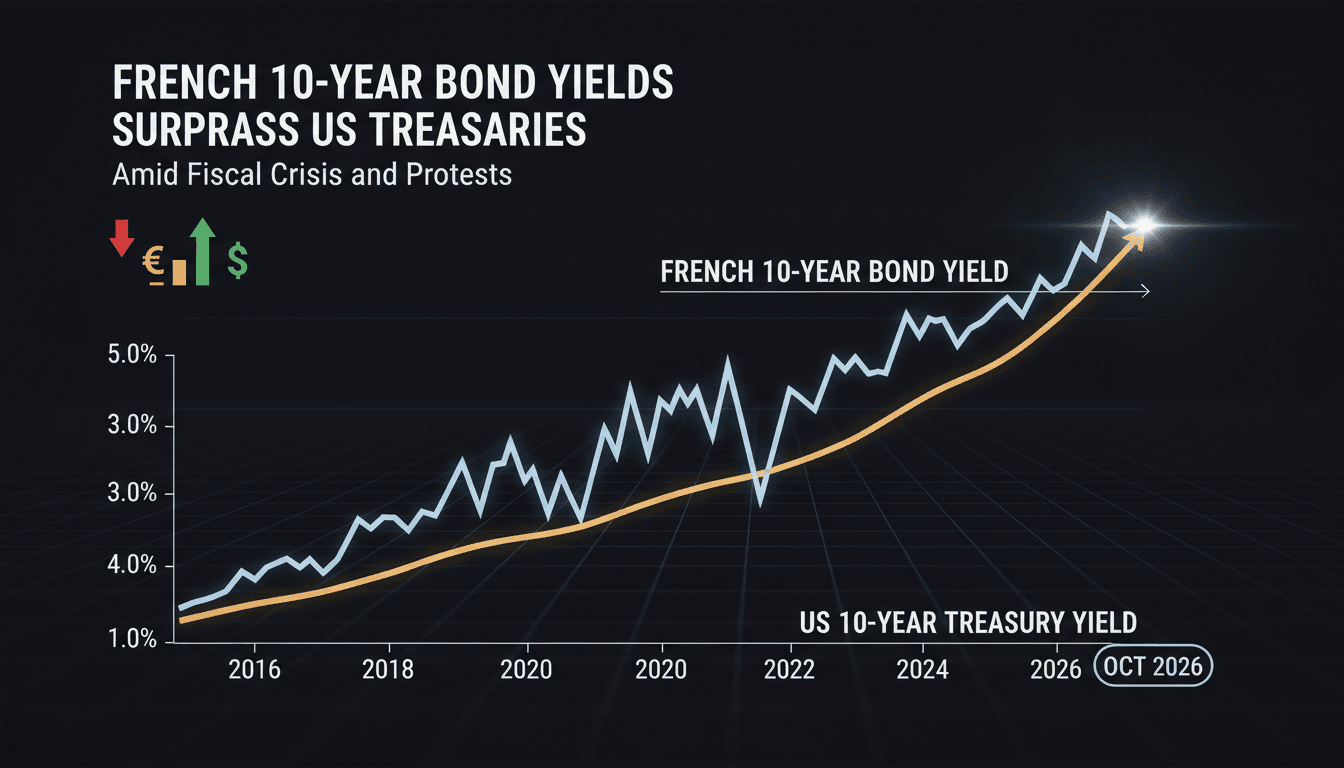
- French 10-year bond yields exceeded US Treasury yields for the first time since 2013, reaching 5.089%.
- Political gridlock over the 2027 budget and civil unrest have heightened investor concerns about France's fiscal health.
- Market volatility is expected to spill over into other eurozone countries, affecting broader financial stability.
The context you actually need
- France's public debt has exceeded 115% of GDP, with deficits above the EU's 3% threshold, raising alarms among investors.
- Recent protests over education funding and living costs escalated into violence, leading to nearly 2,400 arrests and further destabilizing the political landscape.
- The Iran conflict has exacerbated inflationary pressures, complicating recovery efforts and increasing borrowing costs for already indebted nations.
What's really happening
The recent surge in French 10-year bond yields, which crossed the 5% threshold for the first time since 2002, is a clear indicator of the growing fiscal challenges facing the French government. As of October 22, 2026, the yield on French OAT bonds reached 5.089%, surpassing the US equivalent of around 5.08%. This shift is not merely a statistical anomaly; it reflects a confluence of political, economic, and social factors that have created a perfect storm for French sovereign debt.
The backdrop to this situation is a prolonged period of political instability in France, marked by snap elections and repeated government crises between 2024 and 2025. The current government, led by President Emmanuel Macron, is grappling with a parliamentary deadlock over the 2027 budget, which has left investors uncertain about fiscal policy direction. The 5.1% GDP deficit projected for 2025 raises red flags, especially when coupled with a public debt that stands at 115.6% of GDP. These figures are significantly above the EU's stability criteria, which stipulates that member states should maintain deficits below 3% of GDP.
Adding to the complexity is the ongoing civil unrest, which has seen peaceful protests over education funding morph into violent clashes in major cities like Paris, Bordeaux, Nice, and Marseille. The weekend of October 21-22 alone saw nearly 2,400 arrests, further eroding investor confidence. Analysts from Deutsche Bank and ING have noted that the widening spread between French OATs and German Bunds is the highest it has been in almost 15 years, indicating a growing risk premium for French debt.
The implications of this situation extend beyond France. The European Central Bank (ECB) is likely to adopt a more restrictive stance in its upcoming policy meetings, which could have ripple effects across the eurozone. Investors are already exhibiting caution, leading to continued selling pressure on French debt and potential contagion to other high-debt economies like Italy and Spain. The broader global bond market is also experiencing volatility, with analysts warning of spillover effects that could impact other nations facing similar fiscal challenges.
Who feels it first (and how)
- Investors in French bonds: Facing increased risk premiums and potential losses.
- European Central Bank officials: Tasked with navigating the implications of rising yields on monetary policy.
- French citizens: Experiencing the direct impact of civil unrest and potential austerity measures.
- Businesses in France: Likely to face higher borrowing costs, affecting investment and growth.
What to watch next
- Budget negotiations: Watch for developments in the French National Assembly that could either stabilize or further destabilize the fiscal situation.
- ECB policy decisions: The central bank's stance on interest rates will be crucial in shaping market reactions and investor sentiment.
- Global bond market trends: Monitor how rising yields in France influence other high-debt economies and overall market volatility.
French 10-year bond yields have surpassed US Treasury yields for the first time since 2013.
Continued market volatility and increased borrowing costs for France and potentially other eurozone countries.
The long-term impact of civil unrest on French fiscal policy and investor confidence.
Frequently Asked Questions
- Why it matters?
- This shift in bond yields reflects deeper fiscal instability in France, which could influence global investment strategies.
- What happened (in 30 seconds)?
- French 10-year bond yields exceeded US Treasury yields for the first time since 2013, reaching 5.089%. Political gridlock over the 2027 budget and civil unrest have heightened investor concerns about France's fiscal health. Market volatility is expected to spill over into other eurozone countries, affecting broader financial stability.
- What's really happening?
- The recent surge in French 10-year bond yields, which crossed the 5% threshold for the first time since 2002, is a clear indicator of the growing fiscal challenges facing the French government. As of October 22, 2026, the yield on French OAT bonds reached 5.089%, surpassing the US equivalent of around 5.08%. This shift is not merely a statistical anomaly; it reflects a confluence of political, economic, and social factors that have created a perfect storm for French sovereign debt. The backdrop
- Who feels it first (and how)?
- Investors in French bonds: Facing increased risk premiums and potential losses. European Central Bank officials: Tasked with navigating the implications of rising yields on monetary policy. French citizens: Experiencing the direct impact of civil unrest and potential austerity measures. Businesses in France: Likely to face higher borrowing costs, affecting investment and growth.
- What to watch next?
- Budget negotiations: Watch for developments in the French National Assembly that could either stabilize or further destabilize the fiscal situation. ECB policy decisions: The central bank's stance on interest rates will be crucial in shaping market reactions and investor sentiment. Global bond market trends: Monitor how rising yields in France influence other high-debt economies and overall market volatility.
UK and international business news, economics, and corporate coverage.
"The Guardian’s business section covers finance and markets with a progressive editorial tone."
— A47 Editor
French borrowing costs overtake US amid budget turmoil
France's bond market is experiencing significant turmoil as borrowing costs have surged, overtaking those of the United States, amid ongoing public protests and political instability. The difference between French and German 10-year borrowing costs h...
Global business, markets, and technology policy/industry coverage.
"France 24 provides balanced international coverage with a European perspective."
— A47 Editor
French bond yields hit 24-year high after unrest
French bond yields have surged past 5%, reaching their highest level in 24 years, following violent protests and unrest that resulted in significant damage and thousands of arrests across the country. This turmoil has raised concerns about France's f...
24/7 international news from a French perspective in multiple languages.
"France 24 is viewed as a globally focused outlet with balanced coverage and a European perspective."
— A47 Editor
French bond yields hit 24-year high after unrest
French bond yields have surged past 5%, marking their highest level since 2002, following a weekend of widespread protests and unrest. This spike indicates a growing lack of confidence among investors regarding France's financial stability as the gov...
UK and international business news, economics, and corporate coverage.
"The Guardian’s business section covers finance and markets with a progressive editorial tone."
— A47 Editor
French borrowing costs hit 24-year high as civil unrest and budget fears spook markets
France's borrowing costs have surged above 5% for the first time in 24 years, driven by political instability and the government's failure to pass a delayed budget amid ongoing civil unrest. The yield on 10-year government bonds reflects growing inve...
News and current affairs from across Europe.
"The Guardian is known for its progressive editorial stance and in-depth analysis."
— A47 Editor
French borrowing costs hit 24-year high as civil unrest and budget fears spook markets
France's borrowing costs have surged above 5% for the first time in 24 years, driven by political instability and the government's failure to pass a delayed budget amid ongoing civil unrest. The yield on 10-year government bonds reflects growing inve...