
Brent Crude Hits Five-Month High Amid Houthi Attacks on Saudi Energy Sites
Why it matters
The surge in Brent crude prices signals heightened geopolitical risks that can disrupt global energy markets.
What happened (in 30 seconds)
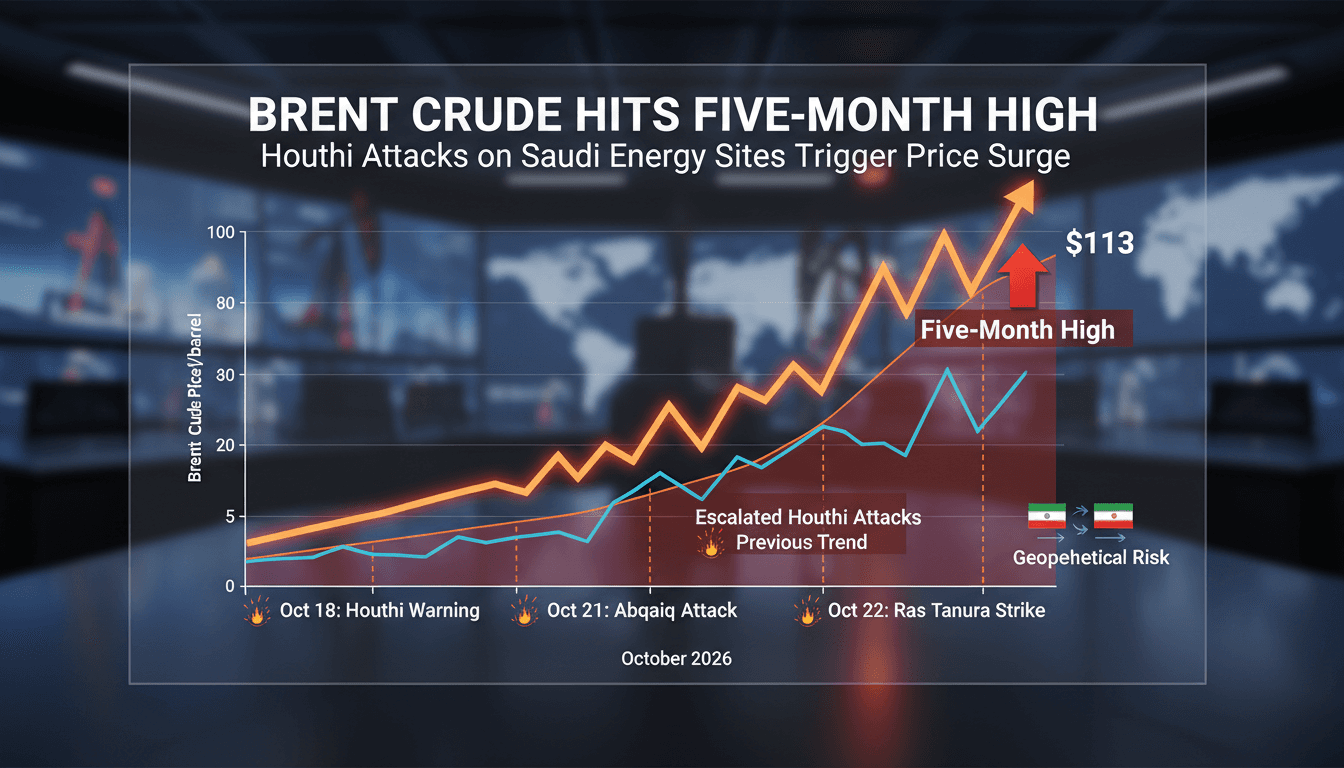
- Brent crude oil futures rose over 4% to exceed $113 per barrel, the highest since early May 2026.
- Houthi forces intensified attacks on Saudi energy infrastructure, raising fears of supply disruptions.
- U.S. security alerts and potential military actions against Iran added to market volatility.
The context you actually need
- Ongoing conflict: The Yemen civil war has seen Iran-aligned Houthi forces targeting Saudi Arabia, escalating tensions in the region.
- Strategic importance: Saudi Arabia is a key player in global oil supply, and disruptions can have far-reaching effects on prices.
- Market response: Oil markets are incorporating a geopolitical risk premium, reflecting uncertainty and potential supply chain issues.
What's really happening
On October 21-22, 2026, Brent crude oil futures surged to $113.14 per barrel, marking a significant increase driven by geopolitical tensions in the Middle East. The catalyst for this spike was a series of attacks by Houthi forces on Saudi Arabian energy infrastructure, including strikes on a Saudi Aramco facility in Yanbu and threats against airports. These developments heightened fears of supply disruptions, as Saudi Arabia is a critical player in the global oil market.
The Houthi attacks are part of a broader conflict stemming from the Yemen civil war, where Iran-aligned forces are engaged in a protracted struggle against a Saudi-led coalition. Recent escalations have included Houthi advances toward strategic chokepoints like the Bab el-Mandeb Strait, which threatens shipping routes in the Red Sea. This situation is compounded by Iranian actions in the Strait of Hormuz, a vital passage for global oil shipments.
In response to the attacks, Saudi Aramco evacuated its Dhahran headquarters, and the U.S. Embassy in Riyadh issued security alerts for potential attacks. Concurrently, reports indicated that the U.S. and Israel were planning military actions against Iranian infrastructure following the November midterms, further escalating tensions. The combination of these factors has led to a sustained geopolitical risk premium in oil markets, with analysts noting that while production volumes remain stable for now, the targeting of facilities creates ongoing uncertainty.
The market's reaction has been swift, with Brent crude futures settling near five-month highs. This volatility is expected to continue as the situation unfolds, particularly with the U.S. midterm elections approaching and the potential for further military actions in the region. The broader implications for global energy prices are significant, as any disruption in Saudi oil supply can lead to increased costs for consumers and businesses worldwide.
Who feels it first (and how)
- Consumers: Higher fuel prices will directly impact household budgets, especially for those reliant on transportation.
- Businesses: Companies dependent on oil and gas will face increased operational costs, potentially leading to higher prices for goods and services.
- Logistics sectors: Shipping and transportation industries will experience rising costs, affecting supply chains and delivery times.
- Expatriates in Dubai: Increased energy costs may dampen economic sentiment among expatriates, impacting spending and investment in the region.
What to watch next
- U.S. military actions: Any escalation in U.S.-Israeli military operations against Iran could further disrupt oil supply and prices.
- Houthi activity: Continued attacks or threats from Houthi forces may lead to sustained volatility in oil markets.
- Global economic indicators: Watch for shifts in consumer spending and business investment as rising oil prices impact economic sentiment.
Brent crude prices have surged to $113.14 per barrel due to geopolitical tensions.
Continued volatility in oil markets as regional tensions persist.
The long-term impact on global oil supply and prices if military actions escalate.
Frequently Asked Questions
- Why it matters?
- The surge in Brent crude prices signals heightened geopolitical risks that can disrupt global energy markets.
- What happened (in 30 seconds)?
- Brent crude oil futures rose over 4% to exceed $113 per barrel, the highest since early May 2026. Houthi forces intensified attacks on Saudi energy infrastructure, raising fears of supply disruptions. U.S. security alerts and potential military actions against Iran added to market volatility.
- What's really happening?
- On October 21-22, 2026, Brent crude oil futures surged to $113.14 per barrel, marking a significant increase driven by geopolitical tensions in the Middle East. The catalyst for this spike was a series of attacks by Houthi forces on Saudi Arabian energy infrastructure, including strikes on a Saudi Aramco facility in Yanbu and threats against airports. These developments heightened fears of supply disruptions, as Saudi Arabia is a critical player in the global oil market. The Houthi attacks are
- Who feels it first (and how)?
- Consumers: Higher fuel prices will directly impact household budgets, especially for those reliant on transportation. Businesses: Companies dependent on oil and gas will face increased operational costs, potentially leading to higher prices for goods and services. Logistics sectors: Shipping and transportation industries will experience rising costs, affecting supply chains and delivery times. Expatriates in Dubai: Increased energy costs may dampen economic sentiment among expatriates, impacting
- What to watch next?
- U.S. military actions: Any escalation in U.S.-Israeli military operations against Iran could further disrupt oil supply and prices. Houthi activity: Continued attacks or threats from Houthi forces may lead to sustained volatility in oil markets. Global economic indicators: Watch for shifts in consumer spending and business investment as rising oil prices impact economic sentiment.
Oil, metals, and agriculture: supply/demand headlines, OPEC chatter, inventories, and price action.
"Solid tape for energy and metals traders tracking macro and micro catalysts."
— A47 Editor
Brent hits over 5-month high as Houthi attacks boost supply disruption fears
Brent crude oil prices have surged to a five-month high, driven by fears of supply disruptions following recent Houthi attacks. This increase reflects heightened market anxiety regarding the stability of oil supplies in the Middle East, particularly ...
Markets desk coverage, trading insights, and investor updates.
"WSJ’s markets reporting provides in-depth analysis and context for investors."
— A47 Editor
Oil Futures Rise on Middle East Conflict Concerns
Oil futures have risen significantly, with Brent crude reaching a five-month high, driven by ongoing attacks from Yemen's Houthis on Saudi targets and concerns over potential U.S. military actions against Iran. This surge reflects heightened market a...
Markets desk coverage, trading insights, and investor updates.
"WSJ’s markets reporting provides in-depth analysis and context for investors."
— A47 Editor
Oil Rises, Asian Stocks Fall as Middle East Tensions Mount
Oil prices have risen as tensions in the Middle East escalate, impacting Asian stock markets which have seen a decline. This shift in market dynamics follows a period of relative calm after concerns over artificial intelligence subsided, redirecting ...