
Japan's Core CPI Surges to 2.1 Percent, Exceeding BOJ's Inflation Target
Why it matters
Japan's inflation exceeding the Bank of Japan's target signals potential shifts in global monetary policy and capital flows.
What happened (in 30 seconds)
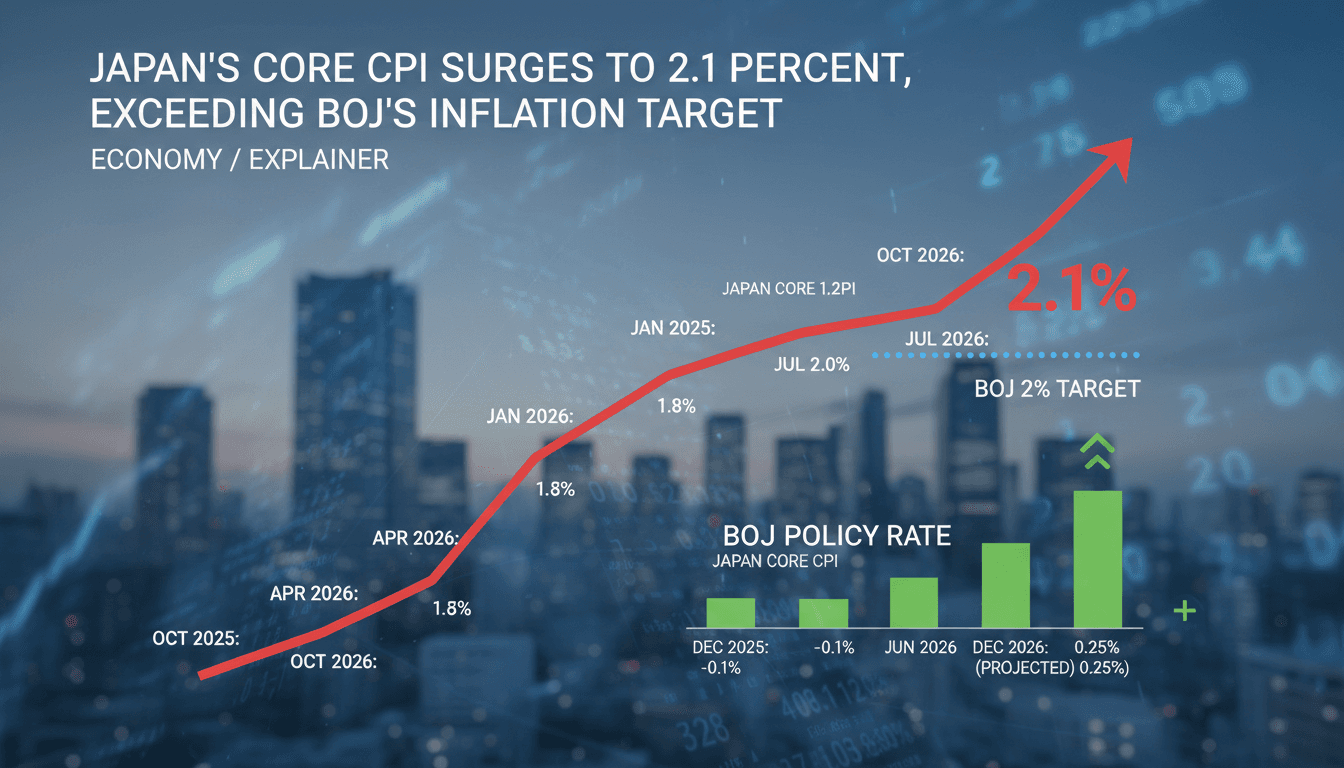
- Core CPI rose: Japan's core consumer price index increased by 2.1% year-on-year in September 2026, surpassing the BOJ's 2% target for the first time in nine months.
- Support for rate hikes: This inflation data strengthens expectations for a further interest rate increase by the Bank of Japan in December 2026.
- Broader price pressures: The rise reflects increasing costs across goods and services, driven by energy prices and a weak yen.
The context you actually need
- Policy normalization: The Bank of Japan raised its policy rate to 1.25% in September 2026, marking a significant shift after decades of low rates.
- Inflation drivers: Factors contributing to inflation include a weak yen, rising energy costs due to geopolitical tensions, and strong global demand linked to AI investments.
- Market expectations: Analysts predict that the BOJ may revise its inflation forecasts upward, indicating a tightening monetary policy environment.
What's really happening
On October 22, 2026, Japan's Ministry of Internal Affairs and Communications released data showing a core CPI increase of 2.1% year-on-year for September, up from 1.7% in August. This marks the first time inflation has exceeded the Bank of Japan's (BOJ) 2% target in nine months, reinforcing the central bank's trajectory toward tightening monetary policy. The core-core measure, which excludes both fresh food and energy, rose to 2.4%, indicating that inflationary pressures are broadening across various sectors.
The rise in inflation can be attributed to several interconnected factors. A weak yen has increased import costs, particularly for energy, which has been further exacerbated by geopolitical tensions in the Middle East. These tensions have led to elevated energy prices, which, combined with strong global demand—especially in sectors like artificial intelligence—have created a perfect storm for rising prices. Governor Kazuo Ueda of the BOJ has previously expressed concerns about inflation potentially overshooting the target, and this latest data aligns with those worries.
Market analysts have interpreted the inflation data as a strong signal for the BOJ to consider a rate hike in December, with expectations for the policy rate to rise to 1.50%. The upcoming BOJ meeting on October 29-30 is anticipated to maintain current rates, but the inflation data will likely prompt discussions about future adjustments. The broader implications of this inflationary trend extend beyond Japan, as higher interest rates could influence global capital flows, particularly in emerging markets and energy sectors.
As Japan navigates this inflationary landscape, the potential for increased rates may also impact investor sentiment and currency movements globally. Investors in Dubai and other financial hubs should be aware of how these shifts could affect oil price volatility and overall market dynamics.
Who feels it first (and how)
- Investors: Those holding Japanese assets may see changes in returns due to interest rate adjustments.
- Importers: Businesses relying on imports may face higher costs, impacting pricing strategies.
- Consumers: Japanese consumers could experience increased prices for goods and services, affecting purchasing power.
- Global traders: Traders in Dubai and other markets may need to adjust strategies based on shifts in Japanese monetary policy and currency fluctuations.
What to watch next
- BOJ's October meeting: Watch for any signals regarding rate hikes or inflation forecasts, as these will shape market expectations.
- Global energy prices: Monitor how geopolitical developments affect energy costs, which are a significant driver of inflation in Japan.
- Yen movements: Keep an eye on the yen's performance against other currencies, as fluctuations could impact international trade dynamics.
Japan's core CPI has risen to 2.1%, exceeding the BOJ's target.
The BOJ will consider a rate hike in December 2026 based on current inflation trends.
The long-term impact of these inflationary pressures on global markets remains uncertain.
Frequently Asked Questions
- Why it matters?
- Japan's inflation exceeding the Bank of Japan's target signals potential shifts in global monetary policy and capital flows.
- What happened (in 30 seconds)?
- Core CPI rose: Japan's core consumer price index increased by 2.1% year-on-year in September 2026, surpassing the BOJ's 2% target for the first time in nine months. Support for rate hikes: This inflation data strengthens expectations for a further interest rate increase by the Bank of Japan in December 2026. Broader price pressures: The rise reflects increasing costs across goods and services, driven by energy prices and a weak yen.
- What's really happening?
- On October 22, 2026, Japan's Ministry of Internal Affairs and Communications released data showing a core CPI increase of 2.1% year-on-year for September, up from 1.7% in August. This marks the first time inflation has exceeded the Bank of Japan's (BOJ) 2% target in nine months, reinforcing the central bank's trajectory toward tightening monetary policy. The core-core measure, which excludes both fresh food and energy, rose to 2.4%, indicating that inflationary pressures are broadening across va
- Who feels it first (and how)?
- Investors: Those holding Japanese assets may see changes in returns due to interest rate adjustments. Importers: Businesses relying on imports may face higher costs, impacting pricing strategies. Consumers: Japanese consumers could experience increased prices for goods and services, affecting purchasing power. Global traders: Traders in Dubai and other markets may need to adjust strategies based on shifts in Japanese monetary policy and currency fluctuations.
- What to watch next?
- BOJ's October meeting: Watch for any signals regarding rate hikes or inflation forecasts, as these will shape market expectations. Global energy prices: Monitor how geopolitical developments affect energy costs, which are a significant driver of inflation in Japan. Yen movements: Keep an eye on the yen's performance against other currencies, as fluctuations could impact international trade dynamics.
Social/economic commentary and analysis relevant to business and markets.
"WSJ blends data-driven economic insight with commentary on policy and society."
— A47 Editor
Japan Consumer Inflation Uptick Offers Tailwind for BOJ Rate Hike
Japan's consumer prices, excluding fresh food, rose by 2.1% in September compared to the previous year, indicating a significant uptick in inflation that may prompt the Bank of Japan (BOJ) to adjust its monetary policy in December.
Macro commentary, policy analysis, growth/inflation themes, and global outlooks.
"Contextual macro coverage that complements day-to-day market headlines."
— A47 Editor
Japan core inflation exceeds BOJ target, cements near-term rate hike chance
Japan's core inflation has exceeded the Bank of Japan's (BOJ) target for the first time this year, indicating a significant shift in economic conditions. This development is underscored by rising energy costs and a weakening yen, which have contribut...
Key macro releases (CPI, jobs, PMIs), surprise indexes, and market implications.
"Great for data-print awareness and instant read-through to rates and risk assets."
— A47 Editor
Japan CPI inflation hits 9-mth high in Sept, crosses BOJ target
Japan's Consumer Price Index (CPI) inflation reached a nine-month high in September 2026, surpassing the Bank of Japan's (BOJ) target for the first time this year. This increase in inflation is attributed to ongoing economic pressures, including risi...
Global markets, investing, and macroeconomics from a premier financial newsroom.
"Bloomberg is respected for in-depth financial reporting and data-driven analysis."
— A47 Editor
Japan Inflation Rises Above BOJ Target, Backing Rate Hikes
Japan's key price gauge has risen above the Bank of Japan's (BOJ) target level for the first time this year, indicating a significant shift in inflation trends and supporting expectations for an interest rate hike in December.
Social/economic commentary and analysis relevant to business and markets.
"WSJ blends data-driven economic insight with commentary on policy and society."
— A47 Editor
U.K. Inflation Jumps Again, Strengthening Case for Rate Hike
U.K. inflation has risen further above the Bank of England's target, prompting speculation about a potential interest rate hike during the upcoming policy meeting. This increase in inflation is attributed to various factors, including the ongoing con...