
Federal Reserve Holds Benchmark Rate at 3.75%-4.00% as Inflation Pressures Persist
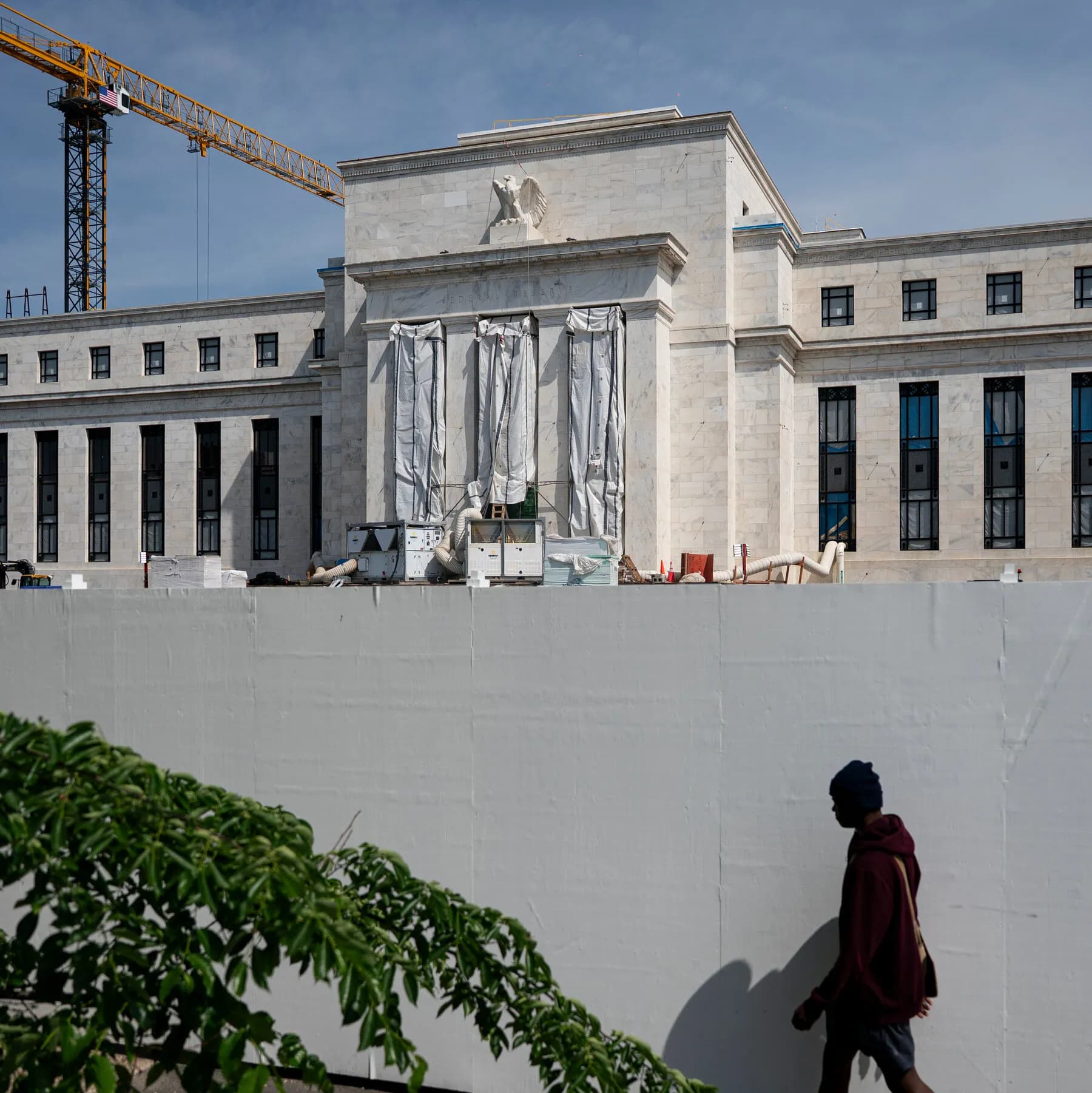
Persistent borrowing costs in the United States maintain elevated capital expenses globally while reinforcing local liquidity across dollar-pegged markets.
Why it matters
Holding benchmark borrowing costs between 3.75% and 4.00% balances rising commodity-driven inflation against domestic political cycles, anchoring currency valuations and debt yields worldwide.
What happened (in 30 seconds)
- The policy hold: The Federal Open Market Committee convened on October 27–28, 2026, entering its policy announcement with markets assigning a 90% probability to maintaining the federal funds target range at 3.75% to 4.00%.
- The prior adjustment: This meeting immediately follows a 25-basis-point interest rate increase executed in September 2026, which represented the central bank's first rate hike since 2023.
- The macro backdrop: Policymakers paused further action as year-over-year inflation reached 3.7% in September, driven by energy market disruptions connected to the Iran conflict, alongside steady domestic consumer spending and low unemployment.
The context you actually need
- Inflationary resurgence: Headline inflation picked up speed heading into autumn 2026, driven by spikes in global oil and natural gas prices linked directly to regional conflict involving Iran.
- Election timing: The policy gathering in Washington concludes less than one week before the U.S. midterm elections on November 3, bringing external political pressure from President Donald Trump for lower borrowing rates into direct contact with central bank independence.
- Missing projections: Because this October session does not include an updated Summary of Economic Projections or a refreshed "dot plot," market participants must extract policy signals solely from the formal statement and Chairman Kevin Warsh’s post-meeting press conference.
What's really happening
The Federal Reserve's choice to hold rates steady at 3.75% to 4.00% is an operational pause rather than a sustained pivot toward monetary easing. After resuming rate increases in September 2026 with a 25-basis-point move, the Federal Open Market Committee (FOMC) faces contradictory structural forces: persistent energy-led consumer inflation on one side, and capital market sensitivity ahead of the November 3 midterm elections on the other.
Chairman Kevin Warsh is operating within an incentive structure designed to test the transmission delay of the September hike before introducing additional friction into corporate borrowing. September data confirmed that headline inflation expanded to 3.7% year-over-year. This acceleration was not primarily caused by runaway wage growth, but rather by supply shocks across crude oil and natural gas linked to the ongoing Iran conflict. Because interest rate adjustments cannot drill new wells or protect shipping lanes, applying rapid, sequential rate hikes risks depressing baseline economic output without immediately neutralizing imported energy costs.
Domestically, the U.S. labor market remains technically tight, with weekly unemployment claims holding at levels consistent with full employment. Consumer spending has shown sustained resilience, preventing an outright contraction but simultaneously establishing a floor under service-sector pricing. In this environment, the FOMC’s primary objective is to manage corporate and investor expectations. Financial markets priced in less than a 10% probability of an October rate increase through the CME FedWatch tool, effectively endorsing a wait-and-see strategy until the December meeting, when formal economic projections are scheduled for release.
For international hubs operating with fixed exchange rates, such as Dubai and the broader United Arab Emirates, this monetary posture exerts a dual effect. Because the UAE dirham is pegged directly to the U.S. dollar, local interbank rates track the federal funds rate closely. Elevated benchmark yields in Washington keep commercial debt, mortgage financing, and corporate credit lines priced higher for longer across the Gulf.
Concurrently, the very mechanism driving the Fed's hawkish bias—geopolitical friction elevating oil and gas prices—bolsters regional hydrocarbon revenues, strengthening public balance sheets and domestic liquidity pools. The trade-off is structural: while state-backed balance sheets expand via commodity export receipts, private enterprises face prolonged import costs and elevated debt servicing expenses tied to a fundamentally strong U.S. dollar.
Who feels it first (and how)
- Corporate treasurers in dollar-pegged markets: Chief financial officers across Dubai and the GCC face sustained borrowing costs on variable-rate credit facilities, forcing tighter cash-flow management despite strong headline regional growth.
- Commercial real estate developers: Project sponsors relying on cross-border debt syndication encounter persistent discounting on long-range cash flows due to the 3.75%–4.00% baseline rate.
- Global energy traders: Commodity desks must balance elevated carrying costs for oil and refined product inventories against supply premiums created by the Iran conflict.
- U.S. fixed-income investors: Bond portfolio managers navigating short-duration debt instruments must re-evaluate reinvestment risk heading into the December FOMC meeting without updated dot-plot guidance.
What to watch next
- The post-meeting press conference tone: Chairman Kevin Warsh’s framing of potential regional bank president dissents at 2:30 p.m. ET will signal whether the committee views 3.75%–4.00% as sufficiently restrictive through early 2027.
- Energy supply corridors post-October: Any escalation or easing in the Iran conflict will directly alter the crude pricing feeding the 3.7% inflation metric, dictating the necessity of a December follow-up hike.
- The December CME FedWatch realignment: Shifts in federal funds futures pricing immediately following the November 3 midterm elections will reveal whether markets expect political rhetoric or headline inflation to dominate the year-end rate decision.
The target federal funds rate sits at 3.75% to 4.00% following the 25-basis-point increase in September 2026; headline inflation reached 3.7% year-over-year heading into the October meeting; the meeting does not include a Summary of Economic Projections.
The FOMC will keep benchmark rates unchanged today, using the policy statement to keep options open for a potential December rate hike if energy costs fail to stabilize.
The extent to which internal committee dissents will fracture public unity, and how aggressively executive branch pressure regarding rate levels will translate into institutional friction following the November 3 midterm elections.
Frequently Asked Questions
- Why it matters?
- Holding benchmark borrowing costs between 3.75% and 4.00% balances rising commodity-driven inflation against domestic political cycles, anchoring currency valuations and debt yields worldwide.
- What happened (in 30 seconds)?
- The policy hold: The Federal Open Market Committee convened on October 27–28, 2026, entering its policy announcement with markets assigning a 90% probability to maintaining the federal funds target range at 3.75% to 4.00%. The prior adjustment: This meeting immediately follows a 25-basis-point interest rate increase executed in September 2026, which represented the central bank's first rate hike since 2023. The macro backdrop: Policymakers paused further action as year-over-year inflation reache
- What's really happening?
- The Federal Reserve's choice to hold rates steady at 3.75% to 4.00% is an operational pause rather than a sustained pivot toward monetary easing. After resuming rate increases in September 2026 with a 25-basis-point move, the Federal Open Market Committee (FOMC) faces contradictory structural forces: persistent energy-led consumer inflation on one side, and capital market sensitivity ahead of the November 3 midterm elections on the other. Chairman Kevin Warsh is operating within an incentive st
- Who feels it first (and how)?
- Corporate treasurers in dollar-pegged markets: Chief financial officers across Dubai and the GCC face sustained borrowing costs on variable-rate credit facilities, forcing tighter cash-flow management despite strong headline regional growth. Commercial real estate developers: Project sponsors relying on cross-border debt syndication encounter persistent discounting on long-range cash flows due to the 3.75%–4.00% baseline rate. Global energy traders: Commodity desks must balance elevated carrying
- What to watch next?
- The post-meeting press conference tone: Chairman Kevin Warsh’s framing of potential regional bank president dissents at 2:30 p.m. ET will signal whether the committee views 3.75%–4.00% as sufficiently restrictive through early 2027. Energy supply corridors post-October: Any escalation or easing in the Iran conflict will directly alter the crude pricing feeding the 3.7% inflation metric, dictating the necessity of a December follow-up hike. The December CME FedWatch realignment: Shifts in federal
Global business headlines with AI angles.
"General business outlet that frequently covers AI."
— A47 Editor
Most Economic Actors Expect the Fed to Keep Rates Unchanged But Hike in December: Poll
The base report, published October 28, 2026 by International Business Times, found that most economic actors expect the Federal Reserve to keep interest rates unchanged at its upcoming meeting, with 93% of respondents forecasting no change, while 76%...
Macro commentary, policy analysis, growth/inflation themes, and global outlooks.
"Contextual macro coverage that complements day-to-day market headlines."
— A47 Editor
Fed likely to go into wait-and-see mode on rates
The Federal Reserve is widely expected to hold interest rates steady at its policy decision on Wednesday, according to Investing.com's base report titled "Fed likely to go into wait-and-see mode on rates." The coverage describes a neutral market outl...
News from the United States including domestic politics, society, and culture.
"The Guardian is known for its progressive editorial stance and in-depth analysis, often advocating for social justice, environmental issues, and liberal values."
— A47 Editor
Fed set to hold interest rates steady in last decision before midterms
The US Federal Reserve is expected to leave interest rates unchanged at its final rate-setting meeting before the midterm elections, keeping borrowing costs at one of the highest pre-election levels in more than 20 years. The decision follows a rate ...
International coverage from The Guardian's global desks.
"The Guardian is known for its progressive editorial stance and in-depth analysis."
— A47 Editor
Fed set to hold interest rates steady in last decision before midterms
The US Federal Reserve is expected to leave interest rates unchanged at its final rate-setting meeting before the midterm elections, keeping borrowing costs at one of the highest pre-election levels in more than 20 years. The decision follows a rate ...
UK and international business news, economics, and corporate coverage.
"The Guardian’s business section covers finance and markets with a progressive editorial tone."
— A47 Editor
Fed set to hold interest rates steady in last decision before midterms
The US Federal Reserve is expected to leave interest rates unchanged at its final rate-setting meeting before the midterm elections, keeping borrowing costs at one of the highest pre-election levels in more than 20 years. The decision follows a rate ...
Capitol Hill news, legislation, and policy insight.
"The Hill specializes in U.S. politics and policy, with a focus on Capitol Hill developments and a reputation for insider reporting."
— A47 Editor
Fed likely to hold rates steady ahead of midterms
The Federal Reserve is expected to hold interest rates steady at its final meeting before the midterm elections, as annual inflation reached 3.7 percent in September, up from 3.4 percent in August, according to the consumer price index. The persisten...
Markets, economy, and company analysis from NYT’s business desk.
"The New York Times is a globally recognized newspaper offering authoritative reporting with a center-left editorial stance."
— A47 Editor
The Federal Reserve Will Release Its Interest Rate Decision Today. Here’s What to Watch.
The Federal Reserve is widely expected to hold interest rates steady at its policy decision on Wednesday, just days before the U.S. midterm elections, after delivering its first rate increase since 2023 last month. Coverage describes the pause as the...