
Federal Reserve to Cut Rate-Setting Meetings from 2027 to Prioritize Strategic Policy Review
Why it matters
The world’s primary anchor currency is shifting away from ultra-frequent rate recalibration to favor longer data horizons, altering how central banks, lenders, and multi-currency operators manage timing risks.
What happened (in 30 seconds)
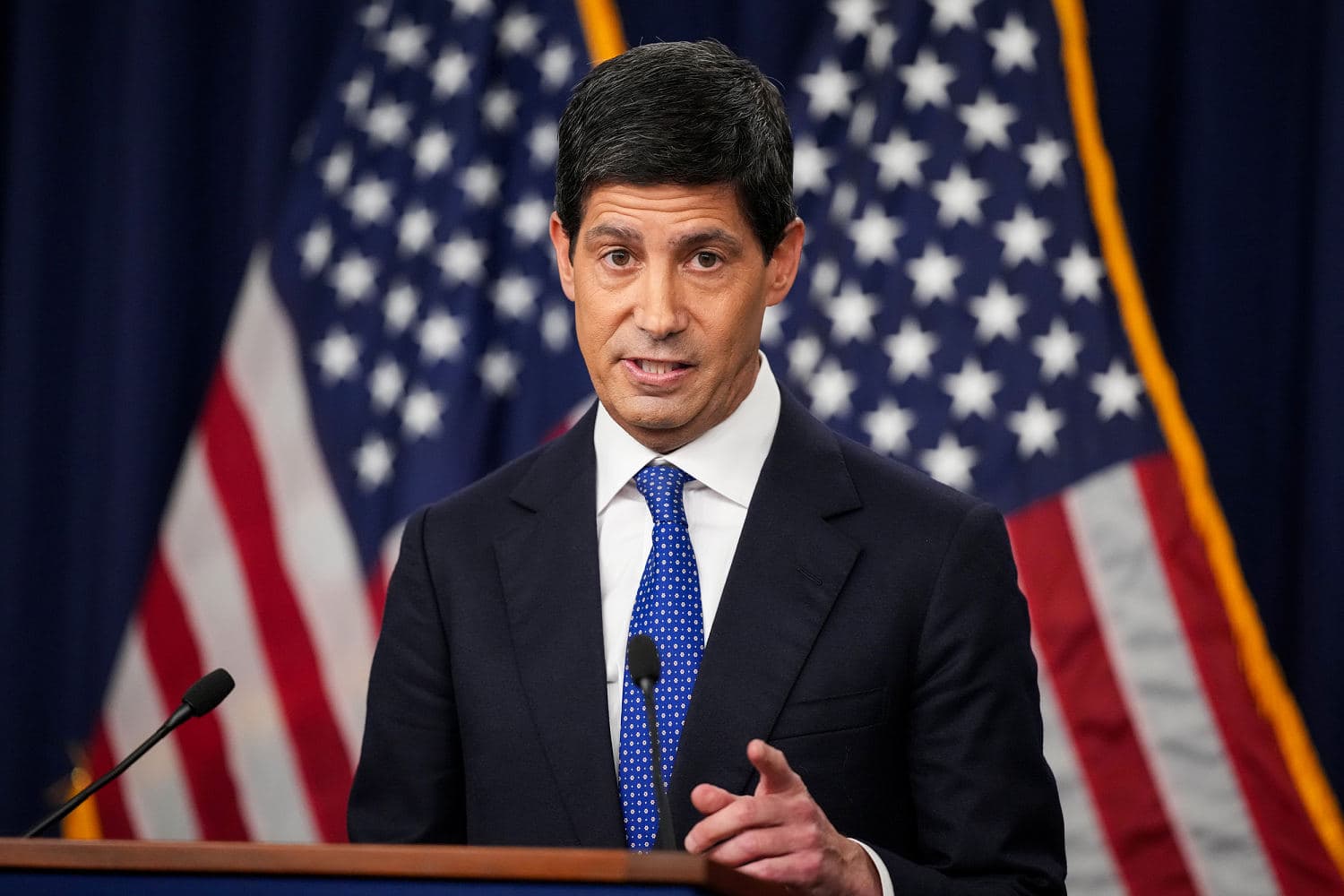
- A phased pivot announced on October 28, 2026: Federal Reserve Chairman Kevin Warsh stated the Federal Open Market Committee (FOMC) will maintain eight annual gatherings but drop one rate vote in 2027 and two in 2028.
- Dedicated strategic forums created: Beginning in fall 2027, the converted sessions will focus exclusively on long-term monetary policy framework analysis without rate-setting ballots or policy statements.
- Short-term policy baseline held firm: The announcement coincided with the FOMC holding benchmark interest rates unchanged, cementing a structural governance update rather than an emergency policy shift.
The context you actually need
- A 45-year operating standard altered: The FOMC has operated on a schedule of eight formal meetings per calendar year since 1981, well above its statutory floor of four annual sessions.
- Chairman Warsh’s initial proposal materialized: Nominated by President Donald Trump and taking office in May 2026, Warsh first floated reducing rate-setting frequency at the July 2026 FOMC meeting to allow macro data to accumulate.
- A deliberate departure from peer institutions: By reserving dedicated non-voting meetings for macro strategy while cutting rate votes to six by 2028, the Fed positions its governance model apart from other major central banks.
What's really happening
The structural mechanics of global central banking have long incentivized high-frequency communication. For over four decades, financial markets grew accustomed to the FOMC recalculating rate paths every six weeks. Under Chairman Kevin Warsh, the Federal Reserve is formally separating tactical liquidity adjustments from overarching economic strategy.
By preserving eight annual calendar gatherings while reducing voting sessions to seven in 2027 and six in 2028, the central bank addresses a persistent institutional friction: the trade-off between reacting to near-term headline figures and conducting rigorous, multi-quarter strategic research. In an environment defined by complex global trade realignments and fluctuating supply chains, evaluating policy on rolling six-week increments frequently forced markets into perpetual, knee-jerk repositioning over minor data revisions.
The incentive structure behind this change is grounded in macro predictability. When central banks meet to vote every six weeks, market participants price in binary event risk eight times per year. This dynamic concentrates short-term option volatility around FOMC press conferences rather than underlying economic fundamentals. By converting select dates into non-voting strategy deep-dives without accompanying policy statements, the Fed lowers the annual count of rate-setting flashpoints to six by 2028.
For cross-border operators and dollar-denominated financial centers, this shift alters liquidity planning horizons. In hubs like Dubai, where commercial lending, sovereign bond issuances, and property mortgages track the U.S. dollar benchmark due to currency peg realities, the spacing between potential monetary pivots will widen. Corporate treasurers must plan financing rounds around wider, eight-to-nine-week decision windows instead of six-week check-ins.
The reform also insulates monetary officials from the expectation that every gathering requires micro-calibrations. Legal statutes require the Fed to meet at least four times annually; setting rate votes at six keeps the institution above its mandate while generating longer empirical windows between policy turns. In practice, this raises the bar for intervening between scheduled votes, signaling that baseline interest rate tiers will remain fixed for longer intervals.
Who feels it first (and how)
- Corporate Treasurers and Chief Financial Officers: Extended intervals between voting meetings require liquidity planners to lock debt pricing and hedge currency exposure across broader calendar windows.
- Fixed-Income and Interest Rate Traders: Trading desks that monetize six-week FOMC rate probabilities must adapt derivatives models to wider holding intervals and two pure strategy meetings per year.
- Dubai Real Estate and Mortgage Borrowers: UAE-based purchasers and regional banks operating under pegged monetary regimes will see local borrowing benchmarks remain static for longer stretches between changes.
- Expatriate Remittance Corridors: Global workers transferring funds out of dollar-linked centers face extended stability periods in underlying baseline foreign exchange differentials.
What to watch next
- The formal 2027 calendar release: Specific meeting dates published by the FOMC will clarify precisely which fall session is designated as the first non-voting strategy forum.
- Forward-guidance adjustments in 2028: Monitoring how the Fed communicates policy trajectories during non-voting months will reveal whether inter-meeting speeches assume outsized market weight.
- Peer central bank structural reviews: Observers will watch whether institutions like the European Central Bank or Bank of England evaluate similar splits between operational voting and strategy reviews.
The FOMC will keep eight annual meetings, reducing voting sessions to seven in fall 2027 and six in 2028, maintaining compliance with the four-meeting statutory minimum.
Market implied-volatility curves will redistribute risk premia across fewer, higher-stakes rate decisions, stretching corporate borrowing windows.
How the Fed will respond if an unforeseen global liquidity contraction occurs directly ahead of a scheduled non-voting strategy session.
Frequently Asked Questions
- Why it matters?
- The world’s primary anchor currency is shifting away from ultra-frequent rate recalibration to favor longer data horizons, altering how central banks, lenders, and multi-currency operators manage timing risks.
- What happened (in 30 seconds)?
- A phased pivot announced on October 28, 2026: Federal Reserve Chairman Kevin Warsh stated the Federal Open Market Committee (FOMC) will maintain eight annual gatherings but drop one rate vote in 2027 and two in 2028. Dedicated strategic forums created: Beginning in fall 2027, the converted sessions will focus exclusively on long-term monetary policy framework analysis without rate-setting ballots or policy statements. Short-term policy baseline held firm: The announcement coincided with the FOMC
- What's really happening?
- The structural mechanics of global central banking have long incentivized high-frequency communication. For over four decades, financial markets grew accustomed to the FOMC recalculating rate paths every six weeks. Under Chairman Kevin Warsh, the Federal Reserve is formally separating tactical liquidity adjustments from overarching economic strategy. By preserving eight annual calendar gatherings while reducing voting sessions to seven in 2027 and six in 2028, the central bank addresses a persi
- Who feels it first (and how)?
- Corporate Treasurers and Chief Financial Officers: Extended intervals between voting meetings require liquidity planners to lock debt pricing and hedge currency exposure across broader calendar windows. Fixed-Income and Interest Rate Traders: Trading desks that monetize six-week FOMC rate probabilities must adapt derivatives models to wider holding intervals and two pure strategy meetings per year. Dubai Real Estate and Mortgage Borrowers: UAE-based purchasers and regional banks operating under
- What to watch next?
- The formal 2027 calendar release: Specific meeting dates published by the FOMC will clarify precisely which fall session is designated as the first non-voting strategy forum. Forward-guidance adjustments in 2028: Monitoring how the Fed communicates policy trajectories during non-voting months will reveal whether inter-meeting speeches assume outsized market weight. Peer central bank structural reviews: Observers will watch whether institutions like the European Central Bank or Bank of England ev
Stock market news, investing ideas, and trading analysis.
"TheStreet provides market news and retail-investor-focused analysis."
— A47 Editor
Fed Chair Kevin Warsh reveals October surprise inside interest-rate pause
The Federal Reserve held its benchmark federal funds rate steady in a range of 3.75% to 4% after a divided 10-2 vote, with Governor Lisa Cook and Cleveland Fed President Beth Hammack dissenting in favor of a rate hike. Chairman Kevin Warsh used the n...
Markets, economy, and company analysis from NYT’s business desk.
"The New York Times is a globally recognized newspaper offering authoritative reporting with a center-left editorial stance."
— A47 Editor
Fed Holds Rates Steady Despite Lack of Progress on Inflation
The Federal Reserve held its benchmark interest rates steady, even as inflation has not made the progress officials had hoped for, according to coverage of the base article. Fed Chairman Kevin M. Warsh said an "information-rich" period before the cen...
Markets desk coverage, trading insights, and investor updates.
"WSJ’s markets reporting provides in-depth analysis and context for investors."
— A47 Editor
The Fed Held Steady on Rates, Leaving Investors to Sit Tight, Too
The Federal Reserve held its benchmark federal funds rate steady in a range of 3.75% to 4% on October 28, 2026, a move widely expected by markets, as stocks and long-term bond yields edged higher after Wall Street read Chairman Kevin Warsh as hesitan...
Global markets, investing, and macroeconomics from a premier financial newsroom.
"Bloomberg is respected for in-depth financial reporting and data-driven analysis."
— A47 Editor
The Fed Will Deliver Price Stability, Warsh Says
The Federal Reserve kept its benchmark federal funds rate unchanged in a range of 3.75% to 4% after a 10-2 vote, with Governor Lisa Cook and Cleveland Fed President Beth Hammack dissenting in favor of a rate hike. At a news conference, Chairman Kevin...
Global business headlines with AI angles.
"General business outlet that frequently covers AI."
— A47 Editor
The Fed Kept Rates Unchanged. Stocks Edged Up.
The Federal Reserve kept its benchmark interest rate unchanged at its October 27-28 meeting, in line with market expectations, while Chair Kevin Warsh said there are signs that financial conditions have tightened since the central bank hiked rates in...
Corporate leadership, finance, technology, and market trends.
"Fortune covers financial trends, leadership, and innovation with a pragmatic editorial approach."
— A47 Editor
For the first time since 1992, a Fed governor and president dissented together, as Kevin Warsh says the ‘monetary medicine’ is starting to work
The Federal Reserve voted 10-2 to hold its benchmark federal funds rate in a range of 3.75% to 4%, leaving borrowing costs unchanged, with Governor Lisa Cook and Cleveland Fed President Beth Hammack dissenting in favor of a rate hike. It was the firs...
Global business headlines with AI angles.
"General business outlet that frequently covers AI."
— A47 Editor
Fed Chair Warsh Says Current Conditions are Helping Create a Path Toward Lower Inflation
Federal Reserve Chair Kevin Warsh said in a press conference following the central bank's policy decision that recent changes in financial and credit conditions are helping create a path toward lower inflation, while the Fed chose to leave interest r...
Global markets, investing, and macroeconomics from a premier financial newsroom.
"Bloomberg is respected for in-depth financial reporting and data-driven analysis."
— A47 Editor
Fed's Warsh Says Monetary 'Medicine' Starting to Work
The Federal Open Market Committee voted 10-2 to hold its benchmark federal funds rate in a range of 3.75% to 4%, leaving borrowing costs unchanged, with Governor Lisa Cook and Cleveland Fed President Beth Hammack dissenting. At a news conference afte...
National headlines across the United States including breaking stories and societal issues.
"NBC News is a mainstream media outlet known for comprehensive national and international news coverage with a centrist to slightly left-leaning editorial tone."
— A47 Editor
Fed plans to eliminate some rate-setting meetings, chairman says
Federal Reserve Chairman Kevin Warsh said Wednesday that the Fed plans to eliminate some rate-setting meetings over the next couple of years, according to NBC News. The announcement came the same day the Fed voted to hold interest rates steady at 3.7...
Corporate leadership, finance, technology, and market trends.
"Fortune covers financial trends, leadership, and innovation with a pragmatic editorial approach."
— A47 Editor
Fed holds rates steady days before the midterms, even as inflation runs hot
The Federal Reserve voted 10-2 to hold its benchmark federal funds rate in a range of 3.75% to 4%, leaving borrowing costs unchanged days before the midterm elections, even as inflation remains above 3 percent. Governor Lisa Cook and Cleveland Fed Pr...
Capitol Hill news, legislation, and policy insight.
"The Hill specializes in U.S. politics and policy, with a focus on Capitol Hill developments and a reputation for insider reporting."
— A47 Editor
Watch live: Warsh speaks after Fed votes to keep interest rates steady
Federal Reserve Chair Kevin Warsh is set to speak to reporters after the central bank voted to hold interest rates steady at 3.75% to 4%, despite persistent inflation and mounting economic pressures ahead of the midterm elections. The decision follow...
Corporate leadership, finance, technology, and market trends.
"Fortune covers financial trends, leadership, and innovation with a pragmatic editorial approach."
— A47 Editor
Don Kohn’s infamous ‘death march’ hikes were referenced in Kevin Warsh’s Jackson Hole speech—now the Fed veteran is weighing the chairman’s path ahead
Fortune reports that Don Kohn's 'death march' rate-hike cycles were referenced in Fed Chairman Kevin Warsh's Jackson Hole speech, with Kohn, a Fed veteran, now weighing the chairman's path ahead. Kohn described such hikes as an important chance to tr...
Social/economic commentary and analysis relevant to business and markets.
"WSJ blends data-driven economic insight with commentary on policy and society."
— A47 Editor
Fed Chairman Kevin Warsh wants to stop previewing coming moves. Several colleagues say the central bank still owes the public an explanation of how it will respond to the economy.
Federal Reserve Chairman Kevin Warsh has said the central bank should stop previewing its coming policy moves, a shift in communication style. Several colleagues, however, argue the Fed still owes the public a clear explanation of how it will respond...
Capitol Hill news, legislation, and policy insight.
"The Hill specializes in U.S. politics and policy, with a focus on Capitol Hill developments and a reputation for insider reporting."
— A47 Editor
Former White House economic adviser on Fed rates: 'Tough position' for Warsh
Stephen Moore, a former economic adviser to President Donald Trump, said Monday that Federal Reserve Chair Kevin Warsh faces a "tough" position ahead of the central bank's meeting on interest rates later this week, according to The Hill. Moore said t...