
Global Equities Mostly Rise After Democratic Midterm Sweep as AI Stocks Sell Off
Why it matters
A shift to divided government in Washington recalibrates global risk premia, driving broad index gains while exposing highly concentrated semiconductor valuations and energy markets to fresh regulatory friction.
What happened (in 30 seconds)
- A divided legislature emerged as Democrats gained control of both chambers of Congress following the November 4, 2026, U.S. midterm elections, reshaping the policy framework for the remainder of President Donald Trump's term.
- Benchmark equity averages rallied across major Western and regional hubs on November 4 and 5, with the Dow Jones Industrial Average jumping over 1,500 points, the S&P 500 rising 1.6%, Hong Kong's Hang Seng advancing 3.7%, and Australia's S&P/ASX 200 gaining 2.6%.
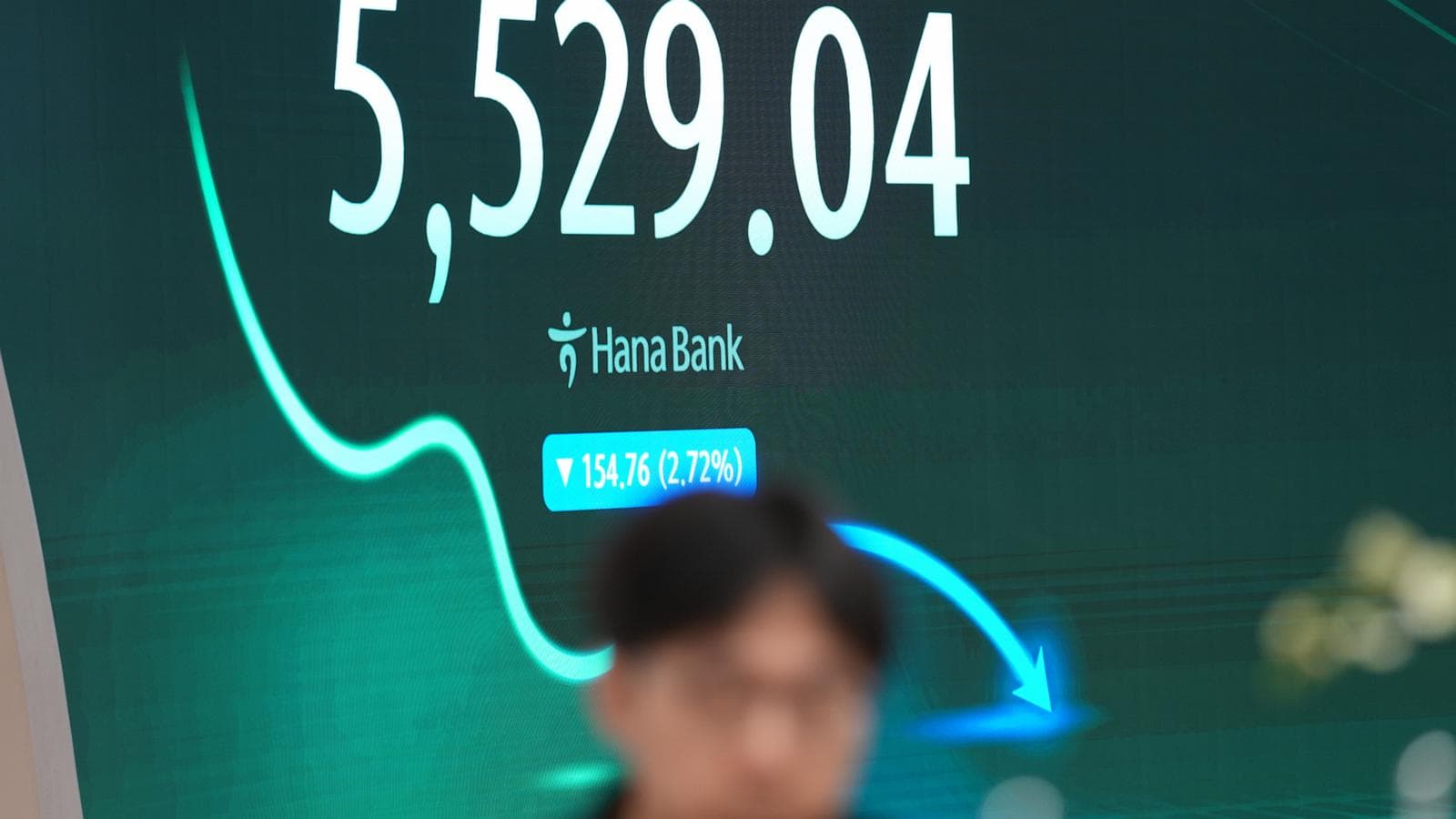
- Hardware and energy equities tumbled as South Korea’s Kospi dropped 5.3% and Tokyo’s Nikkei 225 fell 1.8% on artificial intelligence divestments, while crude contracts saw an initial drop of nearly 9% alongside broad selling across defense contractors.
The context you actually need
- Prior policy settings favored unconstrained hardware builds under unified Republican congressional control, even as international trade tariffs and active involvement in the Iran conflict added underlying supply-chain friction.
- Prolonged hyperscaler capital commitments have faced mounting investor demands to demonstrate direct commercial returns on data centers, leaving chipmakers vulnerable to any prospective legislative hurdles.
- Divided balance-of-power outcomes historically depress legislative volatility, prompting asset allocators to rotate capital out of expensive momentum sectors and into broader cyclical equities.
What's really happening
Markets are executing a structural rotation based on incentive alignment rather than broad macroeconomic sentiment. When a single party loses control of the legislature mid-presidency, the probability of sweeping statutory overhauls declines. Institutional allocators typically reward this gridlock because it limits unilateral regulatory surprises. In this cycle, however, that dynamic presents a distinct sectoral bifurcation.
The immediate advance across broad market measures—including the S&P 500's 1.6% rise and early gains in European bourses—reflects relief pricing around international trade. Investors anticipate that a Democratic-led Congress will establish an institutional counterweight against discretionary tariff escalations. That expectation lowered the hurdle rate for globally integrated exporters, fueling rallies such as the Hang Seng's 3.7% jump.
Conversely, the artificial intelligence supply chain faced focused liquidations. Hardware providers, semiconductor fabrication hubs, and data center operators had operated under an assumption of uninterrupted infrastructure development. With legislative oversight shifting, markets are pricing in targeted committee inquiries concerning energy utilization, land permits for computing facilities, and public infrastructure subsidies.
This legislative rebalancing triggered immediate adjustments in East Asian tech hubs. South Korea’s Kospi absorbed a 5.3% decline, and Japan's Nikkei 225 fell 1.8%, driven by selling in semiconductor components linked directly to Western cloud expansions. Investors are calculating that compliance burdens, environmental reviews, and slower utility interconnection approvals will compress near-term capital expenditures from technology conglomerates.
Simultaneously, defense and energy equities absorbed downward pressure as capital reassessed geopolitical incentives. Speculation that a divided government could restrict funding authorizations for foreign military engagements, including operations tied to the Iran conflict, led to selling across defense contractors.
Energy benchmarks responded with acute volatility, plunging nearly 9% before clawing back a portion of those losses. That crude repricing directly impacts trading hubs like Dubai, where balance sheets and expatriate investment allocations track global hydro-carbon values and trade flow volumes. Capital is systematically leaving sectors reliant on emergency defense appropriations and unregulated computing builds, migrating instead into diversified industrial and commercial indexes that benefit from normalized international commerce.
Who feels it first (and how)
- Semiconductor and data center operators: Slower capital expenditure authorizations and impending congressional reviews pressure near-term multiples, as demonstrated by the Kospi’s 5.3% sell-off.
- Global macro and multi-asset allocators: Portfolios with heavy concentrations in mega-cap technology absorb drawdowns, while positions in international trade equities (such as Hong Kong listings) see multiple expansion.
- Defense aerospace contractors: Equity values decline as legislative gridlock threatens authorizations for extended military engagements and equipment replenishment.
- Dubai and regional energy hubs: Expatriate portfolios and energy-exposed regional balance sheets face transmission shocks from oil price swings that swung as wide as an initial 9% decline.
What to watch next
- Data center infrastructure permit reviews: Legislative committee assignments in early 2027 will reveal whether congressional scrutiny translates into formal constraints on utility and land access for hyperscalers.
- Global tariff enforcement actions: Executive administrative decisions on tariff enforcement over the coming quarter will confirm whether divided government effectively moderates cross-border trade friction.
- Defense appropriations debates: House and Senate committee negotiations over military funding bills will signal the durability of the sell-off across international defense contractors.
Democrats secured majorities in both chambers of Congress on November 4, 2026. Global indices mostly advanced, while South Korea's Kospi dropped 5.3%, Japan's Nikkei 225 fell 1.8%, and crude oil contracts fluctuated following an initial drop near 9%.
Scrutiny over capital expenditure allocations, commercial power consumption, and equipment orders will keep near-term valuations for artificial intelligence infrastructure suppliers compressed relative to broader market benchmarks.
The exact degree to which the White House can sustain foreign policy initiatives in the Iran conflict or implement independent tariff mechanisms without legislative consensus remains unresolved.
Frequently Asked Questions
- Why it matters?
- A shift to divided government in Washington recalibrates global risk premia, driving broad index gains while exposing highly concentrated semiconductor valuations and energy markets to fresh regulatory friction.
- What happened (in 30 seconds)?
- A divided legislature emerged as Democrats gained control of both chambers of Congress following the November 4, 2026, U.S. midterm elections, reshaping the policy framework for the remainder of President Donald Trump's term. Benchmark equity averages rallied across major Western and regional hubs on November 4 and 5, with the Dow Jones Industrial Average jumping over 1,500 points, the S&P 500 rising 1.6%, Hong Kong's Hang Seng advancing 3.7%, and Australia's S&P/ASX 200 gaining 2.6%. Hardware a
- What's really happening?
- Markets are executing a structural rotation based on incentive alignment rather than broad macroeconomic sentiment. When a single party loses control of the legislature mid-presidency, the probability of sweeping statutory overhauls declines. Institutional allocators typically reward this gridlock because it limits unilateral regulatory surprises. In this cycle, however, that dynamic presents a distinct sectoral bifurcation. The immediate advance across broad market measures—including the S&P 5
- Who feels it first (and how)?
- Semiconductor and data center operators: Slower capital expenditure authorizations and impending congressional reviews pressure near-term multiples, as demonstrated by the Kospi’s 5.3% sell-off. Global macro and multi-asset allocators: Portfolios with heavy concentrations in mega-cap technology absorb drawdowns, while positions in international trade equities (such as Hong Kong listings) see multiple expansion. Defense aerospace contractors: Equity values decline as legislative gridlock threaten
- What to watch next?
- Data center infrastructure permit reviews: Legislative committee assignments in early 2027 will reveal whether congressional scrutiny translates into formal constraints on utility and land access for hyperscalers. Global tariff enforcement actions: Executive administrative decisions on tariff enforcement over the coming quarter will confirm whether divided government effectively moderates cross-border trade friction. Defense appropriations debates: House and Senate committee negotiations over mi
Market-moving headlines impacting equities, bonds, and related risk assets.
"Real-time catalysts and volatility drivers across indices and sectors."
— A47 Editor
AI, data-center stocks slip as Democratic sweep clouds expansion plans
Shares of artificial intelligence and data-center companies slipped after Democrats won control of Congress in the November 3, 2026 US midterm elections, with investors reacting to uncertainty over the political outlook for expansion plans, according...
Technology business and AI-related headlines.
"Data-driven tech newsroom with global scope."
— A47 Editor
Big Tech Stocks Surge as Democrats Threaten to Slow AI Spending
Big Tech stocks rallied as the market reacted to the prospect of a Democratic-led Congress that could slow AI spending, with hyperscalers outperforming while not all AI companies fared well, according to Bloomberg Technology. The Guardian reported th...
Technology business news, market impacts, and innovation trends.
"Bloomberg is a premier financial and tech news provider, respected for its in-depth reporting and analytical rigor."
— A47 Editor
Big Tech Stocks Surge as Democrats Threaten to Slow AI Spending
Big Tech stocks rallied as the market reacted to the prospect of a Democratic-led Congress that could slow AI spending, with hyperscalers outperforming while not all AI companies fared well, according to Bloomberg Technology. The Guardian reported th...
Markets desk coverage, trading insights, and investor updates.
"WSJ’s markets reporting provides in-depth analysis and context for investors."
— A47 Editor
AI Selloff Extends, Treasurys Gain as Blue Wave Reverberates
AI-related stocks extended their selloff globally as investors digested the Democratic sweep of the U.S. midterm elections held November 3, while Treasurys gained, according to The Wall Street Journal's base report on the market reaction.
Macro commentary, policy analysis, growth/inflation themes, and global outlooks.
"Contextual macro coverage that complements day-to-day market headlines."
— A47 Editor
AI stocks, oil fall as investors bet on change after US election ’blue wave’
Markets in the US and elsewhere moved sharply after Democrats won control of Congress in the November 3, 2026 midterm elections, with AI stocks and oil falling as investors bet on a change in the political landscape following the 'blue wave' result.
Major U.S. developments and regional news.
"ABC News delivers broad national coverage with a mainstream editorial stance, focusing on accessibility and balanced reporting."
— A47 Editor
World shares mostly gain after US midterm elections as AI-related stocks sink
World shares were mostly higher following the U.S. midterm elections, though heavy selling of artificial intelligence-related stocks offset gains in some markets, according to ABC News.