
UK and EU Officials Begin Preparatory Talks on Post-Brexit Relationship Options Including Freedom of Movement Ahead of 20 November Summit
Why it matters
The formal willingness to evaluate mobility mechanisms signals an incentive shift in London toward trade facilitation, balancing domestic political constraints against cross-border economic friction.
What happened (in 30 seconds)
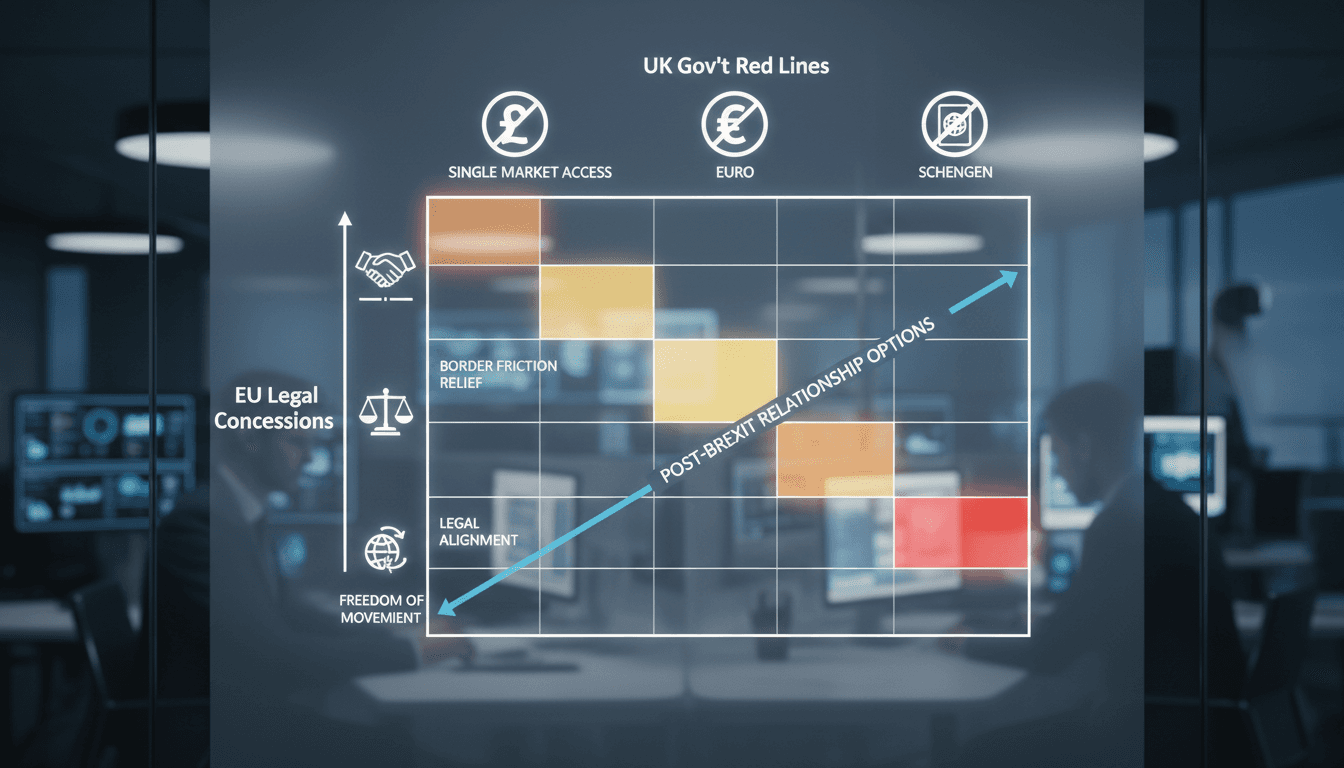
* Bilateral discussions were confirmed on 27 October 2026, with UK Business Secretary Jonathan Reynolds stating officials will explore future relationship options, including freedom of movement, ahead of the 20 November summit. * Prime Minister Andy Burnham initiated public debate on 25 October by calling for an honest assessment of closer ties with the bloc, while ruling out euro adoption and Schengen membership. * Downing Street maintains strict parameters, emphasizing that no formal negotiations on full freedom of movement are currently underway and that single market or customs union re-entry remains bound by 2024 manifesto commitments until at least 2029.
The context you actually need
* The baseline operating environment remains defined by the 2020 exit, which removed reciprocal labor rights and introduced non-tariff barriers across UK-EU commercial corridors. * Immediate bilateral objectives target targeted friction points, specifically youth mobility schemes, agri-food health standards, and linking carbon emissions trading systems rather than sweeping structural reintegration. * Third-country hubs like Dubai experience zero direct structural impact, as these preliminary negotiations focus entirely on bilateral European arrangements without altering Gulf trade or residency frameworks.
What's really happening
The diplomatic sequencing ahead of the 20 November 2026 summit demonstrates an incentive-based recalculation by British leadership. By tasking civil servants to evaluate broad relationship tracks—while maintaining manifesto red lines against formal single market membership until 2029—the administration is probing how much European market access can be purchased with targeted mobility concessions.
Brussels operates on an indivisible legal architecture: single market access requires the free movement of workers. Downing Street is attempting to decouple elements of economic friction from wholesale structural reintegration. The immediate deliverables prioritize three sectors: veterinary standards to lower agrifood import barriers, mutual recognition of emissions trading to prevent cross-border carbon pricing disparities, and reciprocal youth mobility frameworks to address labor deficits in seasonal and service sectors.
Prime Minister Andy Burnham’s public comments reflect an effort to socialize the concept of deeper alignment without violating governing commitments. By explicitly taking Schengen integration and the euro off the table, the domestic political argument is framed as pragmatism over ideology. However, the internal tension within the governing party remains acute. Several Labour members caution that discussing mobility rights risks undermining trust among electorates in districts that supported the 2016 exit. Meanwhile, opposition figures, including Reform UK leader Nigel Farage, argue that opening these tracks contradicts voter mandates.
For the European Commission, the strategic posture is structured around institutional leverage. European negotiators have consistently maintained that piecemeal economic integration cannot dilute single market governance. By allowing preliminary technical talks on mobility options, Brussels preserves its core principle: any substantive regulatory ease for British exporters requires reciprocal movement allowances.
The current talks do not signify an immediate shift in legal statutes. Instead, they serve as a testing phase to identify what mobility frameworks can be politically absorbed before 2029. The UK economy faces continuing drag from post-2020 border friction; the EU seeks predictable regulatory cooperation on its western flank. Both counterparties are testing whether targeted arrangements can pass domestic scrutiny before formal political capital is spent at the November summit.
Who feels it first (and how)
* UK-EU cross-border service firms, who gain potential line-of-sight toward simplified business travel and visa protocols if youth mobility frameworks expand into professional service categories. * Agrifood and supply-chain logistics operators, who face lower compliance costs if parallel food standard discussions progress alongside mobility dialogue. * Corporate human resource directors, who must balance current non-EU points-based sponsorship costs against potential future reciprocal mobility streams. * Gulf and Dubai-based expatriates with UK ties, who observe no disruption to their sovereign visa frameworks, tax status, or commercial routes, as the talks remain confined to bilateral UK-EU administrative mechanics.
What to watch next
* The 20 November 2026 UK-EU Summit agenda, which will reveal whether mobility frameworks remain confined to youth exchange agreements or expand into formal professional services talks. * Downing Street domestic policy guidance, to determine if ministerial messaging shifts closer to single market regulatory alignment ahead of the 2029 electoral cycle. * European Commission preparatory briefings, which indicate whether Brussels insists on linking agrifood and emissions trading pacts directly to human mobility concessions.
Preparatory talks between UK and EU officials are scheduled before 20 November 2026, confirmed by Business Secretary Jonathan Reynolds following comments by Prime Minister Andy Burnham.
Tangible agreements at the upcoming summit will focus on narrow areas like food standards, emissions trading links, and youth mobility, avoiding full market reintegration.
Whether the UK government can build domestic political consensus to formally negotiate broad labor mobility rights prior to the expiration of its 2029 manifesto cycle.
Frequently Asked Questions
- Why it matters?
- The formal willingness to evaluate mobility mechanisms signals an incentive shift in London toward trade facilitation, balancing domestic political constraints against cross-border economic friction.
- What happened (in 30 seconds)?
- Bilateral discussions were confirmed on 27 October 2026, with UK Business Secretary Jonathan Reynolds stating officials will explore future relationship options, including freedom of movement, ahead of the 20 November summit. Prime Minister Andy Burnham initiated public debate on 25 October by calling for an honest assessment of closer ties with the bloc, while ruling out euro adoption and Schengen membership. Downing Street maintains strict parameters, emphasizing that no formal negotiations on
- What's really happening?
- The diplomatic sequencing ahead of the 20 November 2026 summit demonstrates an incentive-based recalculation by British leadership. By tasking civil servants to evaluate broad relationship tracks—while maintaining manifesto red lines against formal single market membership until 2029—the administration is probing how much European market access can be purchased with targeted mobility concessions. Brussels operates on an indivisible legal architecture: single market access requires the free move
- Who feels it first (and how)?
- UK-EU cross-border service firms, who gain potential line-of-sight toward simplified business travel and visa protocols if youth mobility frameworks expand into professional service categories. Agrifood and supply-chain logistics operators, who face lower compliance costs if parallel food standard discussions progress alongside mobility dialogue. Corporate human resource directors, who must balance current non-EU points-based sponsorship costs against potential future reciprocal mobility streams
- What to watch next?
- The 20 November 2026 UK-EU Summit agenda, which will reveal whether mobility frameworks remain confined to youth exchange agreements or expand into formal professional services talks. Downing Street domestic policy guidance, to determine if ministerial messaging shifts closer to single market regulatory alignment ahead of the 2029 electoral cycle. European Commission preparatory briefings, which indicate whether Brussels insists on linking agrifood and emissions trading pacts directly to human m
Political developments, policy debates, elections, and government affairs in the UK.
"BBC News is widely regarded as a reputable international news organization, known for its impartial tone and public service mandate."
— A47 Editor
UK and EU officials to discuss freedom of movement
UK and EU officials are expected to begin discussions on a range of options for the future UK-EU relationship, including freedom of movement, ahead of a summit scheduled for November 20, according to BBC News reporting.
International coverage from The Guardian's global desks.
"The Guardian is known for its progressive editorial stance and in-depth analysis."
— A47 Editor
UK officials discussing options including free movement with EU ahead of summit
UK officials have begun discussions with the EU on a possible long-term relationship that could include a return to free movement, Business Secretary Jonathan Reynolds said, adding that the British people "are the boss" on what the UK accepts. The im...
UK and international business news, economics, and corporate coverage.
"The Guardian’s business section covers finance and markets with a progressive editorial tone."
— A47 Editor
UK officials discussing options including free movement with EU ahead of summit
UK officials have begun discussions with the EU on a possible long-term relationship that could include a return to free movement, Business Secretary Jonathan Reynolds said, adding that the British people "are the boss" on what the UK accepts. The im...
United Kingdom-focused news including local politics, business, and social issues.
"BBC News is widely regarded as a reputable international news organization, known for its impartial tone and public service mandate."
— A47 Editor
No 10 appears to backtrack on PM's freedom of movement referendum suggestion
No 10 appears to have walked back Prime Minister Andy Burnham's suggestion that a referendum could be needed on a return to EU free movement, as the PM says he wants to start a conversation about possible options for the UK's future relationship with...
United Kingdom-focused news including local politics, business, and social issues.
"BBC News is widely regarded as a reputable international news organization, known for its impartial tone and public service mandate."
— A47 Editor
Newscast
UK Prime Minister Andy Burnham has said he wants an honest, evidence-based discussion with the public about a possible return to EU free movement, according to BBC News. The stance, reported as coming ahead of a planned UK-EU summit on November 20, s...
Comprehensive coverage of Middle Eastern and global issues.
"Al Jazeera is a prominent voice from the Global South, especially the Middle East, with an emphasis on underreported stories."
— A47 Editor
UK PM Burnham says he wants to discuss a return to EU freedom of movement
UK Prime Minister Andy Burnham has said Britain should have an 'honest discussion' about how immigration has changed since Brexit, including a possible return to EU freedom of movement, as the government prepares for a UK-EU summit in November.
Global news coverage with extensive reporting on Middle Eastern conflicts and geopolitics.
"Al Jazeera is a Qatar-based broadcaster known for wide regional coverage and alternative perspectives."
— A47 Editor
UK PM Burnham says he wants to discuss a return to EU freedom of movement
UK Prime Minister Andy Burnham has said Britain should have an 'honest discussion' about how immigration has changed since Brexit, including a possible return to EU freedom of movement, as the government prepares for a UK-EU summit in November.
United Kingdom-focused news including local politics, business, and social issues.
"BBC News is widely regarded as a reputable international news organization, known for its impartial tone and public service mandate."
— A47 Editor
Burnham open to 'honest discussion' on EU free movement
Prime Minister Andy Burnham has said he wants a factual, evidence-based and honest discussion with the public about returning to free movement between Britain and the EU, according to BBC News. The stance comes as the government prepares for a UK-EU ...
UK and global business, economy, and markets coverage.
"Sky News is often seen as a center-right outlet in the UK, known for rolling news and breaking business stories."
— A47 Editor
PM open to 'honest discussion' about return to EU free movement
Prime Minister Andy Burnham has said an "honest discussion" is needed about readopting the EU's free movement rules, according to Sky News, with the stance reported as neutral in tone. The remarks come as the government prepares for a planned UK-EU s...
Political developments, elections, and policy issues in the UK.
"Sky News is a UK-based 24-hour channel known for fast-breaking news and political coverage."
— A47 Editor
PM open to 'honest discussion' about return to EU free movement
Prime Minister Andy Burnham has said an "honest discussion" is needed with the public about readopting the EU's free movement rules, according to Sky News, as the government prepares for a UK-EU summit. The stance marks a shift in tone on Brexit-era ...