
Eisenkot Challenges Netanyahu as October 2026 Israeli Election Yields Deadlocked Knesset
Why it matters
A divided 120-seat parliament without a clear 61-seat majority stalls major regulatory reforms, delays post-conflict accountability reviews, and subjects regional commercial ties to extended policy inertia.
What happened (in 30 seconds)
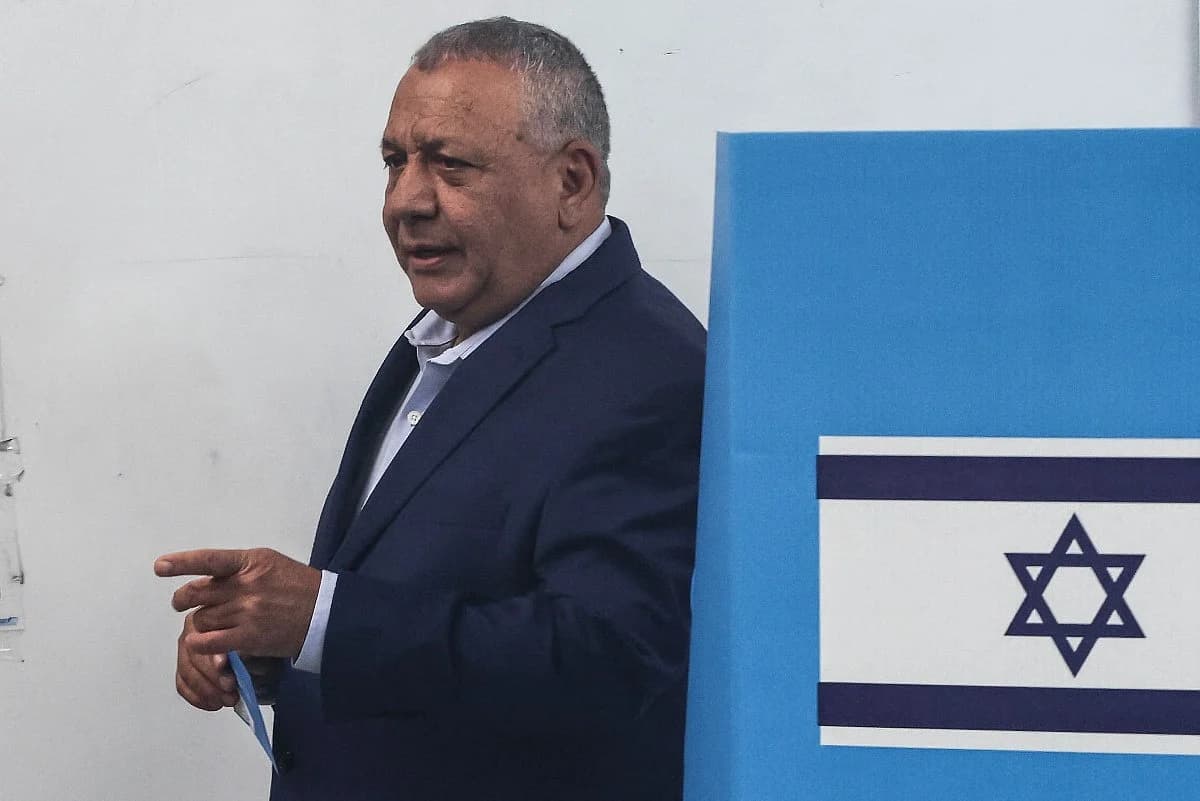
- A deadlocked ballot: On October 27, 2026, Israel held nationwide legislative elections where exit polls projected former IDF Chief of Staff Gadi Eisenkot’s bloc at approximately 52 seats against incumbent Prime Minister Benjamin Netanyahu’s Likud-led bloc at 50 seats.
- Competing mandates claimed: Eisenkot, leading the newly established centrist Yashar party, declared victory based on exit projections, while Netanyahu called for the immediate assembly of a right-wing government.
- No decisive majority: With neither faction securing the 61 seats required to form an unassisted coalition in the 120-seat Knesset, the contest shifted entirely into cross-ideological coalition bargaining.
The context you actually need
- Security-driven political realignment: Eisenkot, who served as IDF Chief of Staff from 2015 to 2019, joined the emergency war cabinet following the October 7, 2023, attacks but resigned in June 2024 over disagreements regarding postwar strategy.
- The emergence of Yashar: After departing Benny Gantz’s National Unity camp, Eisenkot launched the centrist Yashar party in September 2025, centering his campaign on administrative accountability, a state inquiry into the October 7 failures, and universal conscription.
- Post-conflict voter calculations: The 2026 election operated against the backdrop of the Gaza conflict, in which Eisenkot sustained personal losses—including his son Gal and two nephews—positioning his defense background directly against Netanyahu's tenure.
What's really happening
The 52-50 seat projection marks a structural stalemate rather than a definitive transfer of executive power. Under the rules of Israel's parliamentary system, reaching the 61-seat threshold requires either bloc to negotiate concessions across traditional ideological boundaries or trigger successive rounds of voting.
For the incumbent Likud leadership, the incentive structure is clear: preserve executive authority by maintaining cohesion among existing right-wing partners while attempting to peel away single factions from the center. Netanyahu’s call for a right-wing government reflects an effort to consolidate the 50 projected seats into an operational core, betting that centrist coalitions remain too fragmented to settle on ministerial allocations and policy compromises.
Conversely, Eisenkot’s Yashar party faces an asymmetric coalition equation. While exit polls give his broader opposition bloc a nominal lead at 52 seats, turning that pluralistic margin into a stable working government requires integrating disparate parties with divergent economic and social mandates. Eisenkot’s platform explicitly prioritizes a formal state commission of inquiry into the institutional and defense breakdowns of October 7, 2023, along with structural reforms to universal conscription. Both issues present significant friction for traditional ultra-Orthodox and religious factions, limiting the centrist bloc’s ability to recruit defectors from the right.
The broader institutional consequence of this split is immediate administrative paralysis. Key fiscal allocations, structural military personnel adjustments, and long-term infrastructure approvals remain frozen during extended coalition negotiations. Markets have avoided immediate disruptions, but sovereign risk assessments hinge on how long government agencies remain managed by transitional leadership. If coalition talks drag across several months without a clear compromise, statutory budget deadlines could force a dissolution of the newly elected Knesset, continuing a pattern of political instability.
On the international front, this institutional ambiguity directly impacts diplomatic and commercial execution. Initiatives developed under the framework of the Abraham Accords—particularly cross-border energy frameworks, intelligence-sharing protocols, and financial technology corridors—require active ministerial sponsorship to advance beyond initial memorandums. As long as key cabinet portfolios such as defense, finance, and foreign affairs remain bargaining chips in coalition talks, regional counterparties face operational delays on bilateral programs.
Who feels it first (and how)
- Regional commercial executives and trade desks: Cross-border transactions and joint ventures between Israeli tech firms and UAE-based investment entities face administrative slowdowns while key ministerial portfolios remain contested.
- Defense and procurement planners: Implementation of new recruitment models, universal conscription frameworks, and long-term procurement budgets remain halted until a defense minister takes office with a clear parliamentary majority.
- Institutional cross-asset investors: Portfolio managers tracking Middle East sovereign debt and regional equities must price in prolonged political uncertainty, potential fiscal slippage, and delays in passing the next national budget.
- Bilateral travel and hospitality operators: Cross-border tourism pipelines and commercial airline frequencies between Tel Aviv and regional hubs like Dubai remain sensitive to shifts in travel advisory stability and consumer sentiment.
What to watch next
- Certification of final seat tallies: Official vote verification by the Central Elections Committee will determine whether the exit poll split of 52-50 holds or shifts fractional seats across threshold boundaries, altering the math for a 61-seat coalition.
- Presidential mandate allocation: The timing and identity of the candidate selected by the state president to form the government first will reveal which faction possesses viable cross-bloc leverage.
- Defection signals among smaller factions: Watch whether minor parties demand immediate compromises on universal conscription or judicial oversight in exchange for entering a viable 61-seat framework.
Neither Gadi Eisenkot's bloc (projected at 52 seats) nor Benjamin Netanyahu's bloc (projected at 50 seats) secured an outright majority of 61 seats in the 120-seat Knesset on October 27, 2026.
Coalition bargaining will extend across several weeks or months, resulting in high policy concessions for mid-sized kingmaker factions seeking specific ministerial control.
Whether either leader can assemble an operational government without triggering an internal party split or forcing another round of legislative elections.
Frequently Asked Questions
- Why it matters?
- A divided 120-seat parliament without a clear 61-seat majority stalls major regulatory reforms, delays post-conflict accountability reviews, and subjects regional commercial ties to extended policy inertia.
- What happened (in 30 seconds)?
- A deadlocked ballot: On October 27, 2026, Israel held nationwide legislative elections where exit polls projected former IDF Chief of Staff Gadi Eisenkot’s bloc at approximately 52 seats against incumbent Prime Minister Benjamin Netanyahu’s Likud-led bloc at 50 seats. Competing mandates claimed: Eisenkot, leading the newly established centrist Yashar party, declared victory based on exit projections, while Netanyahu called for the immediate assembly of a right-wing government. No decisive majori
- What's really happening?
- The 52-50 seat projection marks a structural stalemate rather than a definitive transfer of executive power. Under the rules of Israel's parliamentary system, reaching the 61-seat threshold requires either bloc to negotiate concessions across traditional ideological boundaries or trigger successive rounds of voting. For the incumbent Likud leadership, the incentive structure is clear: preserve executive authority by maintaining cohesion among existing right-wing partners while attempting to pe
- Who feels it first (and how)?
- Regional commercial executives and trade desks: Cross-border transactions and joint ventures between Israeli tech firms and UAE-based investment entities face administrative slowdowns while key ministerial portfolios remain contested. Defense and procurement planners: Implementation of new recruitment models, universal conscription frameworks, and long-term procurement budgets remain halted until a defense minister takes office with a clear parliamentary majority. Institutional cross-asset inves
- What to watch next?
- Certification of final seat tallies: Official vote verification by the Central Elections Committee will determine whether the exit poll split of 52-50 holds or shifts fractional seats across threshold boundaries, altering the math for a 61-seat coalition. Presidential mandate allocation: The timing and identity of the candidate selected by the state president to form the government first will reveal which faction possesses viable cross-bloc leverage. Defection signals among smaller factions: Wat
Global news coverage with extensive reporting on Middle Eastern conflicts and geopolitics.
"Al Jazeera is a Qatar-based broadcaster known for wide regional coverage and alternative perspectives."
— A47 Editor
Israel’s Eisenkot says country voted for change
Israeli opposition leader Gadi Eisenkot said millions of Israelis voted for change in the October 27, 2026 general election, accusing Prime Minister Benjamin Netanyahu of lies after a divisive tenure. The vote, the first national election since Hamas...
A curated Gulf News feed featuring major stories across news, business, opinion, and lifestyle.
"Gulf News is a major UAE newspaper whose featured stories feed reflects a broad editorial mix shaped for a Gulf audience."
— A47 Editor
Israeli elections: Who is Gadi Eisenkot? The general challenging Netanyahu — and facing a coalition test
Israeli opposition leader Gadi Eisenkot, a former army chief, is challenging Prime Minister Benjamin Netanyahu in the October 27, 2026 general election, the first national vote since Hamas's October 7, 2023 attack, with early exit polls showing no cl...
UAE-based newspaper covering Gulf politics, society, and international developments.
"Gulf News is one of the UAE’s most prominent English-language publications."
— A47 Editor
Israeli elections: Who is Gadi Eisenkot? The general challenging Netanyahu — and facing a coalition test
Israeli opposition leader Gadi Eisenkot, a former army chief, is challenging Prime Minister Benjamin Netanyahu in the October 27, 2026 general election, the first national vote since Hamas's October 7, 2023 attack, with early exit polls showing no cl...
Global markets, investing, and macroeconomics from a premier financial newsroom.
"Bloomberg is respected for in-depth financial reporting and data-driven analysis."
— A47 Editor
Israel Election Tests Netanyahu's Hold on Power
Bloomberg reports that Aaron David Miller, a senior fellow at the Carnegie Endowment for International Peace, compared Donald Trump's endorsement of Benjamin Netanyahu in Israel's election to his grandmother's chicken soup: "it sometimes didn't help,...
Global news coverage with extensive reporting on Middle Eastern conflicts and geopolitics.
"Al Jazeera is a Qatar-based broadcaster known for wide regional coverage and alternative perspectives."
— A47 Editor
Former PLO official says Netanyahu-Eisenkot coalition could be possible
Former PLO official says Israel's election outcome remains uncertain, with polls divided between Prime Minister Benjamin Netanyahu and challenger Gadi Eisenkot, and suggests a Netanyahu-Eisenkot coalition could be possible ahead of the October 27, 20...
Comprehensive coverage of Middle Eastern and global issues.
"Al Jazeera is a prominent voice from the Global South, especially the Middle East, with an emphasis on underreported stories."
— A47 Editor
Former PLO official says Netanyahu-Eisenkot coalition could be possible
Former PLO official says Israel's election outcome remains uncertain, with polls divided between Prime Minister Benjamin Netanyahu and challenger Gadi Eisenkot, and suggests a Netanyahu-Eisenkot coalition could be possible ahead of the October 27, 20...
Regional coverage and analysis focused on politics, diplomacy, and business across the Middle East.
"Al-Monitor is known for analytical reporting on Middle East politics and policy developments."
— A47 Editor
In Israel, Eisenkot tries quiet appeal to oust Netanyahu
Gadi Eisenkot, the former army chief and main challenger to Prime Minister Benjamin Netanyahu, is quietly seeking to unseat him in Israel's general election on October 27, 2026. Known for dressing in black, speaking halting English and answering in b...
Regional coverage and analysis focused on politics, diplomacy, and business across the Middle East.
"Al-Monitor is known for analytical reporting on Middle East politics and policy developments."
— A47 Editor
Netanyahu, rivals trade attacks over Iran as clock counts down to Israel vote
Prime Minister Benjamin Netanyahu closed his campaign on Monday by claiming Israel could face annihilation at the hands of Iran if his election rivals prevail, as the race with ex-army chief Gadi Eisenkot remains neck-and-neck ahead of the October 27...
Conservative-leaning political and national coverage.
"The Washington Times is a conservative-leaning newspaper known for its political coverage and advocacy of right-of-center viewpoints."
— A47 Editor
Who is Gadi Eisenkot? Former top Israeli general seeking to oust Benjamin Netanyahu
Gadi Eisenkot, a retired lieutenant general and former chief of staff of the Israel Defense Forces, is widely seen as the most likely figure to replace Prime Minister Benjamin Netanyahu if he loses power in Israel's general election on October 27, 20...
Coverage of current events and conflicts in the Middle East.
"France 24 is viewed as a globally focused outlet with balanced coverage and a European perspective."
— A47 Editor
Israeli candidate Eisenkot pledges to unite country as Netanyahu deems him 'soft' on Iran
Israeli opposition candidate Gadi Eisenkot pledged on Sunday to "heal" Israeli society after Prime Minister Benjamin Netanyahu's divisive tenure, speaking at his final campaign rally before polling opened Tuesday. The same day, Netanyahu received fre...
European coverage of Middle East politics and security issues.
"France 24 offers international reporting with a European editorial perspective."
— A47 Editor
Israeli candidate Eisenkot pledges to unite country as Netanyahu deems him 'soft' on Iran
Israeli opposition candidate Gadi Eisenkot pledged on Sunday to "heal" Israeli society after Prime Minister Benjamin Netanyahu's divisive tenure, speaking at his final campaign rally before polling opened Tuesday. The same day, Netanyahu received fre...
Conservative-leaning coverage of current events.
"Fox News is a highly influential conservative news outlet known for right-leaning political commentary and coverage."
— A47 Editor
Former Israeli PM emerges as wild card in high-stakes election with Middle East's future at stake
Former Israeli Prime Minister Naftali Bennett has emerged as a wild card in Israel's high-stakes general election set for October 27, 2026, with his Middle East vision including expanding the Abraham Accords, yet polls show him trailing opposition le...
Comprehensive coverage of Middle Eastern and global issues.
"Al Jazeera is a prominent voice from the Global South, especially the Middle East, with an emphasis on underreported stories."
— A47 Editor
Netanyahu rival Eisenkot holds final rally before Israeli election
Gadi Eisenkot, the main challenger to Prime Minister Benjamin Netanyahu in Israel's upcoming election, held his final campaign rally on Sunday, ahead of the general election scheduled for October 27, 2026. This rally marks a crucial moment as both ca...
Global news coverage with extensive reporting on Middle Eastern conflicts and geopolitics.
"Al Jazeera is a Qatar-based broadcaster known for wide regional coverage and alternative perspectives."
— A47 Editor
Netanyahu rival Eisenkot holds final rally before Israeli election
Gadi Eisenkot, Benjamin Netanyahu's main rival in Israel's upcoming election, held his final campaign rally on Sunday, ahead of the October 27, 2026 vote that is widely viewed as a referendum on Netanyahu's leadership.