
Israeli Election Produces Deadlock as Netanyahu Remains Caretaker Prime Minister Amid Record Turnout
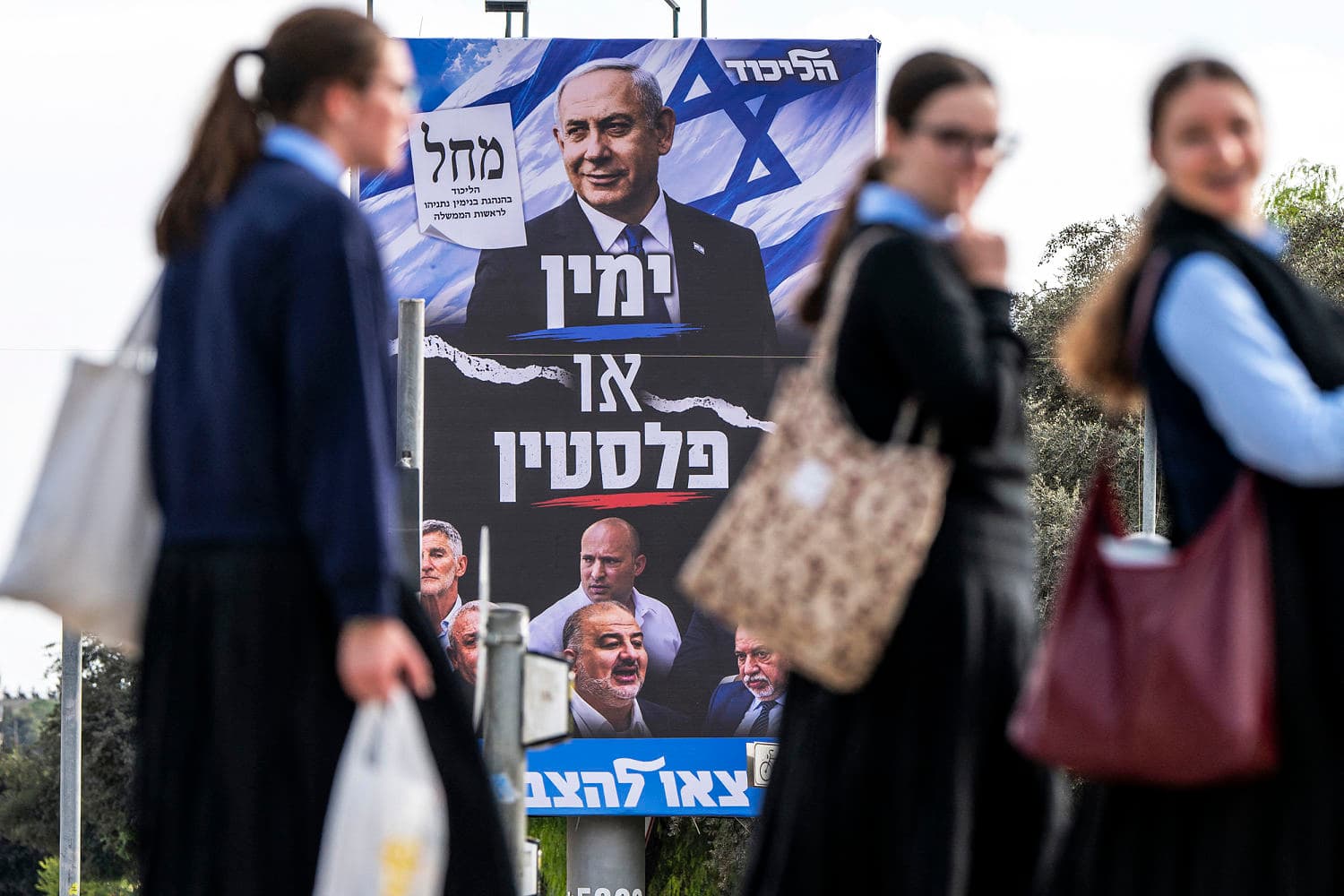
Why it matters
A divided 120-seat Knesset leaves Israel without a definitive governing coalition, elevating institutional friction while regional markets monitor the stability of bilateral trade frameworks and cross-border security alignments.
What happened (in 30 seconds)
- A historic turnout produced no clear majority, with 77.7% of eligible voters participating in the October 27, 2026 election—the highest participation rate in more than two decades.
- The two main factions stalled below the threshold, as Benjamin Netanyahu's Likud-led bloc captured between 50 and 52 seats while Gadi Eisenkot's rival Yashar-led bloc secured 49 to 53 seats, leaving both short of the 61-seat governing line.
- Arab parties emerged with decisive mathematical leverage, securing 17 to 18 seats to create an arithmetic roadblock for standard right- or center-left coalitions, locking Netanyahu into a caretaker capacity.
The context you actually need
- This was the first nationwide vote since October 7, 2023, following three years of continuous regional conflict that triggered deep public scrutiny over security preparedness, economic disruption, and military conscription models.
- Institutional accountability dominated candidate platforms, with former IDF Chief of Staff Gadi Eisenkot structuring his campaign around administrative reform, military operational oversight, and an immediate change in national executive leadership.
- Netanyahu's legal parameters continue to shape legislative tactics, as active domestic judicial proceedings and an international warrant from the ICC incentivize his faction to retain executive authority via prolonged coalition maneuvering.
What's really happening
The October 27 vote illustrates structural incentives overriding decisive electoral mandates. Under Israel's proportional representation model, securing a viable cabinet requires assembling at least 61 seats in the 120-seat Knesset. With exit figures locking the Likud-led bloc at roughly 50 to 52 seats and the Eisenkot-led opposition at 49 to 53 seats, the mechanical path to a functional majority is obstructed. This arithmetic forces both primary blocs into complex horse-trading where small factions hold outsized veto power.
Netanyahu remains caretaker prime minister precisely because the system grants incumbency continuity until a replacement sworn-in cabinet receives parliamentary certification. For the Likud leadership, prolonged negotiation cycles maintain executive tenure without resolving the underlying structural divisions over security accountability, intelligence post-mortems, and universal military draft mandates. Concurrently, Eisenkot’s Yashar party has framed its entire coalition posture on precluding Netanyahu from retaining the premiership, establishing an immediate barrier to national unity arrangements between the two largest vote-getters.
The decisive mathematical development lies in the non-aligned tier: Arab parties consolidated between 17 and 18 seats. While their parliamentary strength mathematically closes off any rapid path to 61 seats for Netanyahu’s right-wing partners—including factions led by Itamar Ben-Gvir and Bezalel Smotrich—historical political barriers continue to constrain their formal entry into an Eisenkot-led governing coalition. The structural result is an administrative holding pattern.
For international market operators, a caretaker executive possesses legal constraints regarding major long-term legislative reforms, broad defense restructuring, and permanent bilateral commitments. The institutional machinery continues to manage day-to-day defense operations, but strategic domestic policy shifts remain paused. Until certified counts convert into a formal governing mandate or trigger another round of national elections, regional actors face an extended period of regulatory and diplomatic unpredictability.
Who feels it first (and how)
- Gulf trade delegations and institutional investors, who must navigate administrative delays in bilateral regulatory harmonization and commercial treaty enforcement under the Abraham Accords framework.
- Sovereign debt and macro hedge funds, which face pricing recalibrations on Israeli sovereign bonds, foreign direct investment flow assumptions, and currency volatility during extended coalition assembly windows.
- Corporate supply-chain directors in the UAE and wider GCC, managing cargo timelines and dual-use technological partnerships that require cabinet-level export clearances and unified ministerial oversight.
- Regional defense and risk consultancy firms, whose strategic models depend on whether executive commands remain centralized under an interim prime minister or transition to defense-establishment veterans.
What to watch next
- Certification of final seat allocations, because a verified single-seat shift between the Likud and Yashar blocs determines which leader receives the initial presidential mandate to attempt government formation.
- Coalition bargaining positions among Arab party leadership, which will reveal whether their 17 to 18 seats will function as outside confidence-and-supply partners or remain an insurmountable arithmetic wall for both mainstream blocs.
- Emergency cabinet alignment discussions, specifically whether centrist elements break their campaign pledges against Netanyahu to avoid entering a repeat election cycle.
Neither the Likud-led bloc (50–52 seats) nor the Eisenkot-led bloc (49–53 seats) holds the requisite 61-seat legislative majority, confirming a parliamentary stalemate.
Netanyahu will retain executive authority in a caretaker capacity over an extended timeline while exploratory coalition negotiations test intra-bloc fault lines.
Whether political operators will forge an emergency cross-bloc compromise or exhaust the statutory negotiation period, triggering another nationwide general election.
Frequently Asked Questions
- Why it matters?
- A divided 120-seat Knesset leaves Israel without a definitive governing coalition, elevating institutional friction while regional markets monitor the stability of bilateral trade frameworks and cross-border security alignments.
- What happened (in 30 seconds)?
- A historic turnout produced no clear majority, with 77.7% of eligible voters participating in the October 27, 2026 election—the highest participation rate in more than two decades. The two main factions stalled below the threshold, as Benjamin Netanyahu's Likud-led bloc captured between 50 and 52 seats while Gadi Eisenkot's rival Yashar-led bloc secured 49 to 53 seats, leaving both short of the 61-seat governing line. Arab parties emerged with decisive mathematical leverage, securing 17 to 18 se
- What's really happening?
- The October 27 vote illustrates structural incentives overriding decisive electoral mandates. Under Israel's proportional representation model, securing a viable cabinet requires assembling at least 61 seats in the 120-seat Knesset. With exit figures locking the Likud-led bloc at roughly 50 to 52 seats and the Eisenkot-led opposition at 49 to 53 seats, the mechanical path to a functional majority is obstructed. This arithmetic forces both primary blocs into complex horse-trading where small fact
- Who feels it first (and how)?
- Gulf trade delegations and institutional investors, who must navigate administrative delays in bilateral regulatory harmonization and commercial treaty enforcement under the Abraham Accords framework. Sovereign debt and macro hedge funds, which face pricing recalibrations on Israeli sovereign bonds, foreign direct investment flow assumptions, and currency volatility during extended coalition assembly windows. Corporate supply-chain directors in the UAE and wider GCC, managing cargo timelines and
- What to watch next?
- Certification of final seat allocations, because a verified single-seat shift between the Likud and Yashar blocs determines which leader receives the initial presidential mandate to attempt government formation. Coalition bargaining positions among Arab party leadership, which will reveal whether their 17 to 18 seats will function as outside confidence-and-supply partners or remain an insurmountable arithmetic wall for both mainstream blocs. Emergency cabinet alignment discussions, specifically
UAE-based newspaper covering Gulf politics, society, and international developments.
"Gulf News is one of the UAE’s most prominent English-language publications."
— A47 Editor
Netanyahu's future on the line as Israel votes today: What you need to know
Israelis went to the polls on October 27, 2026, in a general election widely viewed as a referendum on Prime Minister Benjamin Netanyahu, who has led the country almost continuously for nearly 17 years. It is the first national vote since the October...
A curated Gulf News feed featuring major stories across news, business, opinion, and lifestyle.
"Gulf News is a major UAE newspaper whose featured stories feed reflects a broad editorial mix shaped for a Gulf audience."
— A47 Editor
Netanyahu's future on the line as Israel votes today: What you need to know
Israelis went to the polls on October 27, 2026, in a general election widely viewed as a referendum on Prime Minister Benjamin Netanyahu, who has led the country almost continuously for nearly 17 years. It is the first national vote since the October...
UAE-based English-language newspaper covering regional politics, economics, and global affairs.
"The National reflects Emirati policy perspectives while maintaining international editorial standards."
— A47 Editor
Israeli voters head to polling stations to deliver Netanyahu verdict
Israelis went to the polls on October 27, 2026, in the first national general election since Hamas's October 7, 2023 attacks, a vote widely framed as a referendum on Prime Minister Benjamin Netanyahu, who has led the country almost continuously for n...
Regional coverage and analysis focused on politics, diplomacy, and business across the Middle East.
"Al-Monitor is known for analytical reporting on Middle East politics and policy developments."
— A47 Editor
Israel to give verdict on Netanyahu in pivotal election
Israelis are heading to the polls on October 27, 2026, in a general election widely viewed as a referendum on Prime Minister Benjamin Netanyahu, who has led the country almost continuously for nearly 17 years. It is the first national vote since the ...
Top international stories selected by The Guardian editors.
"The Guardian is known for its progressive editorial stance and in-depth analysis."
— A47 Editor
Netanyahu reportedly pressured military to attack Iran in run-up to election
The Guardian reports that Israeli Prime Minister Benjamin Netanyahu has increasingly used alarmist rhetoric, including posting an AI-generated image of a nuclear mushroom cloud over Tel Aviv, and has reportedly pressed Israel's military to take actio...
Conservative-leaning coverage of current events.
"Fox News is a highly influential conservative news outlet known for right-leaning political commentary and coverage."
— A47 Editor
Netanyahu fights for political future as Israel heads to polls with Iran threat looming
Israel heads into a high-stakes general election on October 27, 2026, with Prime Minister Benjamin Netanyahu's political future and legacy at stake as voters weigh his security record and the continuing threat from Iran, according to Fox News.
UAE-based English-language newspaper covering regional politics, economics, and global affairs.
"The National reflects Emirati policy perspectives while maintaining international editorial standards."
— A47 Editor
Six controversial ways Benjamin Netanyahu has tried to salvage his election prospects
The National reports on six controversial tactics Israeli Prime Minister Benjamin Netanyahu has used to shore up his prospects ahead of the October 27, 2026 election, a vote widely framed as a referendum on his nearly 17 years of near-continuous rule...
RT is a Russian state-funded network covering global events from a Russian perspective.
"RT is widely criticized for promoting pro-Kremlin narratives and is considered by many to be a state propaganda outlet."
— A47 Editor
The lines dividing Israel from itself: RT’s election breakdown
The base report from RT examines Israel's upcoming election, framed around Prime Minister Benjamin Netanyahu's bid to retain power after years of war, political scandals and mass protests. The vote, held October 27, 2026, is the first national electi...
Comprehensive coverage of global events, politics, and international issues.
"NBC News is a mainstream outlet known for comprehensive national and international coverage with a centrist to slightly left-leaning editorial tone."
— A47 Editor
What to know about the Israeli elections as Netanyahu faces a battle for survival
Israelis head to the polls on October 27, 2026, in the first national election since the October 7, 2023 Hamas attacks, a vote widely seen as a referendum on Prime Minister Benjamin Netanyahu, who has dominated Israeli politics for nearly three decad...
National headlines across the United States including breaking stories and societal issues.
"NBC News is a mainstream media outlet known for comprehensive national and international news coverage with a centrist to slightly left-leaning editorial tone."
— A47 Editor
What to know about the Israeli elections as Netanyahu faces a battle for survival
Israeli Prime Minister Benjamin Netanyahu is facing one of the most significant electoral tests of his decades-long career after three years of war, crisis and global outcry, with voters heading to the polls to decide whether he and his Likud party s...