
Trump Renews Military Threats Against Iran as US Reportedly Strikes Qeshm Island Amid Stalled Mediation
Why it matters
The convergence of targeted strikes on key maritime nodes and volatile crude pricing disrupts baseline operating costs for global shipping routes that carry a substantial portion of the world's daily petroleum supply.
What happened (in 30 seconds)
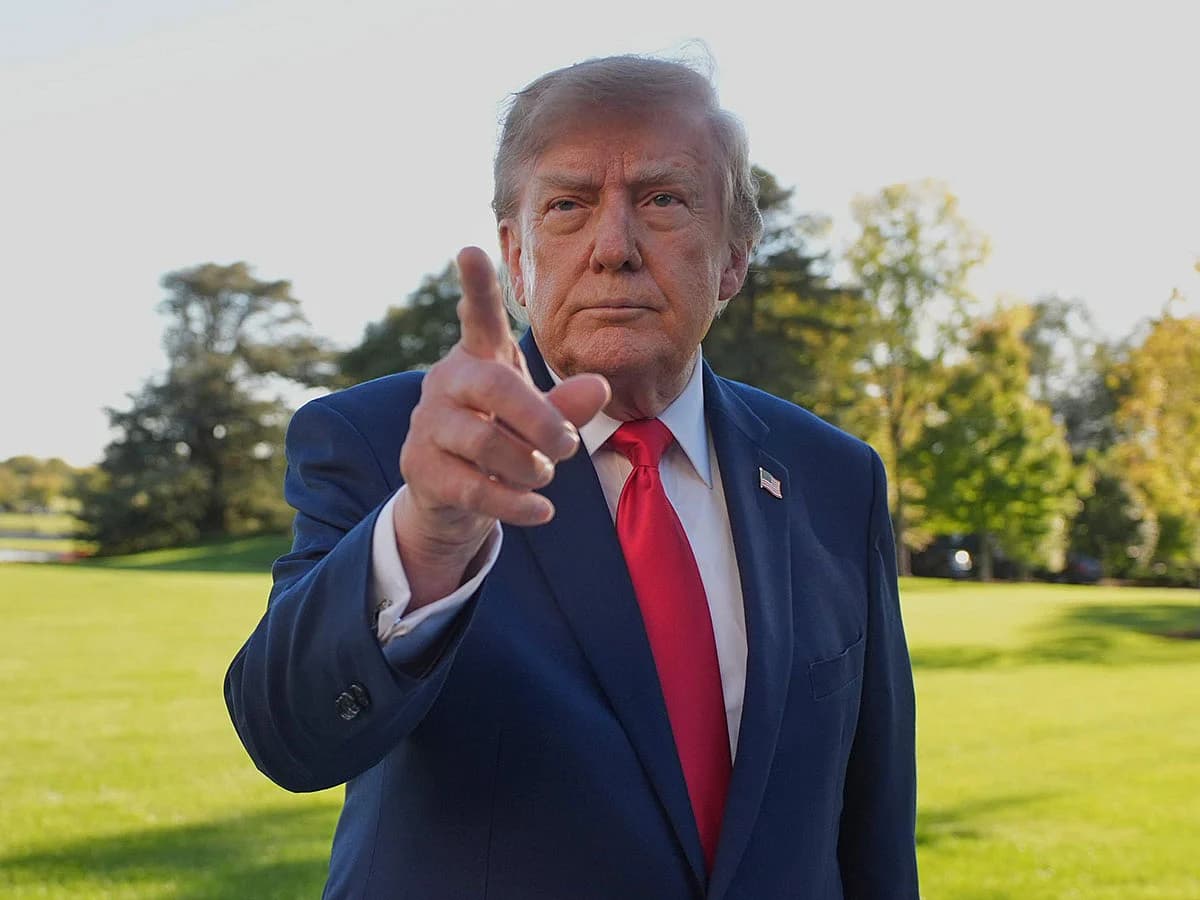
- Renewed military posture: US President Donald Trump stated that Washington may deploy "the hammer" against one or two remaining targets in Iran, asserting these sites could be dealt with in ten minutes.
- Reported strikes and kinetic activity: Reports emerged on November 3, 2026, indicating limited strikes on Iran's strategic Qeshm Island, accompanied by reported drone downings, tanker disruptions, and denials of specific operational claims by US Central Command.
- Tehran's counter-warnings: Iranian officials, including Foreign Minister Abbas Araghchi and military spokesmen, warned that any expansion of hostilities would lack geographic boundaries, red lines, or prior duration constraints.
The context you actually need
- An eight-month baseline conflict: Current developments build upon eight months of reciprocal exchanges between US, Israeli, and Iranian forces that have systematically targeted air defense grids and military infrastructure.
- Active regional diplomacy: Backchannel negotiations mediated by Qatar and Pakistan remain active, seeking de-escalation even as rhetoric escalates around sensitive sites such as Pickaxe Mountain.
- Energy market sensitivity: Brent crude prices dropped 8.22% on November 3, 2026, driven by diplomatic signals despite concurrent kinetic actions and maritime incidents in critical choke points.
What's really happening
The current escalation reflects an operational standoff between deterrence enforcement and geographic leverage. Washington’s articulated rationale focuses on concluding an eight-month kinetic cycle by threatening the remaining nodes of Iran's hardened infrastructure, including sites such as Pickaxe Mountain. By signaling that only one or two operational sites remain and asserting they can be neutralized rapidly, US planning attempts to force compliance before diplomatic mediation solidifies current ground realities.
Tehran’s response operates on asymmetric dispersion. Confronted with degraded conventional capabilities following earlier rounds of conflict, Iranian leadership—including President Masoud Pezeshkian and Supreme Leader Mojtaba Khamenei—is relying on the strategic geography of the Strait of Hormuz to offset conventional aerial disadvantages. The reported strikes on Qeshm Island place kinetic operations directly at the narrowest transit point of the Persian Gulf. By warning that a renewed conflict will extend beyond previous operational timelines and involve zero geographic red lines, Iranian planners are signaling to global markets that localized tactical pressure will trigger broader logistics friction.
This dynamic exposes the conflicting incentives of regional stability and global market pricing. For regional trade hubs, particularly the UAE and Saudi Arabia, stability in shipping lanes remains paramount. While both states have condemned attacks on commercial vessels and enhanced defensive posture, they concurrently support ongoing diplomatic efforts through Qatar and Pakistan to prevent protracted disruptions to commercial transit.
The volatility in energy markets reflects this tension. Rather than pricing in an immediate supply shutdown, commodities traders are balancing the tail risk of Hormuz interdiction against the prospects of a negotiated pause. The 8.22% drop in Brent crude on November 3 underscores that markets are responding primarily to diplomatic viability rather than verbal posturing. However, so long as kinetic operations touch maritime entry points like Qeshm Island, the cost of maritime insurance, security re-routing, and capital protection across regional trade arteries will remain structurally elevated.
Who feels it first (and how)
- Maritime logistics operators: Vessel owners moving through the Strait of Hormuz face immediate shifts in war-risk insurance premiums and route alterations following reported incidents near Qeshm Island.
- Gulf-based enterprise leaders: Supply chain directors and corporate planners in Dubai and regional logistics centers must manage delayed inventory cycles and implement operational contingency buffers.
- Commodity and energy traders: Portfolio managers exposed to crude benchmarks experience sudden volatility swings, demonstrated by single-day price drops exceeding 8%.
- Regional aviation operators: Flight dispatchers and risk management teams must adjust air corridors around contested airspace, driving up fuel burn and schedule adjustments.
What to watch next
- Diplomatic deliverables from Doha and Islamabad: Track whether mediation channels hosted by Qatar and Pakistan yield a structured de-escalation framework or stall over nuclear verification terms.
- Maritime incident frequency around Hormuz: Monitor independent commercial shipping verifications near Qeshm Island to determine if kinetic activity threatens routine tanker transit.
- US target declarations: Watch for follow-up statements from US Central Command regarding specific installations such as Pickaxe Mountain to assess if further targeted strikes materialize.
The US administration issued direct warnings targeting remaining Iranian military sites; mediated diplomatic channels remain open via Qatar and Pakistan; Brent crude dropped 8.22% on November 3, 2026.
Energy markets and shipping insurance will price in persistent risk premiums so long as tactical engagements occur adjacent to major export waterways.
Whether reported kinetic actions on Qeshm Island represent isolated deterrence strikes or the start of an expanded campaign targeting strategic maritime nodes.
Frequently Asked Questions
- Why it matters?
- The convergence of targeted strikes on key maritime nodes and volatile crude pricing disrupts baseline operating costs for global shipping routes that carry a substantial portion of the world's daily petroleum supply.
- What happened (in 30 seconds)?
- Renewed military posture: US President Donald Trump stated that Washington may deploy "the hammer" against one or two remaining targets in Iran, asserting these sites could be dealt with in ten minutes. Reported strikes and kinetic activity: Reports emerged on November 3, 2026, indicating limited strikes on Iran's strategic Qeshm Island, accompanied by reported drone downings, tanker disruptions, and denials of specific operational claims by US Central Command. Tehran's counter-warnings: Iranian
- What's really happening?
- The current escalation reflects an operational standoff between deterrence enforcement and geographic leverage. Washington’s articulated rationale focuses on concluding an eight-month kinetic cycle by threatening the remaining nodes of Iran's hardened infrastructure, including sites such as Pickaxe Mountain. By signaling that only one or two operational sites remain and asserting they can be neutralized rapidly, US planning attempts to force compliance before diplomatic mediation solidifies curr
- Who feels it first (and how)?
- Maritime logistics operators: Vessel owners moving through the Strait of Hormuz face immediate shifts in war-risk insurance premiums and route alterations following reported incidents near Qeshm Island. Gulf-based enterprise leaders: Supply chain directors and corporate planners in Dubai and regional logistics centers must manage delayed inventory cycles and implement operational contingency buffers. Commodity and energy traders: Portfolio managers exposed to crude benchmarks experience sudden v
- What to watch next?
- Diplomatic deliverables from Doha and Islamabad: Track whether mediation channels hosted by Qatar and Pakistan yield a structured de-escalation framework or stall over nuclear verification terms. Maritime incident frequency around Hormuz: Monitor independent commercial shipping verifications near Qeshm Island to determine if kinetic activity threatens routine tanker transit. US target declarations: Watch for follow-up statements from US Central Command regarding specific installations such as Pi
A curated Gulf News feed featuring major stories across news, business, opinion, and lifestyle.
"Gulf News is a major UAE newspaper whose featured stories feed reflects a broad editorial mix shaped for a Gulf audience."
— A47 Editor
Middle East conflict: Trump threatens Iran with military action as Tehran warns new war could last longer
Trump has threatened Iran with military action, while Tehran has warned that any renewed war with the United States could last longer than the previous round of fighting, according to Gulf News. Tensions have escalated across the Gulf, with Iran's su...
UAE-based newspaper covering Gulf politics, society, and international developments.
"Gulf News is one of the UAE’s most prominent English-language publications."
— A47 Editor
Middle East conflict: Trump threatens Iran with military action as Tehran warns new war could last longer
Trump has threatened Iran with military action, while Tehran has warned that any renewed war with the United States could last longer than the previous round of fighting, according to Gulf News. Tensions have escalated across the Gulf, with Iran's su...
Coverage of current events and conflicts in the Middle East.
"France 24 is viewed as a globally focused outlet with balanced coverage and a European perspective."
— A47 Editor
Iran warns renewed war with US could outlast previous conflict
Iran has warned that a renewed war with the United States could last longer than the previous round of fighting, as President Donald Trump suggested Washington still has targets to strike. Tehran has threatened retaliation without geographical limits...
European coverage of Middle East politics and security issues.
"France 24 offers international reporting with a European editorial perspective."
— A47 Editor
Iran warns renewed war with US could outlast previous conflict
Iran has warned that a renewed war with the United States could last longer than the previous round of fighting, as President Donald Trump suggested Washington still has targets to strike. Tehran has threatened retaliation without geographical limits...
UAE-based newspaper covering Gulf politics, society, and international developments.
"Gulf News is one of the UAE’s most prominent English-language publications."
— A47 Editor
Iran warns next war with US could last even longer
Gulf News reports that Iran has warned the United States that any next war could last even longer than the previous one, as tensions over the Gulf escalate and fears of renewed fighting grow. The warning follows reports that Washington and Israel wer...
A curated Gulf News feed featuring major stories across news, business, opinion, and lifestyle.
"Gulf News is a major UAE newspaper whose featured stories feed reflects a broad editorial mix shaped for a Gulf audience."
— A47 Editor
Iran warns next war with US could last even longer
Gulf News reports that Iran has warned the United States that any next war could last even longer than the previous one, as tensions over the Gulf escalate and fears of renewed fighting grow. The warning follows reports that Washington and Israel wer...
Jordanian news and regional updates.
"Roya News is a Jordanian outlet focused on breaking news and local affairs."
— A47 Editor
إيران تحذر واشنطن: أي حرب جديدة ستكون أرهق وأطول من السابقة وترمب لن يملك قرار إنهائها
Iran's military leadership warned Washington on Sunday that any new war would be more exhausting and longer than the previous one, and that President Trump would not hold the authority to end it, according to the base report from Royanews.