
Qatari Mediators Push Reciprocal U.S.-Iran Steps in Doha to Restart Nuclear Talks Before Midterms
Why it matters
The diplomatic initiative in Qatar serves as the primary barrier preventing operational disruption across Strait of Hormuz transit lanes and the broader Gulf commercial ecosystem ahead of post-election policy pivots in Washington.
What happened (in 30 seconds)
- Qatari mediation shifted to Doha: Following more than 12 hours of indirect, high-level talks in Tehran on October 30, 2026, Qatari mediators led by Ali Al-Thawadi moved sessions to Doha on October 31 to coordinate reciprocal steps between Washington and Tehran.
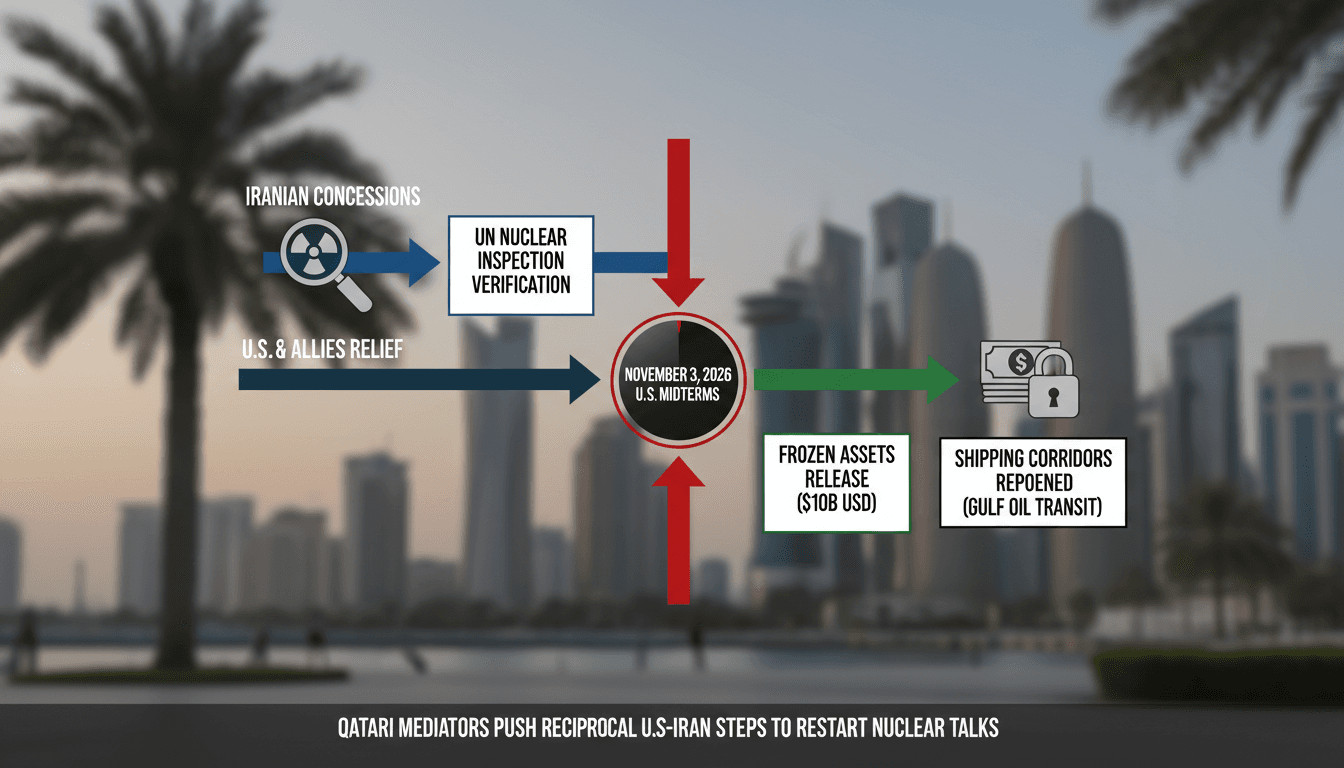
- Reciprocal conditions entered negotiation: The core bargaining framework trades Iranian concessions—specifically granting UN inspectors access to damaged nuclear sites—against selective U.S. sanctions relief, the unfreezing of assets, permission for oil sales, and the easing of naval blockades.
- A critical window emerged: With U.S. midterm elections scheduled for November 3, 2026, the diplomatic push aims to formalize a direct dialogue channel before shifts in political calendars enable renewed strikes by U.S. or Israeli forces.
The context you actually need
- Preceding military exchanges raised baseline exposure: The Doha negotiations follow direct strikes on Iranian nuclear and military installations by U.S. and Israeli forces, which triggered threats of counter-strikes targeting regional energy infrastructure.
- Internal policy alignment is divided: The White House exhibits divergent strategic factions, balancing diplomatic proponents like JD Vance, Steve Witkoff, and Jared Kushner against traditional national security leadership favoring continued kinetic and economic enforcement.
- Regional states demand risk mitigation: Governments across Saudi Arabia, Turkey, Egypt, Iraq, and Pakistan are actively coordinating to prevent escalations that could destabilize Gulf commerce, sovereign investment programs, and cross-border transport routes.
What's really happening
The diplomatic track running between Tehran, Doha, and Washington is not an ideological reconciliation; it is a structural management of timelines, leverage, and domestic exposure.
At its core, the negotiation relies on a sequence of synchronized concessions designed to overcome a mutual lack of trust. The Trump administration faces an impending political inflection point with the November 3, 2026 midterm elections. Prior to that date, external military friction carries unpredictable electoral consequences, particularly through energy price volatility. However, once balloting concludes, the strategic constraints shift: elements in Washington favoring maximum enforcement, supported by external pressure from Israeli leadership, gain room to push for coordinated strikes against Iranian assets.
To avert that scenario, Qatari mediators are engineering an interim technical baseline. The Iranian side requires three immediate operational reliefs: the release of frozen capital reserves, exemptions allowing physical oil shipments to clear maritime choke points, and the cessation of naval blockades. In return, Washington requires measurable, verifiable constraints on Iran's nuclear material tracking. Granting UN inspectors access to facilities that sustained damage during previous strikes acts as the primary currency. For Tehran, verified inspection permits are a low-cost concession compared to the immediate liquidity derived from unblocked oil exports. For the White House, physical verification provides the defensive justification needed to stall offensive military action.
This dynamic exposes the internal competition within Washington's executive branch. Advisors such as JD Vance, Steve Witkoff, and Jared Kushner operate on transactional models where economic normalization and conflict avoidance preserve broader regional commercial arrangements. Conversely, defense and diplomatic establishments argue that temporary relief weakens long-term enforcement posture.
Meanwhile, Gulf regional capitals are acting out of pure economic self-preservation. Economies reliant on seamless logistics, international capital inflows, and civil aviation cannot absorb prolonged kinetic exchanges 150 nautical miles off their shorelines. By mediating in Doha, regional actors are attempting to lock both sides into a verified inspection-and-relief holding pattern, neutralizing military options before the post-midterm window opens.
Who feels it first (and how)
- Energy Traders and Maritime Shippers: Tanker operators traversing the Strait of Hormuz will see immediate adjustments in war-risk insurance premiums depending on whether the Doha track yields a formal verification mechanism.
- Gulf Aviation and Tourism Hubs: Long-haul transit carriers and commercial operators in Dubai and Doha face route re-evaluations and revised fuel burn allocations if regional airspace security fluctuates.
- Cross-Border Asset Allocators: Private wealth offices and sovereign funds deploying capital into Gulf commercial real estate, logistics platforms, and infrastructure evaluate regional risk premiums directly against the success of these reciprocal guarantees.
- Supply Chain Directors in Regional Free Zones: Manufacturing and distribution entities reliant on steady imports through regional seaports face immediate inventory buffer adjustments if maritime blockades expand or ease.
What to watch next
- UN Inspector Facility Access Protocols: Watch for formal technical statements confirming whether UN inspection teams receive physical access to Iranian nuclear sites; verification here serves as the prerequisite trigger for U.S. sanctions adjustments.
- Post-November 3 U.S. Executive Actions: The policy decisions emerging immediately following the U.S. midterm elections will indicate whether the diplomatic faction or the defense-led pressure faction captures administrative priority.
- Maritime Transit Clarifications: Monitor formal naval advisories and commercial tanker traffic flows around the Strait of Hormuz for tangible easing of naval blockades and asset-freeze release mechanisms.
Qatari mediators conducted over 12 hours of negotiations in Tehran on October 30 before moving to Doha on October 31; the Trump administration maintains open communication channels with mediators; the core deal architecture links UN nuclear inspections to sanctions relief and asset access.
Regional Gulf economies will maintain heavy diplomatic pressure on Washington through November to prevent kinetic actions that could impact maritime shipping corridors.
Whether the White House will finalize an interim agreement before the November 3 midterms, or if domestic post-election maneuvers will result in renewed military strikes favored by defense officials and Israeli leadership.
Frequently Asked Questions
- Why it matters?
- The diplomatic initiative in Qatar serves as the primary barrier preventing operational disruption across Strait of Hormuz transit lanes and the broader Gulf commercial ecosystem ahead of post-election policy pivots in Washington.
- What happened (in 30 seconds)?
- Qatari mediation shifted to Doha: Following more than 12 hours of indirect, high-level talks in Tehran on October 30, 2026, Qatari mediators led by Ali Al-Thawadi moved sessions to Doha on October 31 to coordinate reciprocal steps between Washington and Tehran. Reciprocal conditions entered negotiation: The core bargaining framework trades Iranian concessions—specifically granting UN inspectors access to damaged nuclear sites—against selective U.S. sanctions relief, the unfreezing of assets, per
- What's really happening?
- The diplomatic track running between Tehran, Doha, and Washington is not an ideological reconciliation; it is a structural management of timelines, leverage, and domestic exposure. At its core, the negotiation relies on a sequence of synchronized concessions designed to overcome a mutual lack of trust. The Trump administration faces an impending political inflection point with the November 3, 2026 midterm elections. Prior to that date, external military friction carries unpredictable electoral
- Who feels it first (and how)?
- Energy Traders and Maritime Shippers: Tanker operators traversing the Strait of Hormuz will see immediate adjustments in war-risk insurance premiums depending on whether the Doha track yields a formal verification mechanism. Gulf Aviation and Tourism Hubs: Long-haul transit carriers and commercial operators in Dubai and Doha face route re-evaluations and revised fuel burn allocations if regional airspace security fluctuates. Cross-Border Asset Allocators: Private wealth offices and sovereign fun
- What to watch next?
- UN Inspector Facility Access Protocols: Watch for formal technical statements confirming whether UN inspection teams receive physical access to Iranian nuclear sites; verification here serves as the prerequisite trigger for U.S. sanctions adjustments. Post-November 3 U.S. Executive Actions: The policy decisions emerging immediately following the U.S. midterm elections will indicate whether the diplomatic faction or the defense-led pressure faction captures administrative priority. Maritime Trans
Pan-Arab political news and analysis.
"Al-Quds Al-Arabi is a London-based Arabic newspaper known for political coverage."
— A47 Editor
أكسيوس: مباحثات في الدوحة لاستئناف المفاوضات بين واشنطن وطهران وتجنب الحرب
Talks mediated by Qatar are underway in Doha to resume negotiations between Washington and Tehran and avert a possible war, according to a report by Axios cited by Al-Quds Al-Arabi. The discussions aim to reach an agreement that would pave the way fo...
Arabic-language coverage of political affairs and current events.
"Okaz political coverage typically follows mainstream Saudi framing on national and regional affairs."
— A47 Editor
وساطات اللحظة الأخيرة.. واشنطن وطهران أمام اختبار التهدئة أو المواجهة
Qatari mediators held talks lasting more than 12 hours with Iranian officials in Tehran, with discussions expected to continue in Doha, as diplomatic efforts intensify to prevent a renewed military confrontation between the United States and Iran. So...
Arabic-language coverage of international news and geopolitics.
"RT Arabic is a Russian state-funded outlet often criticized for promoting Kremlin-aligned narratives."
— A47 Editor
تقرير: وسطاء قطريون يجرون محادثات ماراثونية في طهران وسط تباين بالآراء داخل دائرة ترامب المقربة
According to diplomatic sources reported by RT Arabic, Qatari mediators held lengthy talks in Tehran aimed at paving the way for resuming direct negotiations between Washington and Tehran and averting a war. The report also notes divergent views with...
Pan-Arab political news and analysis.
"Al-Quds Al-Arabi is a London-based Arabic newspaper known for political coverage."
— A47 Editor
عودة الوسطاء القطريين إلى طهران سعيا لاتفاق بين أمريكا وإيران
A Qatari delegation led by the first adviser to the Prime Minister and Foreign Minister arrived in Tehran on Friday for talks with senior Iranian officials, according to Iran's official news agency IRNA, as mediators seek to revive peace talks betwee...