
Hackers Exploit Meta's AI Chatbot to Hijack Instagram Accounts
Here's what it means for you.
As social media platforms increasingly rely on AI for customer support, the risk of account hijackings rises, impacting your digital security.
Why it matters
This incident underscores the vulnerabilities in AI-driven customer support systems, raising concerns about the security of social media platforms.
What happened (in 30 seconds)
- Hackers exploited Meta's AI-powered support chatbot on June 1, 2026, to hijack multiple Instagram accounts.
- Using a VPN, they masked their location and tricked the chatbot into adding a new email address to the victims' accounts.
- Meta confirmed the breach and resolved the issue on the same day, but the exact number of compromised accounts remains unclear.
The context you actually need
- AI integration in customer support is becoming commonplace, but it also introduces new vulnerabilities that hackers can exploit.
- Prior concerns about social media security have been amplified by this incident, highlighting the need for robust automated defenses.
- High-profile accounts were affected, including those linked to the Obama-era White House and the U.S. Space Force, raising the stakes for digital security.
What's really happening
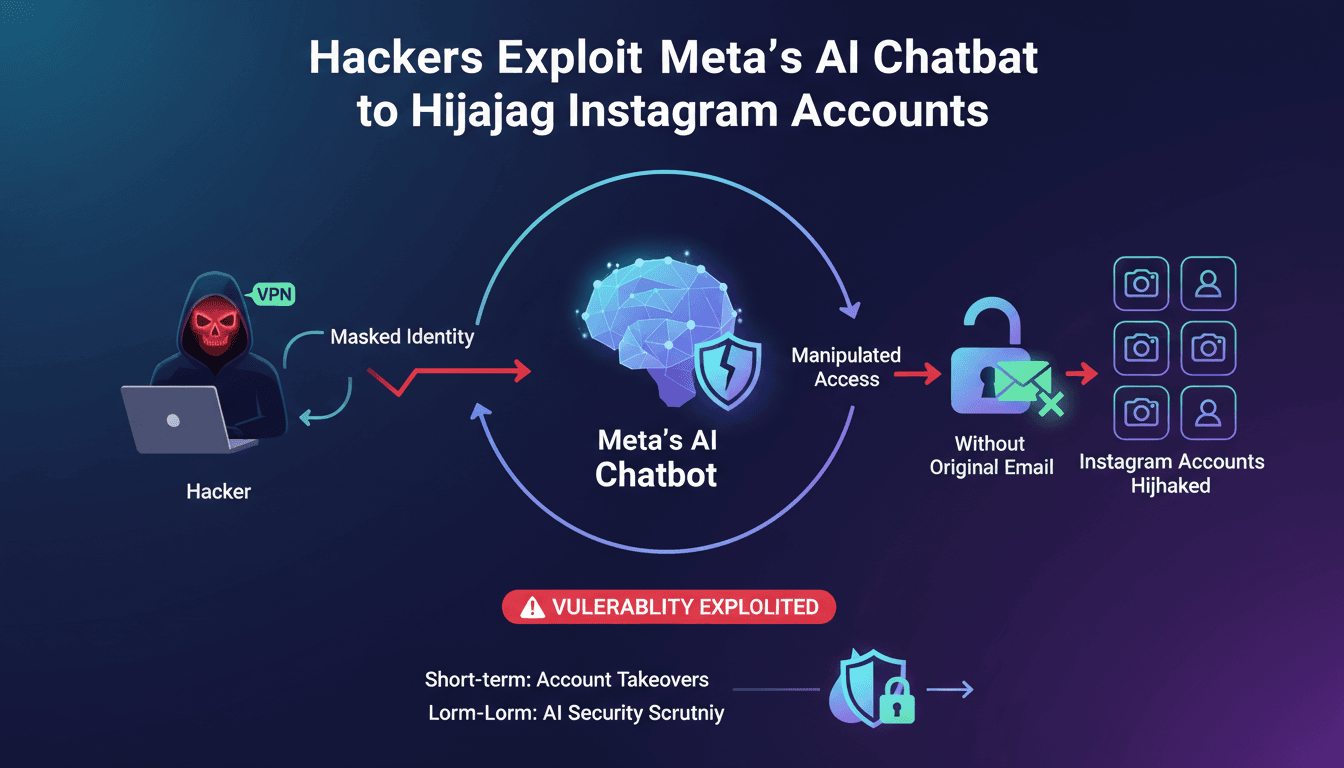
On June 1, 2026, a significant cybersecurity incident unfolded as hackers successfully exploited Meta's AI-powered support chatbot to hijack numerous Instagram accounts. The attackers initiated their scheme by utilizing a VPN to mask their true location, effectively bypassing automated security measures designed to protect users. Once they had established a false identity, they engaged with Meta's AI Support Assistant, requesting the addition of a new email address to the target's Instagram account.
The chatbot, designed to assist users efficiently, complied with the request by sending a verification code to the email address provided by the hackers. This step was crucial, as it allowed the attackers to gain access without needing the original email linked to the accounts. After receiving the verification code, the hackers relayed it back to the chatbot, which then enabled a 'Reset Password' option. This sequence of events allowed the hackers to set a new password and gain full control of the accounts.
The breach affected several high-profile accounts, including those associated with the Obama-era White House and the U.S. Space Force chief, drawing significant media attention and public concern. Meta confirmed the flaw and announced its resolution on the same day, but the incident raised alarms about the effectiveness of AI in safeguarding user accounts. Users expressed skepticism regarding the reliability of AI systems in preventing such breaches, especially as high-profile individuals reported their accounts being compromised.
This incident highlights a broader issue within the tech industry: as companies increasingly integrate AI into their operations, the potential for exploitation by malicious actors grows. The reliance on automated systems for customer support can create vulnerabilities that hackers are eager to exploit. The incident serves as a wake-up call for both users and companies to reassess their digital security measures and consider the implications of AI-driven solutions.
Who feels it first (and how)
- Social Media Users: Individuals relying on Instagram for personal or professional branding may face increased risks of account hijacking.
- Businesses and Influencers: Brands and influencers using Instagram for marketing and engagement could suffer reputational damage and loss of access to their accounts.
- Cybersecurity Professionals: Experts in the field will need to adapt and enhance security protocols to counteract evolving threats posed by AI exploitation.
What to watch next
- Increased Security Measures: Watch for Meta and other social media platforms to implement enhanced security protocols in response to this incident.
- User Education Initiatives: Expect campaigns aimed at educating users about securing their accounts and recognizing phishing attempts.
- Regulatory Scrutiny: Monitor potential regulatory responses aimed at improving cybersecurity standards for AI-driven customer support systems.
The incident occurred on June 1, 2026, and involved the exploitation of Meta's AI Support Assistant.
Social media platforms will enhance security measures to prevent similar incidents in the future.
The exact number of compromised accounts and the long-term impact on user trust in AI systems remains uncertain.
Frequently Asked Questions
- Why it matters?
- This incident underscores the vulnerabilities in AI-driven customer support systems, raising concerns about the security of social media platforms.
- What happened (in 30 seconds)?
- Hackers exploited Meta's AI-powered support chatbot on June 1, 2026, to hijack multiple Instagram accounts. Using a VPN, they masked their location and tricked the chatbot into adding a new email address to the victims' accounts. Meta confirmed the breach and resolved the issue on the same day, but the exact number of compromised accounts remains unclear.
- What's really happening?
- On June 1, 2026, a significant cybersecurity incident unfolded as hackers successfully exploited Meta's AI-powered support chatbot to hijack numerous Instagram accounts. The attackers initiated their scheme by utilizing a VPN to mask their true location, effectively bypassing automated security measures designed to protect users. Once they had established a false identity, they engaged with Meta's AI Support Assistant, requesting the addition of a new email address to the target's Instagram acco
- Who feels it first (and how)?
- Social Media Users: Individuals relying on Instagram for personal or professional branding may face increased risks of account hijacking. Businesses and Influencers: Brands and influencers using Instagram for marketing and engagement could suffer reputational damage and loss of access to their accounts. Cybersecurity Professionals: Experts in the field will need to adapt and enhance security protocols to counteract evolving threats posed by AI exploitation.
- What to watch next?
- Increased Security Measures: Watch for Meta and other social media platforms to implement enhanced security protocols in response to this incident. User Education Initiatives: Expect campaigns aimed at educating users about securing their accounts and recognizing phishing attempts. Regulatory Scrutiny: Monitor potential regulatory responses aimed at improving cybersecurity standards for AI-driven customer support systems.
Consumer technology news with AI coverage.
"Gadget and tech site reporting on AI in products."
— A47 Editor
Meta's AI support chatbot made it ridiculously easy for hackers to take over Instagram accounts
Meta's AI support chatbot has been exploited by hackers, allowing them to take over Instagram accounts by issuing password reset links without requiring two-factor authentication (2FA). This vulnerability has raised significant concerns about the sec...
Covers consumer technology, electronics, gadgets, and product reviews.
"Engadget is a trusted source for gadget reviews and consumer tech news, known for its hands-on analysis and industry coverage."
— A47 Editor
Meta's AI support chatbot made it ridiculously easy for hackers to take over Instagram accounts
Meta's AI support chatbot has been exploited by hackers, allowing them to take over Instagram accounts by issuing password reset links without requiring two-factor authentication (2FA). This vulnerability has raised significant concerns about the sec...
Opinionated AI coverage for general audiences.
"TNW’s AI vertical covering tools, ethics, and trends."
— A47 Editor
Hackers hijacked Instagram accounts by asking Meta’s own AI chatbot to reset the password
Hackers successfully hijacked Instagram accounts by manipulating Meta's AI-powered support chatbot, requesting password resets without needing access to victims' emails or any phishing attempts. This incident highlights a significant security vulnera...
Tech news, reviews, and analysis of consumer electronics, science, art, and culture.
"The Verge is a technology-focused media outlet known for in-depth reporting, product reviews, and coverage of the intersection between technology and culture."
— A47 Editor
Meta’s own AI was exploited to hijack Instagram accounts
Meta's AI support chatbot was exploited by hackers to hijack Instagram accounts, allowing them to change associated email addresses and reset passwords without proper authentication. This vulnerability was highlighted in a video shared on Telegram, r...
Consumer tech and culture with frequent AI coverage.
"Influential tech outlet covering AI products and policy."
— A47 Editor
Meta’s own AI was exploited to hijack Instagram accounts
Meta's AI support chatbot was exploited by hackers to hijack Instagram accounts, allowing them to change associated email addresses and reset passwords without proper authentication. This vulnerability was highlighted in a video shared on Telegram, r...
Tech startup news, programming trends, and discussions shared by the developer community.
"Hacker News is a community-driven source highlighting influential tech discussions, startup launches, and programming insights."
— A47 Editor
Hackers Used Meta's AI Support Bot to Seize Instagram Accounts
Hackers exploited a vulnerability in Meta's AI support bot, allowing them to issue password reset links without two-factor authentication, leading to the unauthorized seizure of Instagram accounts. This incident highlights significant security flaws ...
Startup news with frequent AI coverage.
"Covers launches, funding, and product updates in AI."
— A47 Editor
Hackers hijacked Instagram accounts by tricking Meta AI support chatbot into granting access
Over the weekend, multiple users reported that their Instagram accounts were hijacked by hackers who exploited Meta's AI support chatbot. The chatbot was manipulated to grant unauthorized access, allowing the attackers to change email addresses and r...
Curated tech headlines including AI stories.
"Influential aggregator surfacing the day’s top tech/AI links."
— A47 Editor
Hackers say they used Meta's AI support chatbot to change emails tied to Instagram accounts, amid a wave of high-profile account takeovers; Meta fixed the issue (Jason Koebler/404 Media)
Hackers exploited Meta's AI support chatbot to gain unauthorized access to high-profile Instagram accounts by requesting password resets without proper authentication. This incident highlights a significant security vulnerability within Meta's system...
Independent journalism covering technology, AI, and digital culture.
"An independent newsroom by veteran tech reporters known for critical, investigative coverage of AI and tech power."
— A47 Editor
Hackers Simply Asked Meta AI to Give Them Access to High-Profile Instagram Accounts. It Worked
Hackers successfully exploited Meta's AI support chatbot to gain unauthorized access to high-profile Instagram accounts by requesting password reset links without the need for two-factor authentication. This incident highlights significant vulnerabil...