
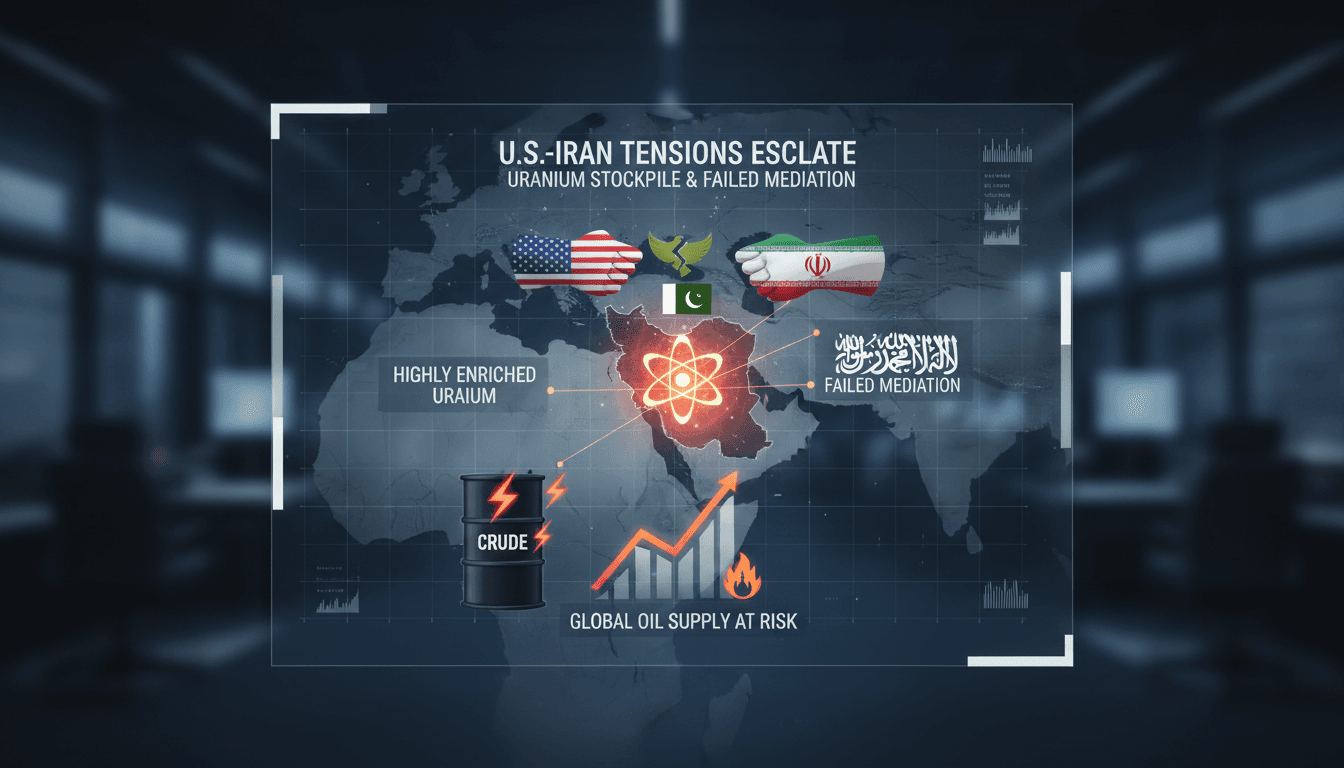
U.S.-Iran tensions escalate over uranium stockpile amid mediation efforts
Here's what it means for you.
The escalating tensions between the U.S. and Iran over uranium stockpiles could have significant implications for global markets, particularly in the energy sector. As negotiations falter, the risk of military confrontation increases, which may disrupt oil supplies and drive prices higher. Stakeholders in international relations and energy markets should closely monitor the situation as it unfolds. The involvement of Pakistan as a mediator adds a layer of complexity, highlighting the geopolitical stakes in the region. A failure to reach an agreement could lead to broader economic repercussions, affecting not just the U.S. and Iran, but also global supply chains.
What happened
Tensions between the U.S. and Iran have escalated as Iran rejected U.S. demands regarding its stockpile of highly enriched uranium. President Trump has insisted on retrieving this uranium, which Iran's Supreme Leader has vowed to keep within the country. The situation complicates ongoing peace negotiations, with both sides entrenched in their positions.
Mediators from Pakistan are attempting to facilitate discussions to prevent further military conflict. However, the stark opposition between the U.S. and Iran raises fears of a renewed crisis in the region. The estimated 900 pounds of highly enriched uranium in Iran's possession remains a critical point of contention.
The Context
The backdrop of this conflict includes President Trump's threats of military action if Iran does not comply with U.S. demands. Iran's Supreme Leader has ordered that the uranium remain within the country, directly opposing U.S. requests. The Strait of Hormuz, a vital point for global oil supplies, adds urgency to the negotiations.
Pakistan's role as a mediator aims to establish a temporary 30-day window for discussions, but the entrenched positions of both nations complicate this effort. The economic implications of the conflict are significant, particularly concerning global oil prices and supply chains, making the outcome of these negotiations critical.
Takeaway
As negotiations continue, the risk of military confrontation remains high, necessitating careful navigation of positions by both sides. The potential for military action looms if diplomatic efforts mediated by Pakistan fail to yield results. Stakeholders should monitor developments closely, as the situation could evolve rapidly.
The ongoing conflict underscores the precarious balance of power in the region and the need for a diplomatic resolution to avoid further escalation. The implications for global markets, particularly in energy, could be profound if tensions continue to rise.
Arabic-language coverage of political affairs and current events.
"Okaz political coverage typically follows mainstream Saudi framing on national and regional affairs."
— A47 Editor
«هرمز» في ربع الساعة الأخيرة.. هل تنجح باكستان في انتزاع مهلة الـ 30 يوماً؟
In a last-minute shift, U.S. President Donald Trump has backed away from a military strike against Iran, raising questions about the implications of this decision as the deadline for Iran's response approaches. The proposed 30-day extension by Pakist...
Conservative-leaning political and national coverage.
"The Washington Times is a conservative-leaning newspaper known for its political coverage and advocacy of right-of-center viewpoints."
— A47 Editor
Uranium deadline creates crisis for peace mediators: Trump threatens 'very drastic' action
President Trump has declared that the U.S. will not permit Iran to retain highly enriched uranium, a critical issue in ongoing negotiations aimed at achieving peace in the Middle East. This statement comes as Pakistani mediators are urging Iran to pr...
Regional coverage and analysis focused on politics, diplomacy, and business across the Middle East.
"Al-Monitor is known for analytical reporting on Middle East politics and policy developments."
— A47 Editor
Trump vows U.S. will retrieve uranium from Iran
President Donald Trump announced that the United States will work to recover Iran's stockpile of highly enriched uranium, despite Iran's refusal to hand over the material. Trump emphasized that the U.S. does not want the uranium and may destroy it af...
Corporate finance news, M&A, deals, and executive interviews.
"Finance Monthly serves a professional readership with corporate finance coverage."
— A47 Editor
Iran Rejects Trump Nuclear Demand as Oil Market Fears Return
Iran has rejected former President Donald Trump's demand regarding its nuclear program, amidst rising tensions and fears of a renewed global oil crisis. This rejection comes as oil markets react to Trump's fluctuating military threats and negotiation...
English-language reporting on Saudi politics, policy, and society.
"Saudi Gazette reflects mainstream Saudi institutional perspectives."
— A47 Editor
Iran examining latest US proposal as Trump says negotiations 'on borderline'
Iran is currently reviewing a proposal from the United States, conveyed through Pakistani mediators, as tensions escalate between the two nations. Iranian Foreign Ministry spokesman Esmaeil Baqaei confirmed that the country is examining the U.S. poin...