
U.S. Energy Secretary Confirms Capacity for Increased Venezuelan Oil Imports
Here's what it means for you.
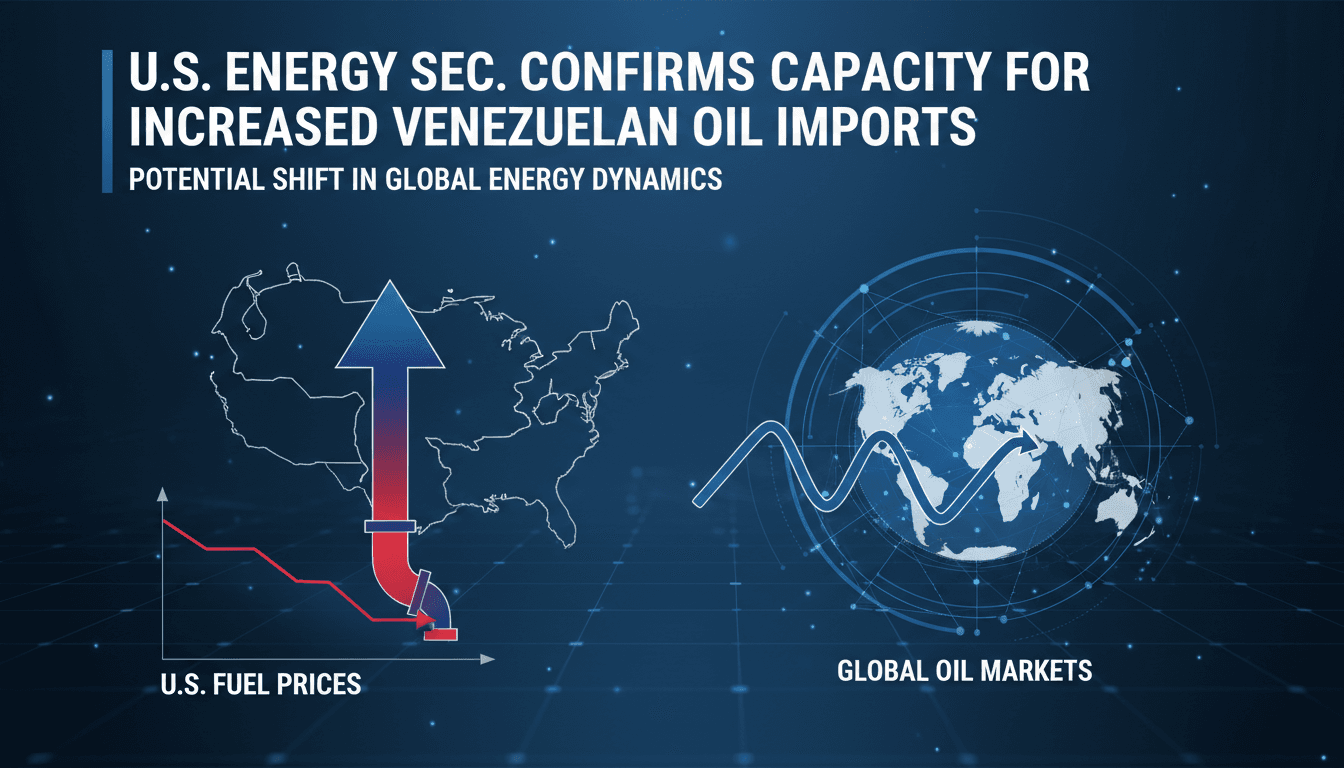
The announcement by U.S. Energy Secretary Chris Wright that American refiners can absorb more Venezuelan crude oil signals a potential shift in U.S. energy sourcing strategies. This development comes at a time when the U.S. is looking to enhance its oil imports from Venezuela, which could help stabilize domestic fuel prices. As global energy dynamics fluctuate, this move may also impact international oil markets significantly. Increased capacity for Venezuelan oil imports could lead to a more resilient U.S. energy landscape, particularly as geopolitical tensions continue to influence supply chains. Stakeholders in the energy sector should closely monitor these developments as they unfold.
What happened
Energy Secretary Chris Wright confirmed that U.S. refiners are capable of handling additional Venezuelan crude oil. This statement was made amid ongoing discussions regarding the potential for increased oil imports from Venezuela. The confirmation indicates a readiness to adapt to changing global energy dynamics.
Currently, the level of Venezuelan oil imports to the U.S. stands at zero, but this could change with the newfound capacity. The implications of this announcement could be far-reaching, affecting both domestic fuel prices and the broader oil market.
The Context
The U.S. has been exploring ways to increase oil imports from Venezuela, a country whose oil production has been significantly affected by sanctions and economic challenges. As the global energy landscape evolves, the ability to tap into Venezuelan resources could provide a much-needed boost to U.S. fuel supply.
This development is particularly relevant given the ongoing fluctuations in global oil markets, which have been influenced by various geopolitical factors. The timing of Wright's announcement aligns with broader energy market considerations, making it a pivotal moment for U.S.-Venezuela relations.
Takeaway
The ability of U.S. refiners to absorb more Venezuelan oil could lead to a significant shift in energy sourcing strategies. Stakeholders should monitor U.S.-Venezuela relations closely, as any changes in import levels could reshape the energy landscape.
Additionally, fluctuations in global oil prices may occur as U.S. refiners adjust their supply sources. The coming months will be crucial in determining how this capacity change impacts both domestic and international markets.
Regional and international reporting focused on Middle Eastern politics, diplomacy, and economics.
"Asharq Al-Awsat is a Saudi-owned international newspaper reflecting mainstream Gulf political perspectives."
— A47 Editor
US Refiners Can Still Absorb More Venezuelan Oil, Energy Secretary Wright Says
Energy Secretary Wright stated that US refiners have the capacity to absorb additional Venezuelan oil, indicating a potential increase in imports from the South American nation. This statement comes amid ongoing discussions about energy supply and ge...
Pan-Arab news coverage spanning politics, business, sports, and regional affairs.
"Asharq Al-Awsat reflects a broad Arab editorial perspective with strong attention to regional geopolitics."
— A47 Editor
وزير الطاقة: المصافي الأميركية قادرة على استيعاب المزيد من نفط فنزويلا
U.S. Energy Secretary Chris Wright stated that American refineries are still capable of processing more Venezuelan crude oil. This announcement highlights the ongoing capacity of U.S. refineries to accommodate additional supplies from Venezuela, whic...
Macro commentary, policy analysis, growth/inflation themes, and global outlooks.
"Contextual macro coverage that complements day-to-day market headlines."
— A47 Editor
Wright says U.S. refiners can handle more Venezuelan oil
U.S. Energy Secretary Wright stated that U.S. refiners are capable of processing more Venezuelan oil, indicating a potential increase in imports from the South American nation. This announcement reflects a shift in U.S. energy policy towards enhancin...