
SpaceX's IPO Boosts Market Sentiment and Trading Activity
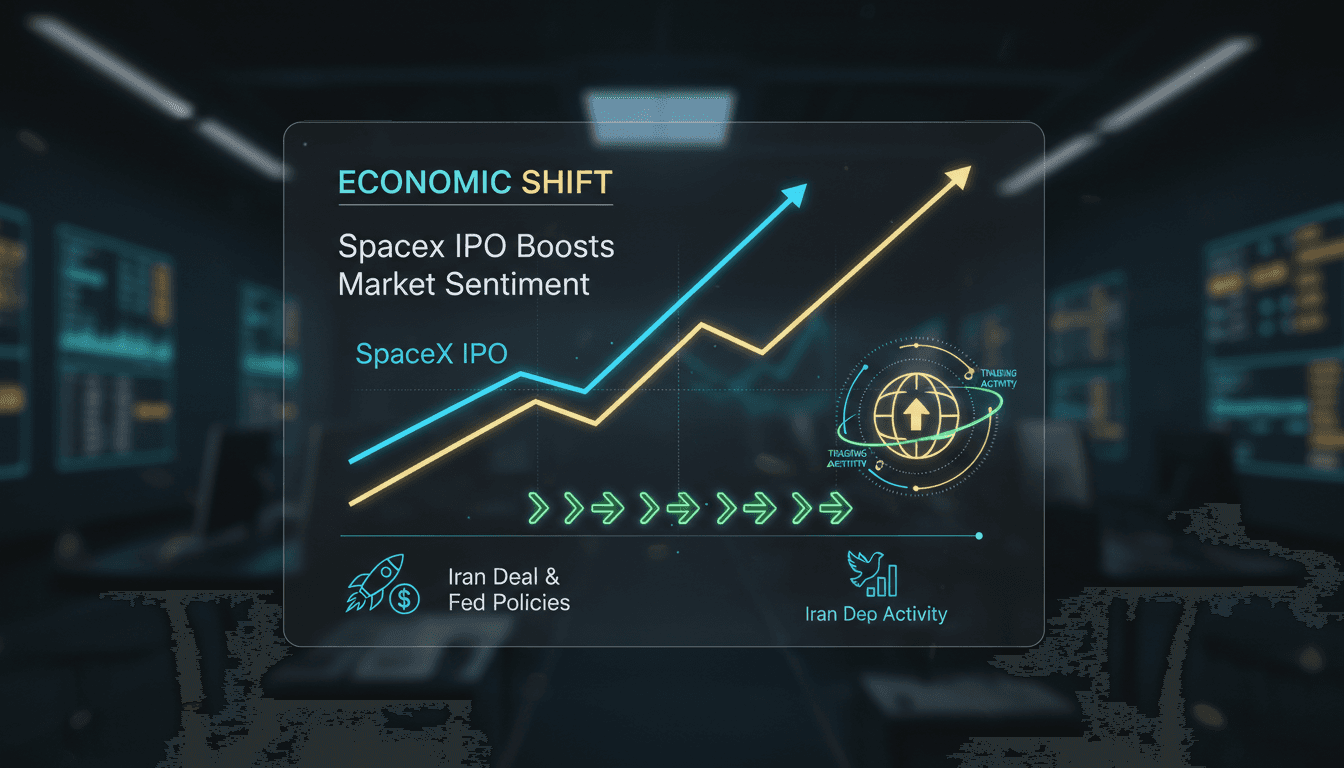
Here's what it means for you.
The successful IPO of SpaceX has revitalized market sentiment, signaling a renewed confidence among investors. This shift comes at a crucial time as attention pivots back to domestic economic issues, particularly the Iran deal and Federal Reserve policies. As trading activity ramps up, particularly with the anticipated launch of SpaceX options, market participants are likely to reassess their investment strategies. Investors will need to stay alert to how these developments may influence broader market dynamics in the coming weeks.
What happened
SpaceX's recent IPO has had a significant positive impact on market sentiment and trading activity. Executed last week, it marked the largest-ever IPO, which has drawn considerable attention from investors. This event has prompted a shift in focus back to domestic economic issues, including the ongoing discussions surrounding the Iran deal and Federal Reserve policies.
As a result of this renewed interest, heavy trading is expected with the upcoming launch of SpaceX options. This indicates that investors are keen to engage with the company’s performance in the market.
The Context
The execution of SpaceX's IPO represents a pivotal moment in the financial landscape, as it is the largest in history. This milestone has not only boosted investor confidence but also shifted the focus from SpaceX to other pressing economic factors. The timing of this IPO coincides with a volatile week for the markets, making its success even more noteworthy.
Stakeholders are now closely monitoring how this development will influence trading strategies and market behavior. The interplay between SpaceX's performance and broader economic issues will be critical in shaping future investment decisions.
Takeaway
Looking ahead, investors should keep a close eye on developments regarding the Iran deal and the performance of SpaceX options in the coming days. The market's reaction to SpaceX's IPO suggests a potential reevaluation of investment strategies as participants remain vigilant about domestic economic developments.
As the market stabilizes, the implications of SpaceX's entry will likely continue to resonate, influencing trading dynamics and investor sentiment.
Global markets, investing, and macroeconomics from a premier financial newsroom.
"Bloomberg is respected for in-depth financial reporting and data-driven analysis."
— A47 Editor
Stock Market Moves On From SpaceX to Focus On Iran Deal, Fed
Following the successful debut of SpaceX's initial public offering (IPO), which raised approximately $75 billion, the stock market is shifting its focus from the aerospace company back to domestic concerns, particularly the potential Iran deal and Fe...
Market-moving headlines impacting equities, bonds, and related risk assets.
"Real-time catalysts and volatility drivers across indices and sectors."
— A47 Editor
Heavy trading expected when SpaceX options launch in coming days
SpaceX is set to launch its options trading in the coming days following a historic debut on the Nasdaq, where it achieved a market valuation exceeding $2 trillion after its initial public offering (IPO) priced at $135 per share. The IPO raised appro...
Market-moving headlines impacting equities, bonds, and related risk assets.
"Real-time catalysts and volatility drivers across indices and sectors."
— A47 Editor
SpaceX debut helps lift market sentiment after volatile week
SpaceX made a historic debut on the Nasdaq on June 12, 2026, achieving a market valuation exceeding $2 trillion after its initial public offering (IPO) priced at $135 per share, raising approximately $75 billion. The stock opened 11% higher on its fi...