
Microsoft announces Majorana 2 quantum chip with enhanced reliability and accelerated timeline
Here's what it means for you.
Microsoft's unveiling of the Majorana 2 quantum chip signals a pivotal shift in the quantum computing landscape, promising enhanced reliability and a faster path to commercial viability. This development could have profound implications for industries that rely on quantum technologies, such as cryptography and materials science. As the company aims for practical applications by 2029, stakeholders should prepare for a potential transformation in how quantum computing is integrated into various sectors. The integration of AI in the chip's development underscores a growing trend of leveraging advanced technologies to solve complex challenges in quantum computing. This move not only positions Microsoft as a leader in the field but also sets the stage for increased competition among tech giants.
What happened
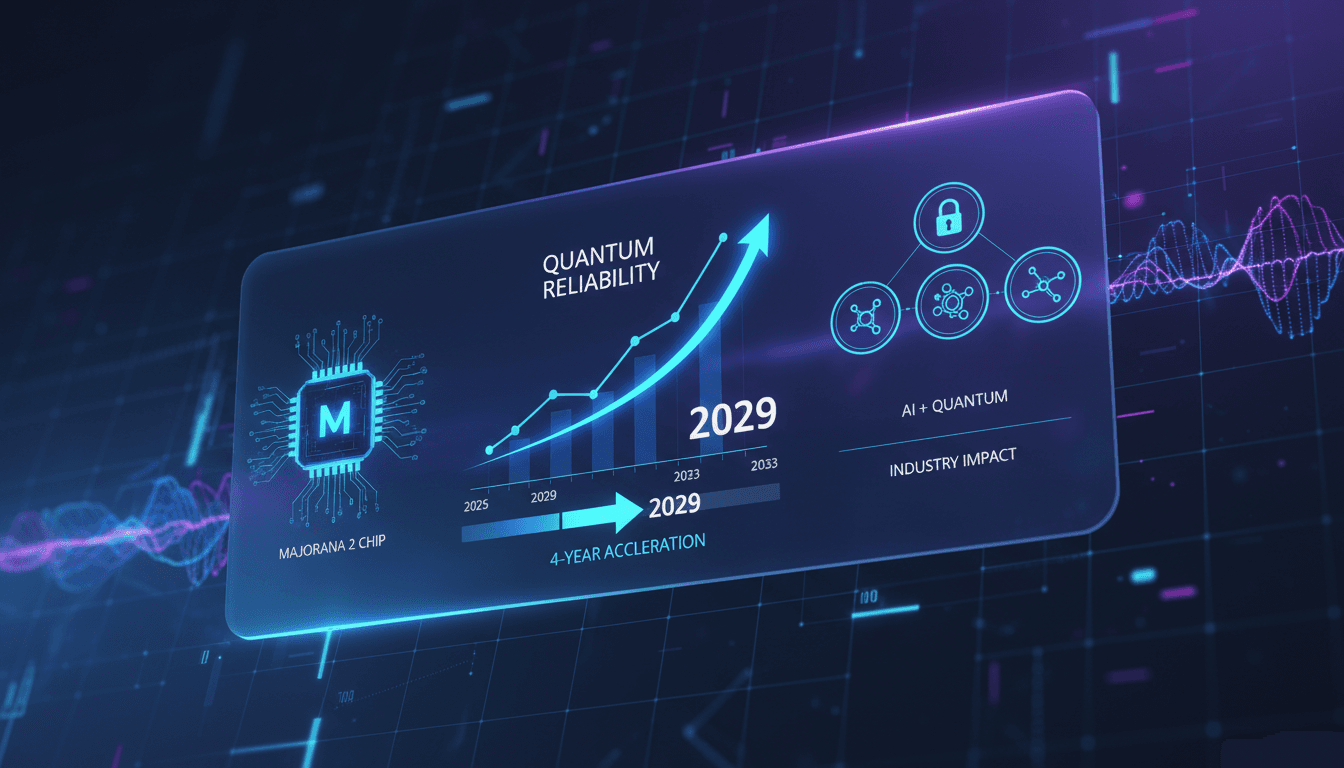
On June 2, 2026, Microsoft announced the launch of its next-generation quantum chip, Majorana 2. The company claims that this chip will lead to commercially viable quantum computing by 2029, significantly reducing its previous timeline by four years. Majorana 2 features qubits that are 1,000 times more reliable than those in its predecessor, marking a substantial advancement in quantum technology.
The development of Majorana 2 was aided by the use of agentic AI, showcasing Microsoft's commitment to integrating cutting-edge technology into its quantum computing efforts. This announcement is a critical step toward achieving scalable quantum machines that can meet commercial demands.
The Context
Microsoft's Majorana 2 chip represents a significant milestone in the ongoing race to develop practical quantum computing solutions. The enhanced reliability of its qubits positions Microsoft favorably against competitors in the quantum space, as the company aims to establish itself as a leader in this emerging market. The revised timeline for commercial viability reflects a strategic shift in the company's approach to quantum technology.
As industries increasingly recognize the potential of quantum computing, the implications of Majorana 2 could extend beyond Microsoft, influencing advancements in fields such as cryptography, materials science, and complex system simulations. The collaboration with AI in the chip's development highlights the importance of interdisciplinary approaches in overcoming the challenges faced in quantum computing.
Takeaway
Looking ahead, the advancements presented by Majorana 2 could significantly accelerate the practical applications of quantum computing across various industries. As Microsoft works toward its 2029 goal, stakeholders should monitor further developments in quantum technology from the company and watch for competitive responses from other tech firms. The landscape of quantum computing is poised for transformation, with Majorana 2 potentially paving the way for breakthroughs that were previously thought to be years away.
The focus on reliability and commercial viability will likely drive increased investment and research in quantum technologies, making it essential for industry players to stay informed about these developments.
Market-moving headlines impacting equities, bonds, and related risk assets.
"Real-time catalysts and volatility drivers across indices and sectors."
— A47 Editor
Microsoft reveals new quantum chip made with AI, says it will have systems by 2029
Microsoft has announced the development of a new quantum chip that integrates artificial intelligence, with plans to have operational systems by 2029. This innovation marks a significant step in the company's efforts to advance its technology portfol...
Opinionated AI coverage for general audiences.
"TNW’s AI vertical covering tools, ethics, and trends."
— A47 Editor
Microsoft used agentic AI to make its quantum chip 1,000 times more reliable, then cut its timeline to a scalable quantum computer in half
Microsoft has introduced Majorana 2, a next-generation topological quantum chip that boasts qubits 1,000 times more reliable than its predecessor, enabling the company to reduce its timeline for a scalable quantum computer from 2033 to 2029.
Curated tech headlines including AI stories.
"Influential aggregator surfacing the day’s top tech/AI links."
— A47 Editor
Microsoft unveils Majorana 2 quantum chip, which was developed with the help of AI, and says it will have commercially useful quantum machines by 2029 (Stephen Nellis/Reuters)
Microsoft has unveiled its Majorana 2 quantum chip, developed with the assistance of artificial intelligence, and announced plans to have commercially viable quantum machines by 2029. This advancement marks a significant step in the company's quantum...
Technology business news, market impacts, and innovation trends.
"Bloomberg is a premier financial and tech news provider, respected for its in-depth reporting and analytical rigor."
— A47 Editor
Microsoft’s New Quantum Chip Aiming for Useful Machine in 2029
Microsoft Corp. has unveiled an updated quantum-computing chip, with ambitions to develop a commercially viable quantum machine by 2029. This announcement marks a significant step in the company's ongoing efforts to advance quantum technology, which ...
Technology business and AI-related headlines.
"Data-driven tech newsroom with global scope."
— A47 Editor
Microsoft’s New Quantum Chip Aiming for Useful Machine in 2029
Microsoft Corp. has unveiled an updated quantum-computing chip, with ambitions to develop a commercially viable quantum machine by 2029. This announcement marks a significant step in the company's ongoing efforts to advance quantum technology, which ...
Tech news, reviews, and analysis of consumer electronics, science, art, and culture.
"The Verge is a technology-focused media outlet known for in-depth reporting, product reviews, and coverage of the intersection between technology and culture."
— A47 Editor
Microsoft’s next-gen quantum chip cuts timeline to useful quantum computing
Microsoft has announced Majorana 2, the next generation of its topological quantum chip, following the previous release of Majorana 1. This new quantum processor aims to advance the timeline for practical quantum computing, despite initial skepticism...
Consumer tech and culture with frequent AI coverage.
"Influential tech outlet covering AI products and policy."
— A47 Editor
Microsoft’s next-gen quantum chip cuts timeline to useful quantum computing
Microsoft has announced Majorana 2, the next generation of its topological quantum chip, following the previous release of Majorana 1. This new quantum processor aims to advance the timeline for practical quantum computing, despite initial skepticism...