
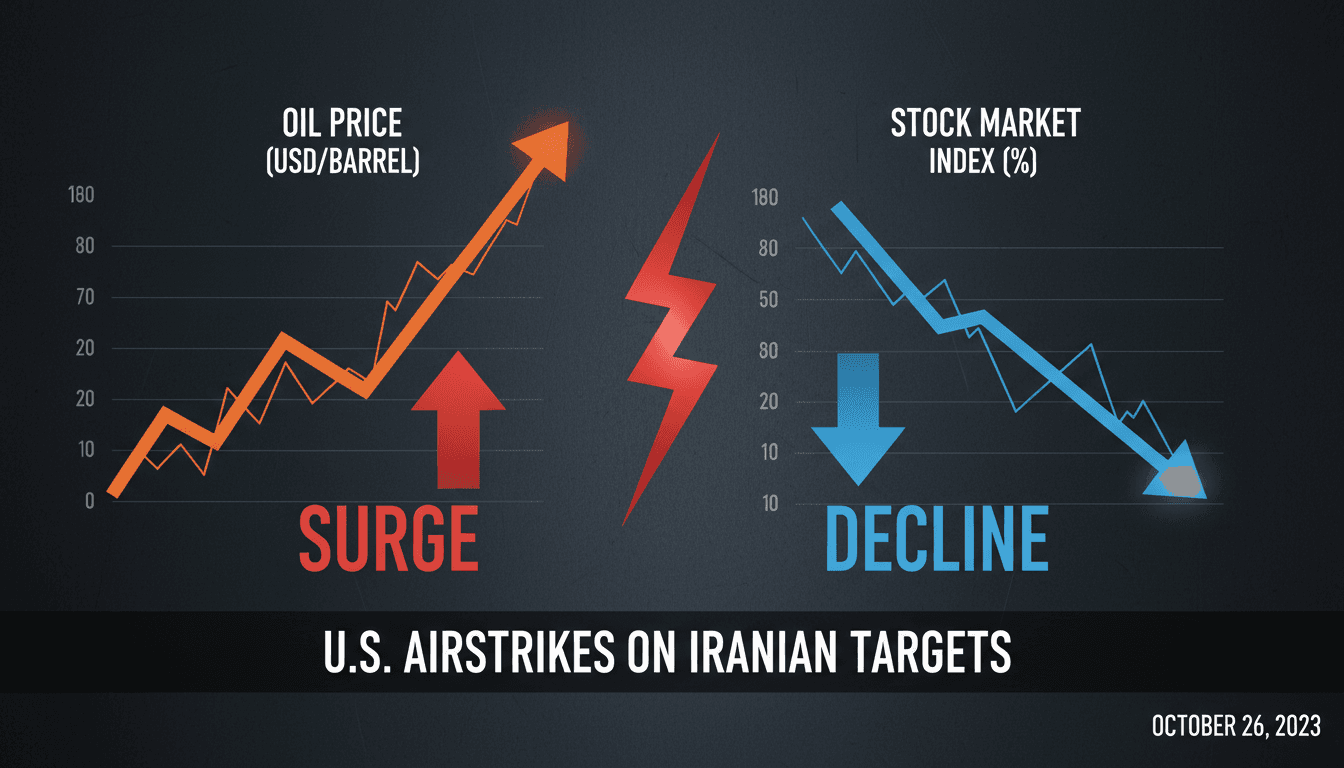
U.S. airstrikes on Iranian targets trigger oil price surge and stock market decline
Here's what it means for you.
The recent U.S. airstrikes on Iranian military sites have sent shockwaves through global markets, particularly in the oil sector. Investors are now facing heightened uncertainty as oil prices soar and stock markets react negatively. This escalation in geopolitical tensions could lead to increased inflationary pressures, impacting consumer spending and economic stability. As the situation unfolds, stakeholders must remain vigilant, monitoring developments in U.S.-Iran relations and their potential implications for the economy. The volatility in oil prices may persist, influencing both market performance and inflation expectations.
What happened
U.S. airstrikes on Iranian military targets have resulted in a sharp increase in oil prices and a decline in stock markets. Following the strikes, oil prices surged to nearly $120 a barrel, reflecting the immediate impact of the military actions. Concurrently, the S&P 500 experienced a drop of approximately 9% from late January to the end of March, indicating investor concerns about the broader economic implications.
Gasoline prices have also climbed above $4 per gallon, further exacerbating inflation fears. The market's reaction underscores the interconnectedness of geopolitical events and economic stability.
The Context
The airstrikes on May 28, 2026, have reignited fears of escalating conflict in the Middle East, a region critical to global oil supply. The recent spike in oil prices, with Brent crude rising 2.9% toward $97 a barrel, highlights the sensitivity of fuel costs to geopolitical tensions. Investors are now grappling with the implications of these developments on inflation and overall economic health.
As military actions continue, the potential for further escalation remains a significant concern for markets. The ongoing conflict between the U.S. and Iran could disrupt not only oil markets but also broader economic stability, necessitating close monitoring by investors and policymakers alike.
Takeaway
Looking ahead, it is crucial to monitor developments in U.S.-Iran relations for potential market impacts. Economic indicators related to inflation and consumer spending will also be key to understanding the broader implications of this conflict. The ongoing military actions may lead to persistent volatility in oil prices, which could further fuel inflation concerns.
Investors should remain alert to shifts in market sentiment as the situation evolves. The potential for continued military engagement could have lasting effects on both oil markets and the overall economy.
Stock market news, investing ideas, and trading analysis.
"TheStreet provides market news and retail-investor-focused analysis."
— A47 Editor
Vanguard warns investors on Iran conflict, oil prices
Oil prices have surged to nearly $120 a barrel as of March 2026, following renewed military strikes by the U.S. on Iran, which have heightened inflation concerns and rattled global markets. The S&P 500 index dropped approximately 9% during this perio...
Oil, metals, and agriculture: supply/demand headlines, OPEC chatter, inventories, and price action.
"Solid tape for energy and metals traders tracking macro and micro catalysts."
— A47 Editor
Oil prices muted after U.S. and Iran said to reach deal pending Trump nod
Oil prices have remained muted following reports that the U.S. and Iran have reached a preliminary agreement that is pending approval from former President Donald Trump. This development comes amid ongoing geopolitical tensions and military actions b...
International coverage of politics, security, and social issues.
"Global News is a mainstream Canadian outlet with a centrist editorial stance, focusing on factual reporting."
— A47 Editor
Oil prices spike again, shares drop after U.S. strikes Iran
Oil prices surged by more than $2 a barrel following recent U.S. military strikes on Iranian targets, which escalated tensions between Washington and Tehran. This spike in oil prices comes after a previous decline, reflecting the volatile nature of t...
Global markets, investing, and macroeconomics from a premier financial newsroom.
"Bloomberg is respected for in-depth financial reporting and data-driven analysis."
— A47 Editor
Iran War: US Strikes Targets Near Hormuz With No Deal in Sight | The Opening Trade 5/28/2026
Recent U.S. airstrikes on Iranian military targets have escalated tensions in the Middle East, leading to a rise in oil prices and a decline in stock markets, particularly the S&P 500, which fell by 0.2%. This development comes amid ongoing peace tal...
Corporate finance news, M&A, deals, and executive interviews.
"Finance Monthly serves a professional readership with corporate finance coverage."
— A47 Editor
Oil Shock Rattles Global Markets as Fuel Pressure Starts Spreading Again
Global markets faced a downturn as oil prices surged following renewed military tensions between the U.S. and Iran, particularly after Iran's announcement of a retaliatory attack on a U.S. airbase. This escalation has reignited fears of further confl...