
D1 humanoid robot sets new half-marathon world record
Here's what it means for you.
The emergence of humanoid robots in athletics could reshape competitive sports and societal roles.
What happened
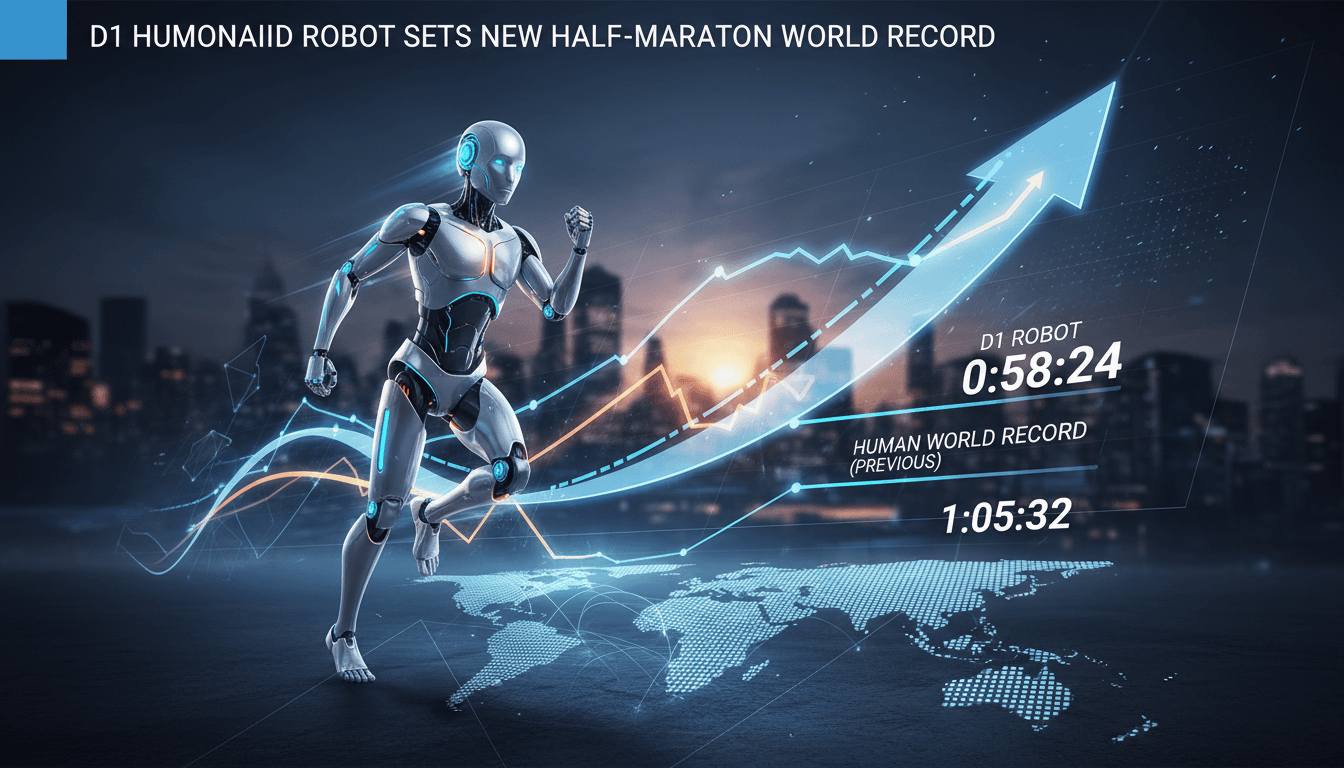
The D1 humanoid robot has set a new world record for the half-marathon, surpassing human runners by approximately seven minutes.
The Context
- Humanoid robots are approaching the 100-metre sprint record.
- The D1 robot was developed by a smartphone manufacturer.
- Interest in speed capabilities of robots is growing despite unclear applications.
Takeaway
As humanoid robots continue to improve their athletic performance, their potential applications and implications for society will need to be carefully considered.
Scientific discoveries, health, technology, and natural phenomena.
"Live Science reports on scientific discoveries, health, technology, and natural phenomena with a popular science tone."
— A47 Editor
Humanoid robots have outpaced human runners in the half-marathon, beating the world record — here are the secrets to this astonishing feat
The D1 humanoid robot, developed by a smartphone manufacturer, has achieved a remarkable feat by surpassing the human world record in the half-marathon by approximately seven minutes. This achievement marks a significant milestone in the field of rob...
Tech coverage including AI and robotics.
"Accessible science/tech magazine with AI coverage."
— A47 Editor
Humanoid robots may be about to break the 100-metre sprint record
Humanoid robots are approaching the men's 100-metre sprint record, showcasing their ability to run a half-marathon faster than humans. This rapid advancement raises questions about the motivations behind developing such speedy robots, especially when...
Discoveries, research, environment, and health innovations.
"New Scientist is a well-respected publication offering accessible science news, commentary, and expert analysis."
— A47 Editor
Humanoid robots may be about to break the 100-metre sprint record
Humanoid robots are approaching the men's 100-metre sprint record, showcasing their ability to run a half-marathon faster than humans. This rapid advancement raises questions about the motivations behind developing such speedy robots, particularly wh...