
NHTSA mandates autonomous vehicle companies to resolve emergency responder interference
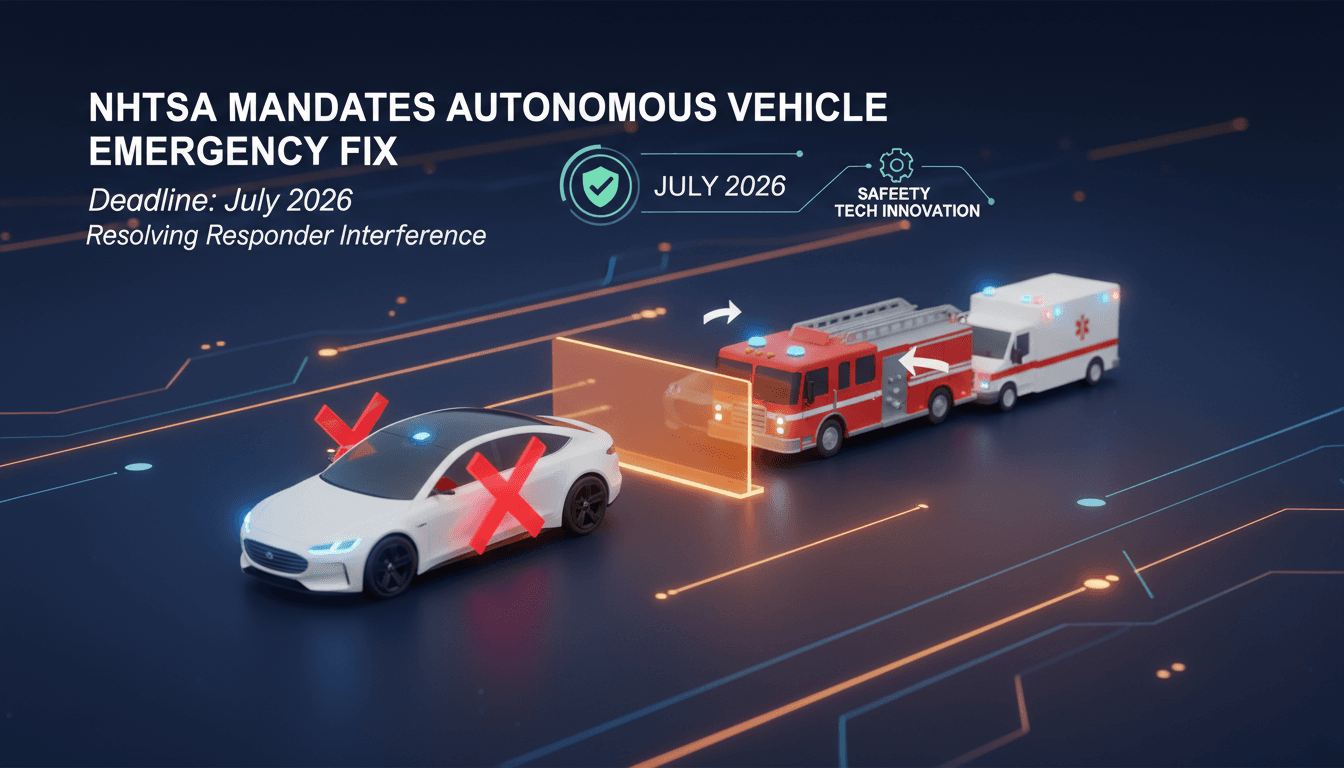
Here's what it means for you.
The National Highway Traffic Safety Administration's (NHTSA) directive underscores the critical need for autonomous vehicle manufacturers to prioritize public safety. As these vehicles become more integrated into everyday life, ensuring they do not obstruct emergency services is paramount. This regulatory push may drive innovation in technology that enhances the interaction between autonomous vehicles and first responders. The deadline set for July 2026 places pressure on companies to develop effective solutions, potentially reshaping industry standards and practices. Stakeholders must now navigate the balance between technological advancement and public safety.
What happened
The NHTSA has mandated that autonomous vehicle developers address the interference their vehicles cause to emergency responders. This directive was issued following multiple incidents where driverless cars obstructed access for ambulances and firefighters. Companies are required to present solutions to this issue by the end of July 2026.
The directive highlights a growing concern over the safety of autonomous vehicles in emergency situations. NHTSA Administrator Jonathan Morrison noted that these incidents are not isolated, indicating a systemic problem that needs immediate attention.
The Context
Autonomous vehicles have increasingly been reported to block access for emergency services, raising alarms about their integration into public safety protocols. The NHTSA's directive comes at a time when the technology is rapidly evolving, yet the safety measures surrounding it have not kept pace. This regulatory action aims to ensure that as these vehicles become more prevalent, they do not hinder emergency response efforts.
The deadline for compliance is significant, as it compels companies to innovate quickly. The implications of this directive extend beyond regulatory compliance; they touch on public trust in autonomous technology and its role in society.
Takeaway
As the July 2026 deadline approaches, companies are likely to intensify their efforts to develop technologies that enhance the safety of autonomous vehicles in emergency situations. This push for solutions may lead to advancements that prioritize public safety and reshape industry standards.
Future developments in emergency response protocols involving autonomous vehicles will be crucial to watch, as they could set new benchmarks for safety and efficiency in the sector.
Opinionated AI coverage for general audiences.
"TNW’s AI vertical covering tools, ethics, and trends."
— A47 Editor
NHTSA demands autonomous vehicle companies fix first responder interference by end of July
The National Highway Traffic Safety Administration (NHTSA) has issued a directive requiring autonomous vehicle companies to address issues of interference with first responders by the end of July. This follows reports of driverless vehicles obstructi...
Startup news with frequent AI coverage.
"Covers launches, funding, and product updates in AI."
— A47 Editor
Feds demand autonomous vehicle companies stop interfering with first responders
The National Highway Traffic Safety Administration (NHTSA) has mandated that autonomous vehicle companies cease interference with first responders at emergency scenes, emphasizing that these situations are not merely edge cases. This directive comes ...
Market-moving headlines impacting equities, bonds, and related risk assets.
"Real-time catalysts and volatility drivers across indices and sectors."
— A47 Editor
Companies must address self-driving car interference with emergency vehicles, US says
The U.S. government has emphasized the need for companies to address the interference that self-driving cars may cause to emergency vehicles. This statement highlights concerns regarding the operational safety and efficiency of emergency services in ...