
Paralyzed man regains movement through innovative brain implant technology
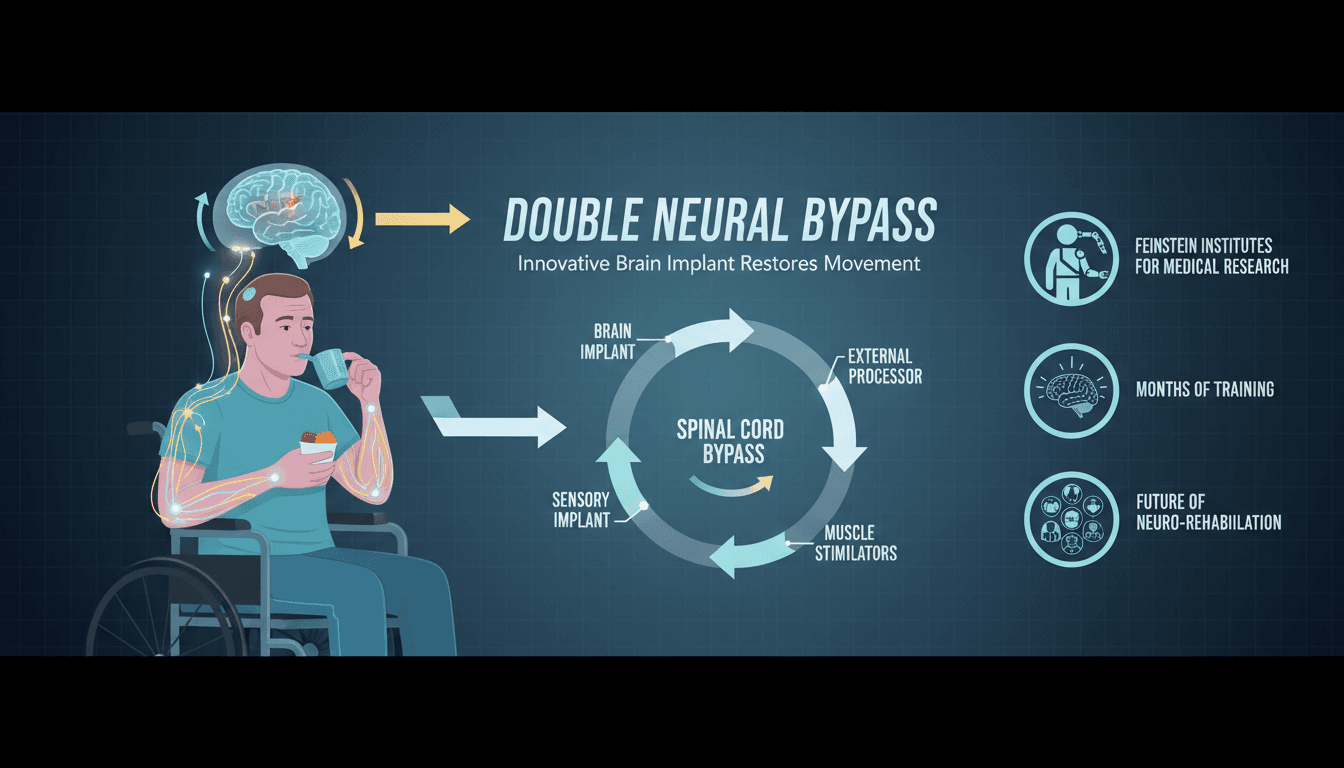
Here's what it means for you.
The recent breakthrough in brain implant technology signifies a transformative moment in neurorehabilitation. For healthcare professionals and researchers, this advancement opens new avenues for treating spinal cord injuries and other neurological conditions. The implications extend beyond individual cases, potentially influencing policy and funding for neurotechnology research. As the medical community continues to explore the capabilities of neural bypass systems, the potential for improved quality of life for patients with paralysis becomes increasingly tangible. This innovation could reshape rehabilitation practices and inspire further advancements in brain-computer interfaces.
What happened
Keith Thomas, who was paralyzed from the chest down due to a swimming accident, has regained the ability to feed himself and drink from a cup following the implantation of a revolutionary brain device. This remarkable achievement comes after months of training post-surgery, showcasing the effectiveness of the technology. The brain implant, known as a 'double neural bypass,' rewires the nervous system, allowing Thomas to move his arms and hands once again.
This breakthrough highlights the potential of advanced neurotechnology in restoring movement and sensation. Thomas had been paralyzed for six years before this significant development, illustrating the long-term impact of spinal injuries and the promise of innovative treatments.
The Context
The brain implant technology was developed by the Feinstein Institutes for Medical Research, marking a significant step in the field of neurotechnology. The results of this groundbreaking work were published in the journal Nature Medicine, emphasizing the potential of neural bypass systems. This advancement not only represents a leap forward for individuals with spinal cord injuries but also sets the stage for broader applications in treating various neurological conditions.
As research continues, the implications of this technology could extend beyond paralysis, potentially benefiting a wide range of patients. The intersection of artificial intelligence and medical innovation is becoming increasingly relevant, as demonstrated by Thomas's journey from paralysis to regaining movement.
Takeaway
This breakthrough could pave the way for further advancements in restoring movement and sensation in paralyzed individuals. Future developments in brain-computer interface technology may enhance rehabilitation strategies and improve outcomes for patients with similar conditions. The potential applications of neural bypass systems could also extend to other types of paralysis, offering hope to many.
As the field of neurotechnology evolves, it will be crucial to monitor ongoing research and its implications for patient care. The success of Keith Thomas serves as a powerful reminder of the possibilities that lie ahead in the realm of medical innovation.
Opinionated AI coverage for general audiences.
"TNW’s AI vertical covering tools, ethics, and trends."
— A47 Editor
AI and a brain implant restored a paralysed man’s movement and touch
Researchers have successfully restored hand movement and the sense of touch to a man who was paralysed from the chest down, utilizing a technology known as a 'double neural bypass.' This innovative approach, developed by the Feinstein Institutes for ...
News and features on AI from The Guardian.
"Progressive-leaning international outlet with critical AI coverage."
— A47 Editor
Brain implant helps paralysed man to feed himself and drink from cup
Keith Thomas, a man paralyzed from the chest down due to a swimming accident six years ago, has regained the ability to feed himself and drink from a cup following a brain implant procedure that bypasses his spinal cord injury. After months of traini...
Tech culture, product news, and critical takes on the tech industry's social impact.
"The Guardian's tech coverage blends mainstream news, critical analysis, and cultural commentary on emerging technologies and digital trends."
— A47 Editor
Brain implant helps paralysed man to feed himself and drink from cup
Keith Thomas, a man paralyzed from the chest down due to a swimming accident six years ago, has regained the ability to feed himself and drink from a cup following a brain implant procedure that bypasses his spinal cord injury. After the surgery and ...
Top international stories selected by The Guardian editors.
"The Guardian is known for its progressive editorial stance and in-depth analysis."
— A47 Editor
Brain implant helps paralysed man to feed himself and drink from cup
Keith Thomas, a man paralyzed from the chest down due to a swimming accident six years ago, has regained the ability to feed himself and drink from a cup following a brain implant procedure that bypasses his spinal cord injury. After months of traini...
News in science and technology, with a focus on consumer and innovation stories.
"Popular Science simplifies complex scientific topics for general audiences and celebrates innovation."
— A47 Editor
After revolutionary brain-computer implant, man with paralysis can feed himself
A man with paralysis has regained the ability to feed himself following the implantation of a revolutionary brain-computer interface that rewires the nervous system. This groundbreaking technology allows for direct communication between the brain and...