
US and Iran escalate military conflict amid stalled ceasefire negotiations
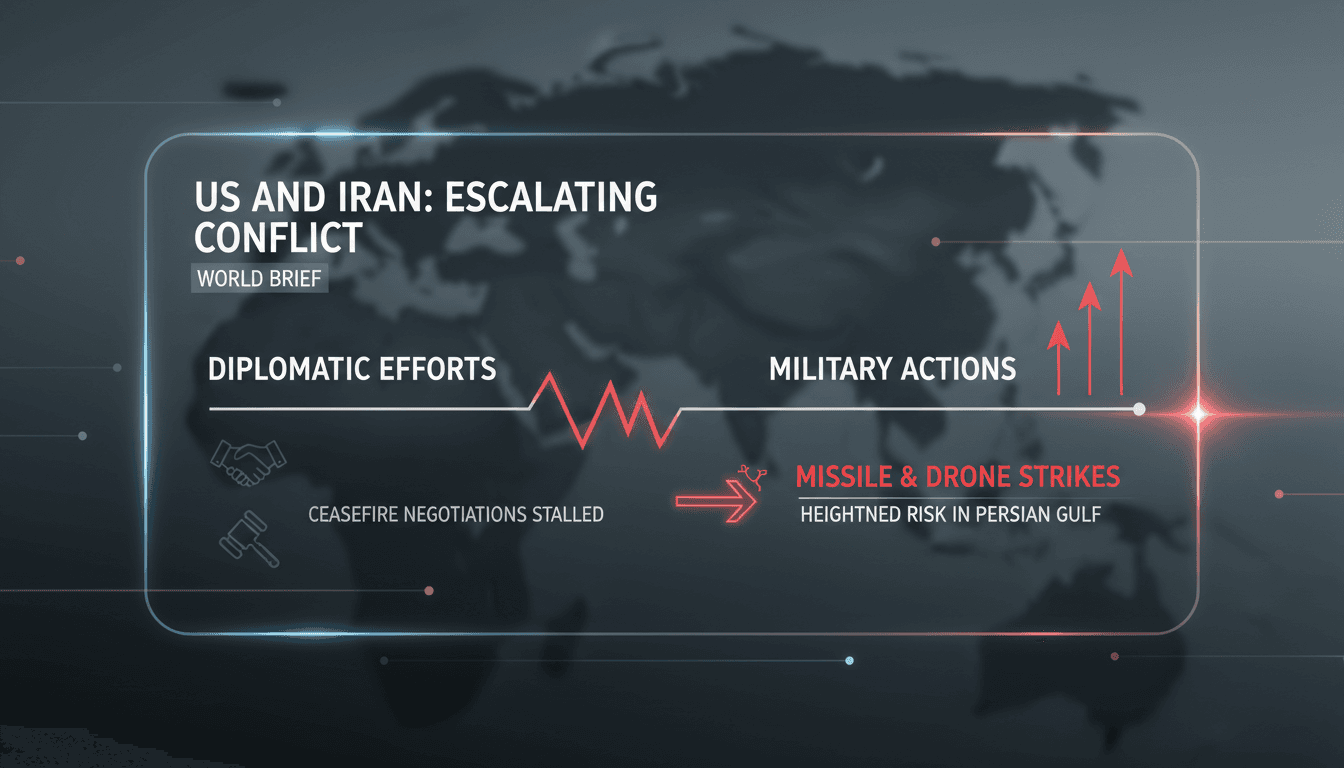
Here's what it means for you.
The renewed military exchanges between the United States and Iran signal a troubling escalation that could have significant implications for regional stability and global markets. As both nations remain entrenched in their positions, the likelihood of further confrontations in the Persian Gulf increases, potentially impacting oil prices and international trade routes. Stakeholders in the energy sector and policymakers must closely monitor these developments, as the situation could evolve rapidly. The failure of diplomatic efforts to secure a ceasefire raises concerns about the effectiveness of current strategies aimed at de-escalation. This ongoing conflict may also influence international relations, particularly among nations with vested interests in the region.
What happened
The United States and Iran have engaged in a series of missile and drone strikes, marking a significant escalation in their ongoing conflict. This surge in hostilities follows failed diplomatic efforts to secure a ceasefire agreement, underscoring the fragility of the situation. The US fired a Hellfire missile at a tanker attempting to breach a blockade in the Strait of Hormuz, prompting Iran to retaliate by attacking US bases in the Gulf.
These exchanges represent the most intense conflict seen in months, with both nations accusing each other of aggression. The recent military actions highlight the deteriorating relations between the two countries, as they continue to engage in aggressive posturing.
The Context
The backdrop of this conflict involves a complex interplay of geopolitical interests and historical tensions between the US and Iran. The Strait of Hormuz is a critical chokepoint for global oil shipments, making any military escalation in the region particularly concerning for international markets. Diplomatic efforts to stabilize the situation have been unsuccessful, leaving both nations to pursue military options.
The timeline of events indicates a rapid escalation, with the US missile strike occurring on June 2, 2026, followed closely by Iran's retaliatory actions. This sequence of events illustrates the precarious nature of the current situation, as both sides remain unwilling to compromise.
Takeaway
The ongoing military exchanges suggest that both nations are far from reaching a peaceful resolution, with the potential for further escalation looming large. Observers should watch for any new diplomatic initiatives that may arise, as well as the possibility of increased military actions in the Persian Gulf. The situation remains precarious, and the likelihood of further conflict appears high.
As tensions continue to rise, the international community will be closely monitoring developments to assess their impact on regional stability and global economic conditions.
International coverage of politics, culture, and current affairs.
"BBC News is widely regarded as a reputable international news organization, known for its impartial tone and public service mandate."
— A47 Editor
US and Iran launch new strikes as ceasefire negotiations stalled
The United States has launched new military strikes against Iran and an oil tanker, following Iran's claims of attacking U.S. bases in the Gulf. This escalation comes amid stalled ceasefire negotiations, heightening tensions in the region.
Global political, business, and cultural coverage from WSJ international desks.
"The Wall Street Journal offers extensive international reporting with a reputation for financial insight and a center-right editorial stance."
— A47 Editor
U.S., Iran Trade Heavy Fire in Persian Gulf, Testing Fragile Ceasefire
The United States and Iran have engaged in intense military exchanges in the Persian Gulf, marking the most significant escalation in months amid stalled diplomatic efforts to resolve their ongoing conflict. The U.S. conducted self-defense strikes on...
News from the United States including domestic politics, society, and culture.
"The Guardian is known for its progressive editorial stance and in-depth analysis, often advocating for social justice, environmental issues, and liberal values."
— A47 Editor
Trump news at a glance: US and Iran exchange fresh strikes
The United States and Iran have engaged in a series of missile and drone strikes, escalating tensions and undermining ongoing efforts to establish a new ceasefire agreement. The U.S. military targeted Iranian radar and drone control sites in response...