
WHO warns of impending global cancer crisis with cases projected to rise to 35 million by 2050
Here's what it means for you.
The World Health Organization's alarming projection of nearly doubling cancer cases by 2050 signals a critical public health challenge. Countries must urgently reform their healthcare systems to effectively manage the anticipated surge in cancer diagnoses. This situation emphasizes the need for proactive measures in cancer care and treatment strategies to mitigate the impending crisis. As the global population ages and lifestyles change, the demand for comprehensive cancer care will only increase. Stakeholders across the healthcare spectrum must collaborate to address this looming issue.
What happened
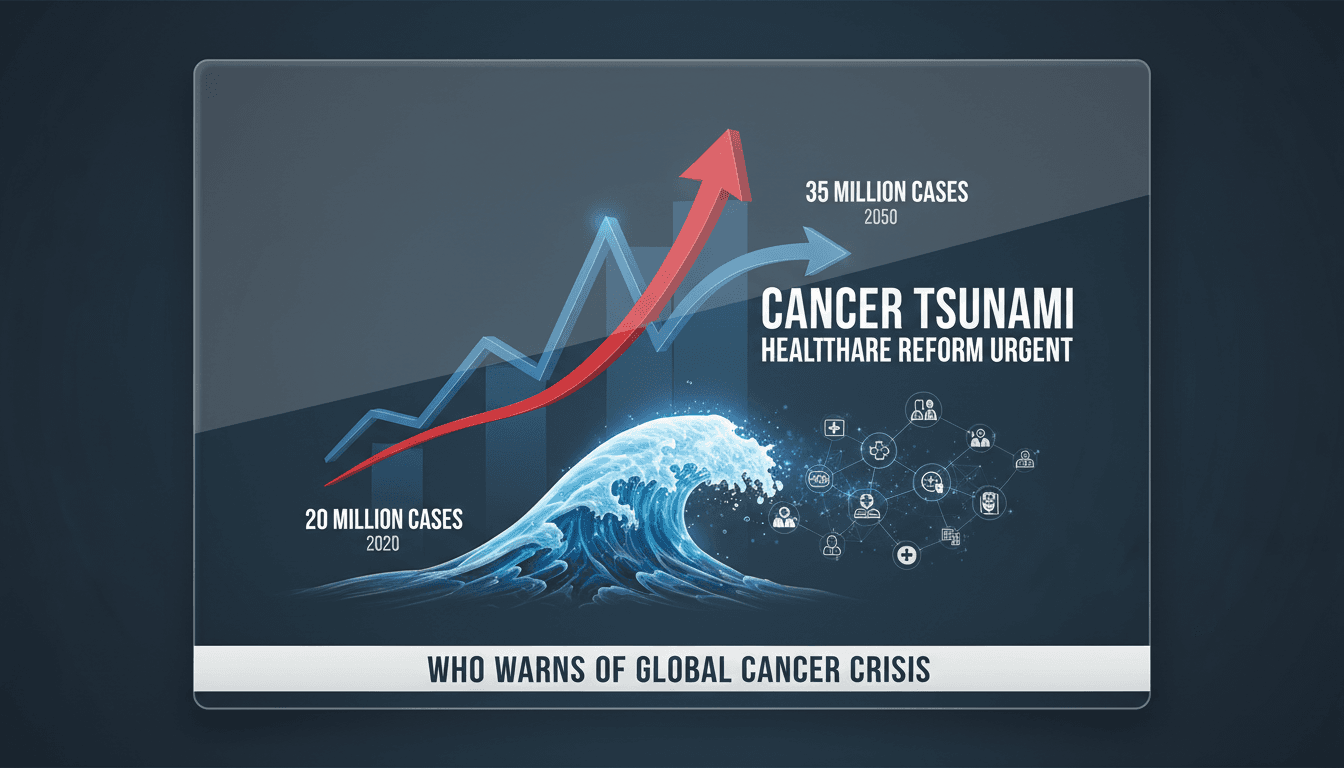
The World Health Organization (WHO) has projected that annual cancer cases could rise from 20 million to nearly 35 million by 2050. This stark warning has prompted experts to describe the situation as a 'cancer tsunami.' The report highlights that this increase will affect over 90% of the global population, raising significant concerns about healthcare capacity.
Experts are particularly worried about the widening gap in cancer care and treatment as cases rise. Countries, including Canada, are being urged to enhance their healthcare systems in anticipation of this surge in diagnoses.
The Context
The WHO's report comes at a time when global health systems are already under strain. With cancer cases expected to rise dramatically, the implications for healthcare policy and resource allocation are profound. Stakeholders, including governments and healthcare providers, must recognize the urgency of this situation.
The projected increase in cancer cases underscores the need for immediate action to reform healthcare policies. As the gap in cancer care widens, it is crucial for countries to prepare for the challenges ahead, ensuring that adequate resources and support systems are in place.
Takeaway
As cancer cases are expected to rise significantly, proactive measures in healthcare systems will be crucial to manage the impending crisis. Monitoring healthcare policy changes in response to the WHO report will be essential for understanding how countries plan to address this challenge.
Advancements in cancer treatment and prevention strategies will also play a vital role in mitigating the impact of this projected increase. The future of cancer care will depend on how effectively countries respond to the WHO's warnings and implement necessary reforms.
Jordanian news and regional updates.
"Roya News is a Jordanian outlet focused on breaking news and local affairs."
— A47 Editor
الصحة العالمية: السرطان يهدد 35 مليون شخص بحلول 2050 وفجوة الرعاية تتسع
The World Health Organization (WHO) has issued a global warning indicating that cancer is projected to threaten 35 million individuals by the year 2050, highlighting an expanding gap in healthcare access. This alarming forecast underscores the increa...
RT is a Russian state-funded network covering global events from a Russian perspective.
"RT is widely criticized for promoting pro-Kremlin narratives and is considered by many to be a state propaganda outlet."
— A47 Editor
Cancer cases to soar worldwide – WHO
The World Health Organization (WHO) has issued a stark warning that annual cancer cases could nearly double by 2050, projecting an increase from 20 million to approximately 35 million cases globally. This alarming trend indicates that cancer will aff...
Canadian and international health news, medicine, public policy, and research.
"Global News is a mainstream Canadian outlet generally considered to have a centrist editorial stance, covering news with a focus on factual reporting and national interest."
— A47 Editor
Doctor warns of ‘cancer tsunami’ as WHO projects sharp rise in cases by 2050
A new report from the World Health Organization (WHO) indicates that annual cancer cases could surge from 20 million to nearly 35 million by the year 2050, prompting experts to warn Canada to prepare for a potential 'cancer tsunami.'
National coverage of politics and current events across Canada.
"Global News is a mainstream Canadian outlet with a centrist editorial stance, focusing on factual reporting."
— A47 Editor
Doctor warns of ‘cancer tsunami’ as WHO projects sharp rise in cases by 2050
A new report from the World Health Organization (WHO) indicates that annual cancer cases could surge from 20 million to nearly 35 million by the year 2050, prompting experts to warn Canada to prepare for a potential 'cancer tsunami.'