
Goldman Sachs Raises Q4 2026 Oil Price Forecasts Due to Middle East Supply Disruptions
Here's what it means for you.
If you're in the energy sector or rely on oil prices for business, expect increased costs and potential shifts in market dynamics.
Why it matters
The upward revision in oil price forecasts signals significant supply chain vulnerabilities that could impact global markets and consumer prices.
What happened (in 30 seconds)
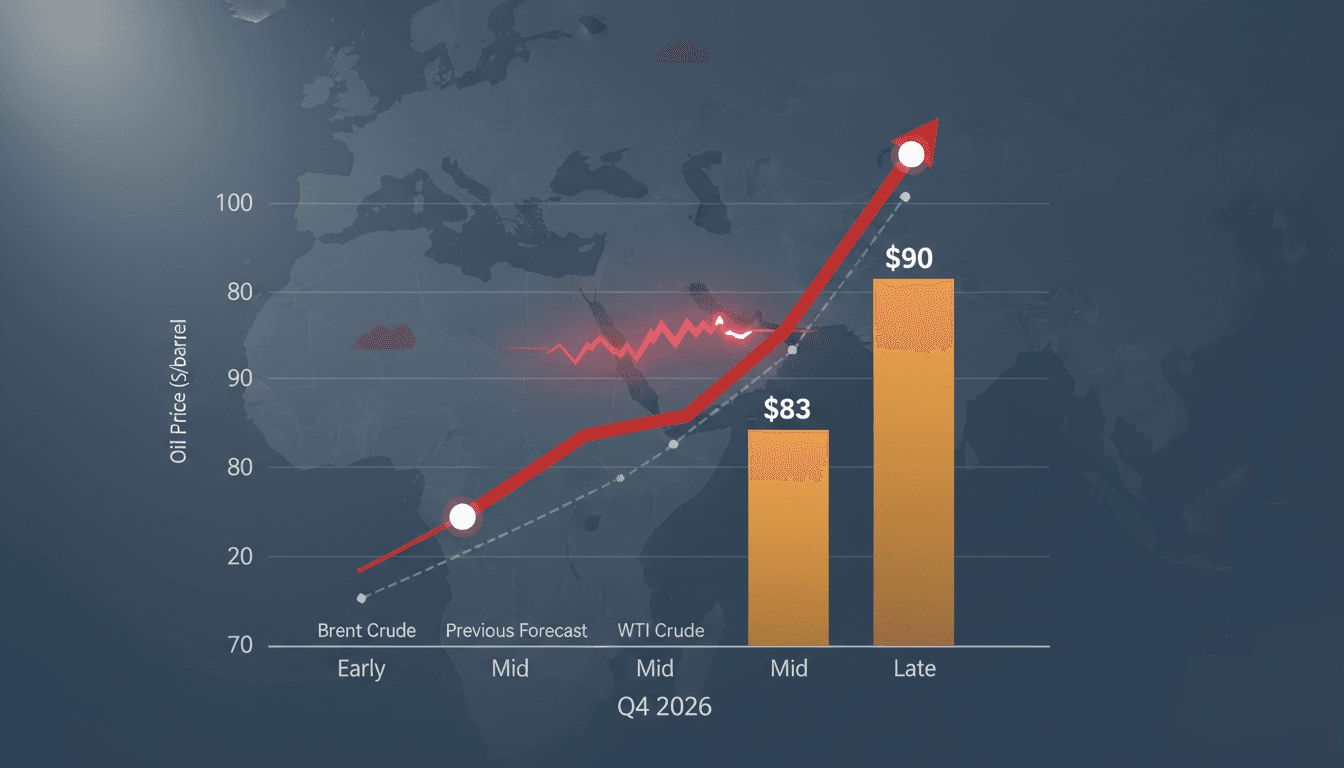
- Goldman Sachs revised its Q4 2026 oil price forecasts upward, projecting Brent crude at $90 per barrel and WTI at $83 per barrel.
- The adjustment is due to 14.5 million barrels per day of Middle East crude production offline, exacerbated by geopolitical tensions.
- Record inventory draws of 11-12 million barrels per day are contributing to a tightening market, with delayed normalization of Gulf exports expected until late June.
The context you actually need
- Escalating geopolitical tensions in the Middle East have led to significant disruptions in oil supply, particularly through the Strait of Hormuz.
- Previous forecasts indicated a surplus of 1.8 million barrels per day in 2025, but the current outlook reflects a drastic shift to a 9.6 million barrels per day deficit in Q2 2026.
- Goldman Sachs had already raised annual averages in March 2026, but the April update accounts for slower recovery timelines and increased risk premiums.
What's really happening
Goldman Sachs' analysts, led by Daan Struyven and Yulia Zhestkova Grigsby, have identified a critical supply squeeze in the oil market, primarily driven by geopolitical instability in the Middle East. The investment bank's latest research note highlights that approximately 14.5 million barrels per day of crude production from the region is offline due to ongoing disruptions. This situation has led to accelerated global inventory depletion, with draws reaching 11-12 million barrels per day in April alone.
The forecast revision reflects a significant shift in the oil supply landscape. Earlier projections had anticipated a surplus in oil production, but the reality has shifted dramatically. The anticipated normalization of Gulf exports through the Strait of Hormuz has been delayed until late June, rather than mid-May as previously expected. This delay is critical, as it prolongs the supply shortfall and exacerbates the already tight market conditions.
Demand projections also play a role in this scenario. Goldman Sachs expects a decline in demand of 1.7 million barrels per day in Q2 2026, which, while substantial, is insufficient to offset the significant supply shortfall. The combination of reduced supply and stagnant demand creates a precarious balance that could lead to further price increases.
The implications of these developments extend beyond just oil prices. Higher oil prices can lead to increased costs for consumers and businesses alike, affecting everything from transportation to manufacturing. Additionally, the geopolitical tensions that have led to these supply disruptions are unlikely to resolve quickly, suggesting that the oil market may remain volatile for the foreseeable future.
Who feels it first (and how)
- Energy sector professionals: Increased operational costs and potential shifts in investment strategies.
- Consumers: Higher prices at the pump and increased costs for goods reliant on oil.
- Logistics and transportation companies: Elevated shipping costs due to rising fuel prices.
- Middle Eastern economies: Potential fiscal uplift from higher oil revenues, but also increased regional economic uncertainty.
What to watch next
- Gulf export normalization timelines: Delays beyond late June could further tighten supply and elevate prices.
- Geopolitical developments in the Middle East: Any escalation or resolution could significantly impact oil supply and pricing.
- Global inventory levels: Monitoring inventory draws will provide insight into market balance and potential price movements.
Goldman Sachs has raised its oil price forecasts due to supply disruptions.
Continued volatility in oil prices as geopolitical tensions persist.
The long-term impact on global demand and economic growth due to sustained high oil prices.
This article was generated by AI from 6 verified sources and reviewed by A47 editorial systems.
Stock market news, investing ideas, and trading analysis.
"TheStreet provides market news and retail-investor-focused analysis."
— A47 Editor
Goldman Sachs revamps oil price forecast on supply squeeze
Goldman Sachs has revised its oil price forecast, indicating a significant supply squeeze in the Persian Gulf, which is impacting global oil prices. The investment bank's analysis highlights that the ongoing geopolitical tensions are causing disrupti...
Global markets, investing, and macroeconomics from a premier financial newsroom.
"Bloomberg is respected for in-depth financial reporting and data-driven analysis."
— A47 Editor
Goldman Hikes Oil Forecasts Again as Hormuz Shock Builds
Goldman Sachs has revised its oil price forecasts, projecting Brent crude to reach $90 per barrel by the fourth quarter of 2026, driven by reduced production in the Persian Gulf and ongoing disruptions in the Strait of Hormuz. The firm now anticipate...
Global business headlines with AI angles.
"General business outlet that frequently covers AI."
— A47 Editor
Goldman Sachs Raises Oil Forecasts For 2026 As Strait Of Hormuz Remains Closed
Goldman Sachs has raised its oil price forecasts for 2026 as the Strait of Hormuz remains closed, contributing to sustained elevated prices in the oil market. This closure is a result of ongoing geopolitical tensions, particularly between the U.S. an...
Oil, metals, and agriculture: supply/demand headlines, OPEC chatter, inventories, and price action.
"Solid tape for energy and metals traders tracking macro and micro catalysts."
— A47 Editor
Goldman raises oil forecasts as Gulf supply shock seen lasting longer
Goldman Sachs has raised its oil price forecasts, anticipating that the supply shock in the Gulf region will persist longer than previously expected. This adjustment reflects ongoing geopolitical tensions and significant disruptions in oil production...
Oil, metals, and agriculture: supply/demand headlines, OPEC chatter, inventories, and price action.
"Solid tape for energy and metals traders tracking macro and micro catalysts."
— A47 Editor
Factbox-Goldman Sachs lifts oil price forecasts on weaker Middle East output
Goldman Sachs has raised its oil price forecasts, attributing this adjustment to declining output from the Middle East, a region critical to global oil supply. This shift reflects ongoing geopolitical tensions that are impacting production levels and...
Global markets, investing, and macroeconomics from a premier financial newsroom.
"Bloomberg is respected for in-depth financial reporting and data-driven analysis."
— A47 Editor
Goldman Hikes Oil-Price Outlook as Hormuz Shock Intensifies
Goldman Sachs Group Inc. has raised its oil-price forecasts due to the ongoing closure of the Strait of Hormuz, which has led to significant inventory draws. This situation has been exacerbated by geopolitical tensions and military actions in the reg...