
James Webb Space Telescope reveals new insights into Orion A and ancient galaxies
Here's what it means for you.
The recent discoveries made by the James Webb Space Telescope (JWST) have significant implications for our understanding of cosmic phenomena. As the telescope captures detailed images of the Orion A region and ancient galaxies, it enhances our knowledge of star formation and the evolution of the universe. These findings may influence future research directions and funding in astrophysics, as well as public interest in space exploration. The insights gained from JWST's observations could reshape educational curricula and inspire a new generation of scientists. As we learn more about the dynamics of ancient galaxies, the implications for our own Milky Way become increasingly relevant.
What happened
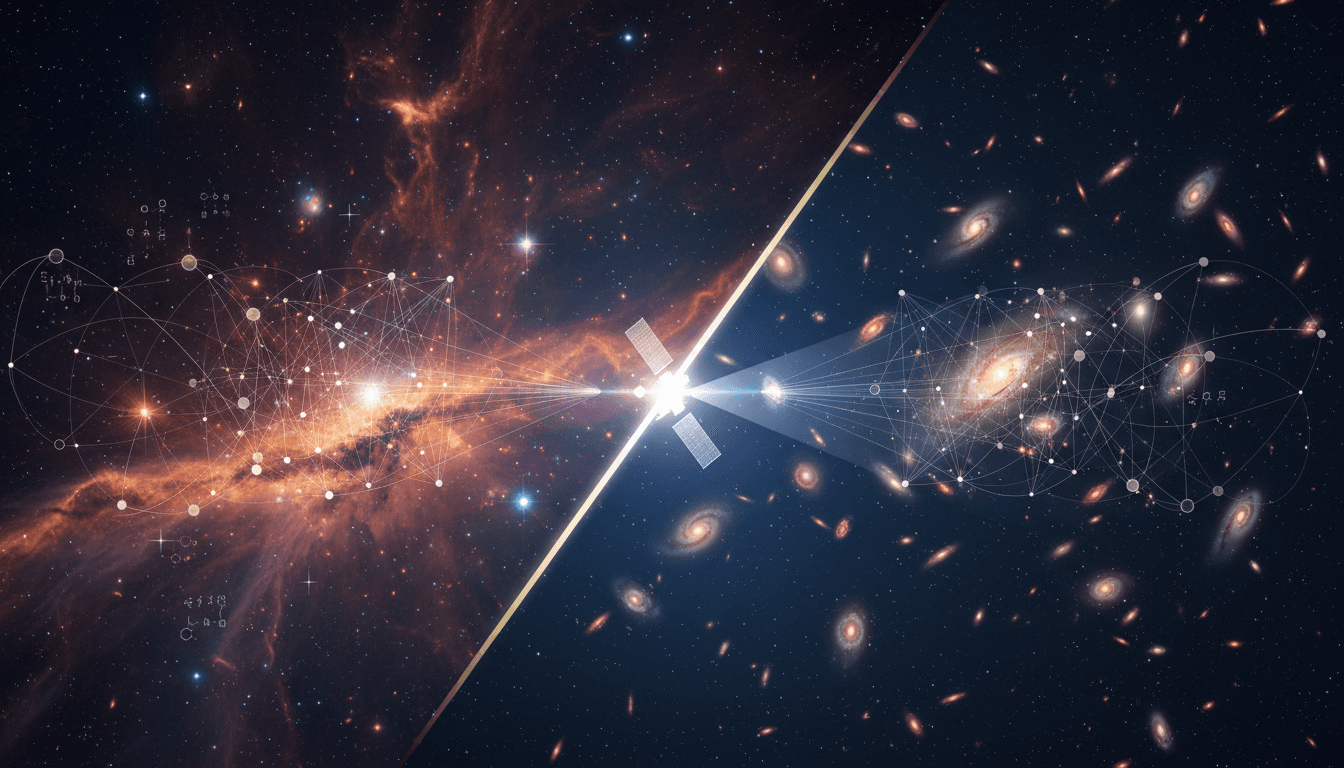
The James Webb Space Telescope has recently captured stunning images of the Orion A region, showcasing vibrant star-forming clouds. These observations reveal the dynamics of ancient galaxies and their rapid life cycles, influenced by intense cosmic winds. On June 22, 2026, the telescope provided critical insights into both star formation and the environments surrounding these ancient galaxies.
The JWST's advanced capabilities have allowed it to explore cosmic phenomena in unprecedented detail. The telescope's findings highlight the ongoing mission to enhance our understanding of the universe's formation and evolution.
The Context
The Orion A region is renowned for its active star formation, making it a focal point for astronomical studies. The JWST's observations not only shed light on this region but also provide a deeper understanding of ancient galaxies, which are crucial for comprehending the universe's history. The telescope's ability to detect intense winds affecting these galaxies underscores the complex interactions that shape cosmic evolution.
As the JWST continues its mission, it is expected to uncover more about the life cycles of stars and galaxies. This ongoing research is vital for scientists and astronomers who seek to understand the fundamental processes that govern the universe.
Takeaway
The ongoing discoveries from the James Webb Space Telescope will likely reshape our understanding of the universe's formation and evolution. Future studies will focus on the implications of galaxy-killing winds and the life cycles of stars, which could lead to groundbreaking revelations. Upcoming images from the JWST will further enhance our knowledge of other cosmic phenomena, providing a richer context for the findings in Orion A.
As the telescope continues to operate, the scientific community eagerly anticipates the insights that will emerge from its observations. These findings will not only deepen our understanding of the cosmos but also inspire future explorations and research initiatives.
Space science news, astronomy updates, and spaceflight developments.
"Space.com delivers space science news, astronomy updates, and spaceflight developments with engaging coverage."
— A47 Editor
James Webb Space Telescope captures the star-forming clouds of Orion A in stunning detail | Space photo of the day for June 22, 2026
The James Webb Space Telescope (JWST) has captured stunning images of the Orion A star-forming region, showcasing its vibrant colors and intricate structures. This observation highlights the telescope's advanced capabilities in revealing the complexi...
Scientific discoveries, health, technology, and natural phenomena.
"Live Science reports on scientific discoveries, health, technology, and natural phenomena with a popular science tone."
— A47 Editor
James Webb telescope detects 'galaxy-killing wind' near the dawn of time — and it could preview the death of the Milky Way
Recent observations from the James Webb Space Telescope (JWST) have identified a 'galaxy-killing wind' near the dawn of time, suggesting that ancient galaxies experienced rapid life cycles due to intense winds driven by cosmic collisions. This phenom...
Scientific discoveries, health, technology, and natural phenomena.
"Live Science reports on scientific discoveries, health, technology, and natural phenomena with a popular science tone."
— A47 Editor
James Webb telescope finds a cosmic cloud of creation buried in the Sword of Orion — Space photo of the week
The James Webb Space Telescope has captured a stunning image of the OMC-2 cosmic cloud, located in the Sword of Orion, showcasing glowing gas, sculpted jets, and newly formed stars. This discovery highlights the telescope's advanced capabilities in o...