
China's factory-gate inflation reaches highest level in nearly four years amid Middle East conflict impacts
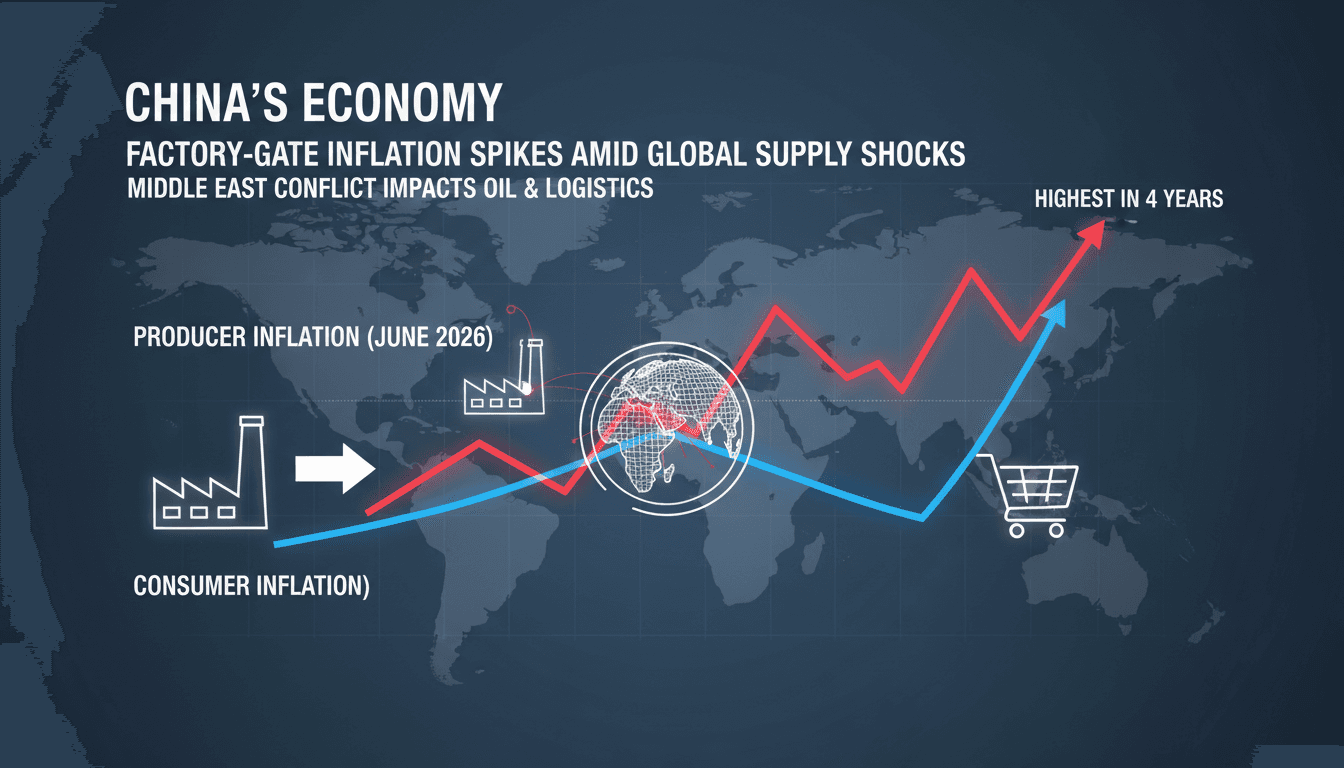
Here's what it means for you.
China's recent spike in factory-gate inflation signals potential challenges for both domestic and global markets. As production costs rise, businesses may face increased pressure to adjust pricing strategies, which could ultimately affect consumer spending. Policymakers will need to navigate these inflationary pressures while stimulating domestic demand to foster sustainable economic growth. The cooling of consumer inflation amidst rising producer prices indicates a complex economic landscape that may require careful management. Stakeholders should remain vigilant as these trends could influence future economic policies and consumer behavior.
What happened
In June 2026, China's factory-gate inflation accelerated, reaching its highest level in nearly four years. This increase is primarily attributed to ongoing economic impacts stemming from the Middle East conflict, which has disrupted global supply chains and elevated costs. Concurrently, consumer price inflation showed signs of easing, suggesting a potential weakness in domestic demand.
The divergence between rising producer prices and cooling consumer inflation highlights the complexities facing China's economy. As production costs rise, the implications for consumer spending and overall economic recovery become increasingly significant.
The Context
The ongoing conflict in the Middle East has had substantial economic repercussions worldwide, affecting supply chains and costs across various sectors. Producer inflation serves as a critical indicator of manufacturing costs, which can directly influence consumer prices. The current economic climate raises concerns about weak domestic demand, posing challenges for China's recovery efforts.
As inflation dynamics evolve, the interplay between external pressures and domestic economic policies will be crucial. Policymakers must balance rising production costs with the need to stimulate domestic demand, ensuring that economic growth remains sustainable in the face of these challenges.
Takeaway
Looking ahead, it will be essential to monitor China's economic policies in response to these inflation trends. The divergence between rising producer prices and falling consumer inflation could lead to significant shifts in consumer spending patterns. Stakeholders should keep an eye on how these developments may influence future economic strategies and recovery efforts.
As the situation unfolds, the balance between managing inflation and supporting domestic demand will be critical for China's economic stability. Observing these trends will provide valuable insights into the broader implications for both the Chinese economy and global markets.
Social/economic commentary and analysis relevant to business and markets.
"WSJ blends data-driven economic insight with commentary on policy and society."
— A47 Editor
China’s Factory-Price Growth Quickens, Consumer Inflation Eases
China's factory-gate inflation accelerated in June, reflecting the ongoing economic impacts of the Middle East conflict, while consumer-price gains showed signs of cooling, indicating persistent weakness in domestic demand.
Global political, business, and cultural coverage from WSJ international desks.
"The Wall Street Journal offers extensive international reporting with a reputation for financial insight and a center-right editorial stance."
— A47 Editor
China’s Factory-Price Growth Quickens, Consumer Inflation Eases
China's factory-gate inflation accelerated in June, reflecting the ongoing economic impacts of the Middle East conflict, while consumer-price gains showed signs of cooling, indicating persistent weakness in domestic demand.
Key macro releases (CPI, jobs, PMIs), surprise indexes, and market implications.
"Great for data-print awareness and instant read-through to rates and risk assets."
— A47 Editor
China factory-gate inflation hits 4-yr high in June; CPI misses forecasts
In June 2026, China's factory-gate inflation reached a four-year high, while the Consumer Price Index (CPI) fell short of forecasts, indicating ongoing economic challenges. This inflation surge reflects the pressures faced by manufacturers amid fluct...
Key macro releases (CPI, jobs, PMIs), surprise indexes, and market implications.
"Great for data-print awareness and instant read-through to rates and risk assets."
— A47 Editor
China’s producer inflation hits near 4-year high in June
China's producer inflation reached a near four-year high in June, driven by significant increases in factory gate prices, which have risen for four consecutive months. This surge is attributed to supply chain disruptions linked to geopolitical tensio...