
Goldman Sachs reports AI is displacing white-collar jobs in the U.S.
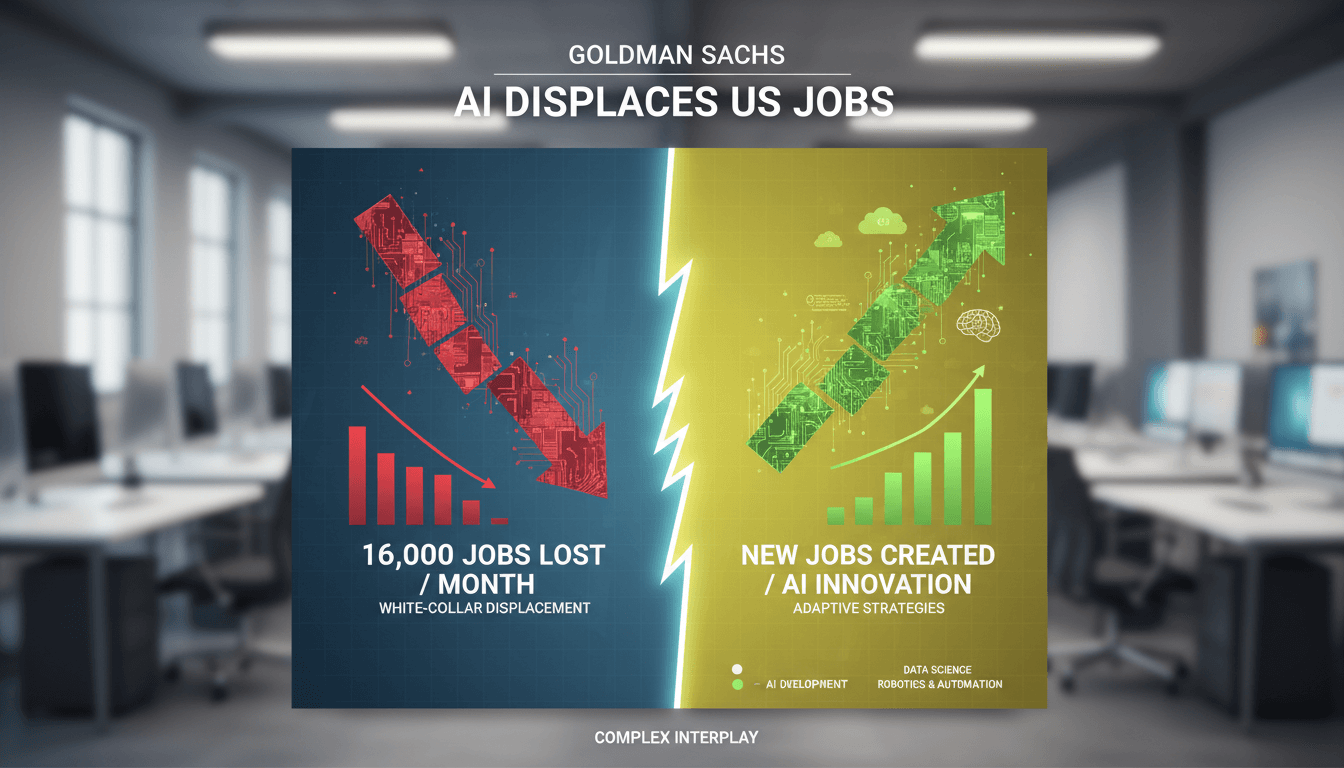
Here's what it means for you.
The rise of artificial intelligence is reshaping the U.S. job market, particularly in white-collar sectors. As companies increasingly automate tasks, the implications for employment are profound, with an estimated loss of 16,000 jobs monthly. This trend necessitates a reevaluation of workforce strategies, urging both employees and employers to adapt to the evolving landscape. The dual nature of AI's impact—displacement versus potential job creation—highlights the need for proactive measures in workforce development and policy formulation. Stakeholders must remain vigilant as the narrative surrounding AI continues to evolve.
What happened
Goldman Sachs has reported that artificial intelligence is beginning to replace white-collar jobs in the United States, significantly affecting hiring and payroll growth. The firm estimates that this shift is resulting in a loss of approximately 16,000 jobs each month. As AI technology advances, employers are increasingly automating tasks that were once managed by large teams.
The CEO of Goldman Sachs, David Solomon, has commented on the situation, suggesting that fears of mass unemployment due to AI are exaggerated. This perspective adds a layer of complexity to the ongoing discourse about the future of work in an AI-driven economy.
The Context
The impact of AI on employment is a critical issue that has garnered attention from various stakeholders, including policymakers, businesses, and workers. As AI advancements lead to job reductions in certain industries, the conversation is shifting towards the potential for job growth in emerging sectors. Goldman Sachs acknowledges that while some jobs are being eliminated, there is also the possibility of new opportunities arising.
The timeline of this development is significant, with reports indicating that AI has already begun to reduce U.S. monthly payroll growth. The ongoing dialogue around AI's role in the workforce is essential for understanding the broader implications for the economy and society.
Takeaway
As artificial intelligence continues to evolve, its dual potential to displace and create jobs will significantly shape the future of work. Monitoring AI's impact on job creation in emerging sectors will be crucial for understanding the overall employment landscape. Additionally, observing policy responses to address job displacement will provide insights into how governments and organizations plan to navigate this transition.
The interplay between job displacement and creation will require adaptive strategies from both workers and employers, emphasizing the importance of resilience in the face of technological change.
Stock market news, investing ideas, and trading analysis.
"TheStreet provides market news and retail-investor-focused analysis."
— A47 Editor
Goldman Sachs has good news for U.S. workers worried about AI
Goldman Sachs has provided a positive outlook for U.S. workers concerned about the impact of artificial intelligence (AI) on employment, suggesting that fears of widespread job losses may be overstated. The bank's analysis indicates that while AI is ...
Business, investment, entrepreneurship, leadership, and innovation.
"Forbes is known for its coverage of business leaders, market trends, and entrepreneurial ventures with a pro-business editorial stance."
— A47 Editor
Goldman Sachs CEO Says Fears Of Mass Unemployment From AI Are ‘Overblown’
Goldman Sachs CEO David Solomon stated that fears of mass unemployment due to artificial intelligence (AI) are exaggerated, acknowledging that while AI has led to job losses in certain sectors, it could also foster job creation in others.
Corporate finance news, M&A, deals, and executive interviews.
"Finance Monthly serves a professional readership with corporate finance coverage."
— A47 Editor
Goldman Sachs Warns AI Is Starting to Replace White-Collar Jobs Across America
Goldman Sachs has issued a warning that artificial intelligence (AI) is beginning to replace white-collar jobs across America, with reports indicating a loss of approximately 16,000 jobs per month, particularly affecting younger workers from Generati...