
Gold prices decline amid strong US dollar and rising oil prices
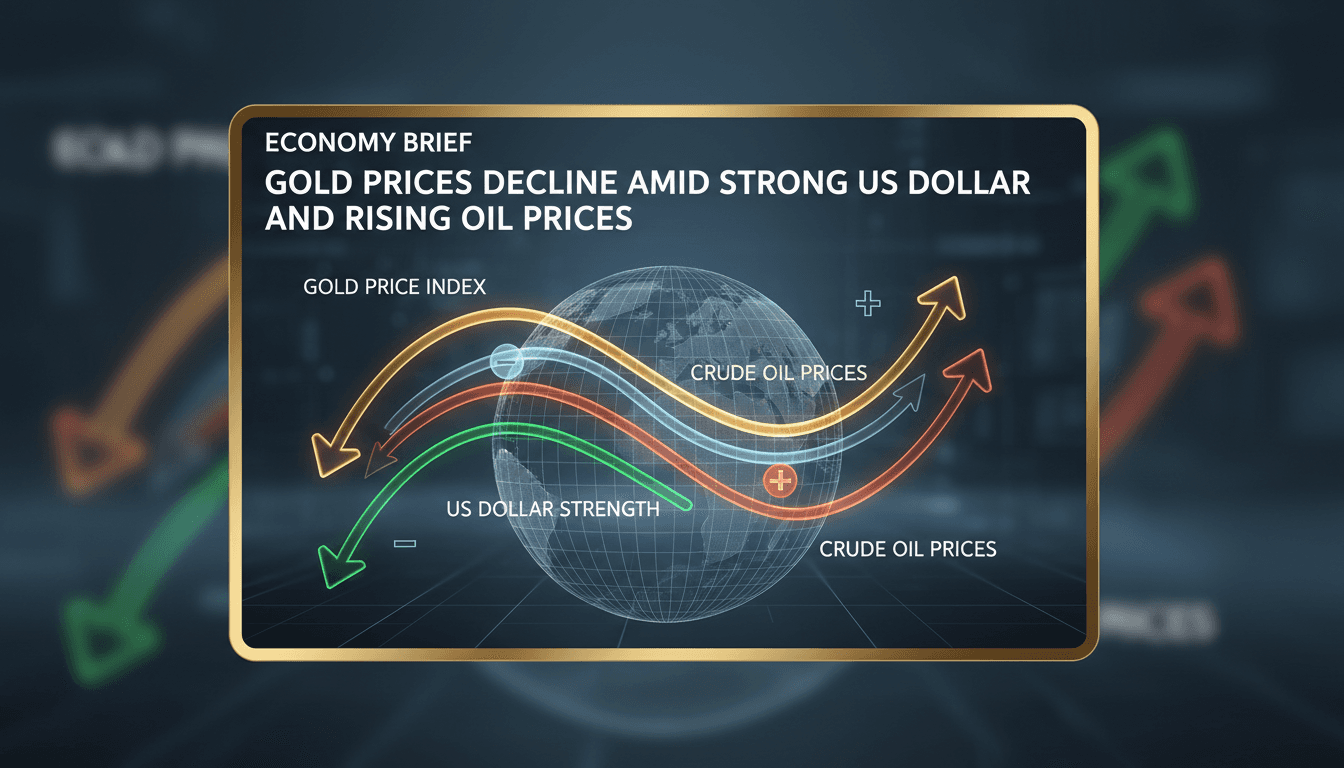
Here's what it means for you.
The recent decline in gold prices signals a shift in market dynamics influenced by a robust US dollar and escalating oil prices. Investors are likely to reassess their strategies as these economic indicators reshape the attractiveness of gold as a safe haven. This trend may prompt a reevaluation of investment portfolios, particularly for those heavily weighted in precious metals. As the interplay between currency strength and commodity prices continues, market participants should remain vigilant. The evolving economic landscape could lead to further fluctuations in gold prices, impacting both individual and institutional investors.
What happened
Gold prices have fallen at the beginning of the week, primarily driven by the strength of the US dollar and rising oil prices. The recent price of gold was noted at 4539 dollars per ounce, reflecting its current market value amidst these economic pressures. Investors are closely monitoring these developments as they influence broader market trends.
The decline in gold's appeal is significant, as it suggests a shift in investor sentiment towards other assets. This situation is compounded by the anticipation of key economic decisions that may further impact market dynamics.
The Context
The strength of the US dollar is a critical factor affecting commodity prices, including gold. As the dollar strengthens, it typically makes gold more expensive for foreign investors, thereby reducing demand. Concurrently, rising oil prices contribute to inflationary pressures, which can further diminish gold's attractiveness as a hedge against economic uncertainty.
Investors are currently navigating a complex landscape where currency fluctuations and commodity prices are intertwined. The timing of these changes is crucial, as market participants await economic reports that could influence both the dollar and oil prices.
Takeaway
Looking ahead, the relationship between the dollar's strength and oil prices will be pivotal for the gold market. Investors should monitor upcoming economic reports that could affect these variables, as they may lead to further volatility in gold prices. Additionally, shifts in investor sentiment regarding gold as a safe haven could reshape market dynamics in the near future.
As the economic landscape evolves, understanding these interconnections will be essential for making informed investment decisions. The ongoing fluctuations in currency and commodity prices will likely continue to shape the gold market's trajectory.
Pan-Arab news coverage spanning politics, business, sports, and regional affairs.
"Asharq Al-Awsat reflects a broad Arab editorial perspective with strong attention to regional geopolitics."
— A47 Editor
الذهب يتراجع بضغط من قوة الدولار وقفزة النفط
Gold prices declined at the start of the weekly trading session on Monday, pressured by the strength of the US dollar and a surge in crude oil prices. This downward trend reflects the ongoing volatility in the commodities market, influenced by curren...
Arabic-language economic and business reporting with strong UAE market relevance.
"Emarat Al Youm business coverage often centers UAE property, banking, consumer issues, and economic policy."
— A47 Editor
بريق الذهب يخفت أمام قوة الدولار وارتفاع أسعار النفط بريق الذهب يخفت أمام قوة الدولار وارتفاع أسعار النفط
Gold prices have slightly declined today due to the strengthening of the dollar and rising oil prices, as investors await a decision from the president.
Jordanian news and regional updates.
"Roya News is a Jordanian outlet focused on breaking news and local affairs."
— A47 Editor
أسعار الذهب تقفز عالميا وتستقر عند 4539 دولارا للأونصة مع إغلاق التعاملات الأسبوعية
Gold futures have seen a significant increase, closing at $4,539 per ounce as the weekly trading sessions concluded. This rise reflects a notable trend in the global gold market, indicating heightened investor interest and demand for the precious met...