
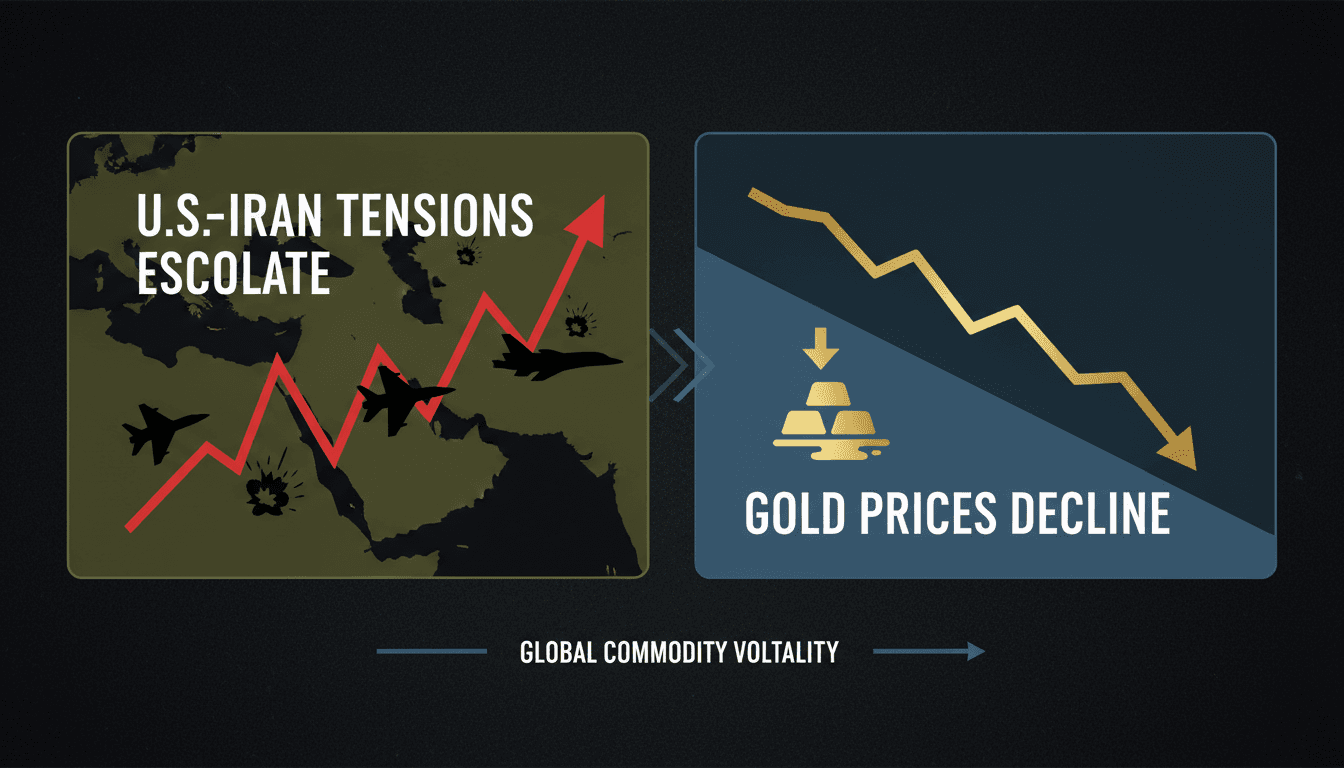
Gold prices decline as U.S.-Iran military tensions escalate
Here's what it means for you.
The recent escalation in military tensions between the U.S. and Iran has led to a notable decline in gold prices, reflecting the immediate impact of geopolitical instability on commodity markets. Investors are likely to experience increased volatility as the situation unfolds, particularly in gold and oil sectors. This development underscores the interconnected nature of global markets, where military actions can swiftly influence commodity valuations.
What happened
Gold prices have fallen as military tensions between the U.S. and Iran have intensified. The conflict has resulted in military exchanges in the Gulf region, prompting market reactions that have affected both gold and oil prices. On June 29, 2026, gold prices opened lower, while oil futures increased by 0.69%, reflecting the immediate consequences of the ongoing conflict.
The rise in oil prices is a direct result of the military actions, indicating heightened market volatility. As the situation continues to evolve, traders are closely monitoring these developments for further implications on commodity pricing.
The Context
The military exchanges between the U.S. and Iran have significant implications for global markets, particularly in the commodities sector. The Gulf region is a critical area for oil supply, and any disruptions can lead to fluctuations in prices. Stakeholders, including traders and investors, are particularly concerned about the potential impact on maritime navigation in the Strait of Hormuz, a vital shipping route for oil.
As tensions escalate, the interconnectedness of geopolitical events and market dynamics becomes increasingly evident. The ongoing conflict not only affects immediate commodity prices but also raises concerns about long-term stability in the region.
Takeaway
As the situation develops, it is essential for traders and investors to remain vigilant regarding potential further escalations between the U.S. and Iran. Monitoring changes in oil supply and demand dynamics in the Gulf region will be crucial for understanding market movements. The ongoing conflict may continue to impact global commodity prices, particularly gold and oil, as market reactions unfold.
Future developments in military actions will likely dictate the trajectory of these commodities, making it imperative to stay informed on the evolving landscape.
Pan-Arab news coverage spanning politics, business, sports, and regional affairs.
"Asharq Al-Awsat reflects a broad Arab editorial perspective with strong attention to regional geopolitics."
— A47 Editor
الذهب يتراجع مع تحفيز الضربات المتبادلة بين واشنطن وطهران لأسعار النفط
Gold prices declined on Monday amid escalating military strikes between the United States and Iran in the Gulf region, which contributed to rising oil prices.
Jordanian news and regional updates.
"Roya News is a Jordanian outlet focused on breaking news and local affairs."
— A47 Editor
تراجع أسعار الذهب عالميا وسط تجدد الضربات بين أمريكا وإيران
Gold futures opened lower against the US dollar as tensions between the United States and Iran have escalated, leading to a decline in global gold prices. This situation reflects ongoing geopolitical instability that often influences commodity market...
Jordanian news and regional updates.
"Roya News is a Jordanian outlet focused on breaking news and local affairs."
— A47 Editor
أسعار النفط ترتفع بعد تبادل الضربات بين واشنطن وطهران وتباطؤ الملاحة في هرمز
Oil futures rose by 50 cents, equivalent to a 0.69% increase, following exchanges of strikes between Washington and Tehran, coupled with a slowdown in navigation through the Strait of Hormuz. This escalation in tensions has raised concerns over the s...