
Russia bans diesel exports amid Ukrainian drone attacks on refineries
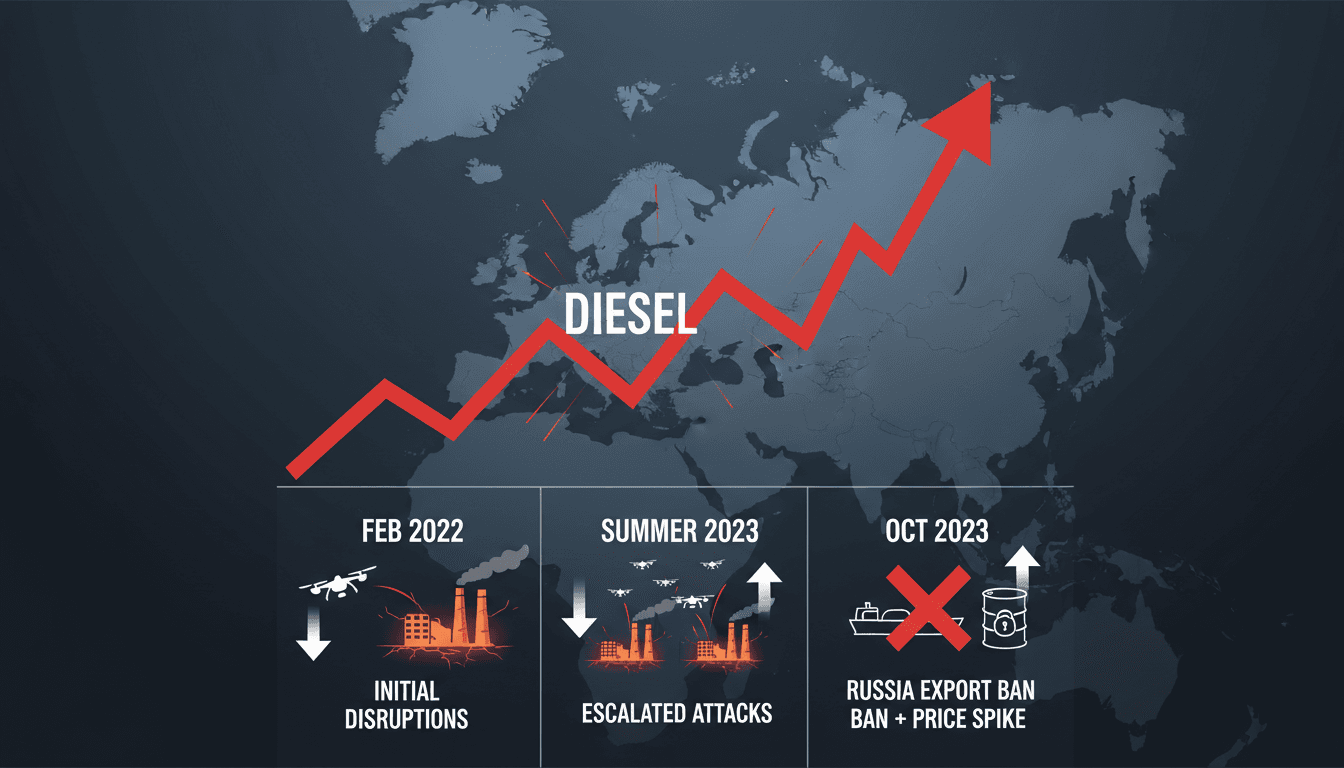
Here's what it means for you.
The recent ban on diesel exports by Russia is a significant move aimed at stabilizing domestic fuel supplies amidst ongoing Ukrainian drone strikes. This decision has immediate implications for international markets, as diesel prices have surged, reflecting heightened volatility. Stakeholders in the energy sector should prepare for potential disruptions and price fluctuations as the geopolitical landscape evolves. As countries adjust to these new supply constraints, the long-term effects on global fuel markets remain uncertain. Consumers and businesses alike may face increased costs and supply challenges in the near future.
What happened
On July 8, 2026, Russia implemented a ban on diesel exports to secure its domestic supply in response to escalating drone strikes from Ukraine targeting its oil refineries. This decision was made to alleviate long lines at gas stations and stabilize domestic fuel prices. The immediate aftermath saw international diesel prices experience the largest daily gains in four years, indicating a strong market reaction to the ban.
The export ban reflects Russia's urgent need to manage its fuel resources amid ongoing conflict. As a result, drivers in Russia are currently facing long wait times at fuel stations due to supply shortages.
The Context
The backdrop to this ban includes a series of Ukrainian drone attacks that have disrupted operations at Russian refineries, raising concerns about fuel availability. The Russian government aims to prevent domestic shortages while addressing the challenges posed by these attacks. The timing of the ban coincides with a critical period in the ongoing conflict, which has significant implications for energy security in the region.
Internationally, the surge in diesel prices highlights the interconnectedness of global fuel markets and the impact of geopolitical tensions on supply chains. As countries navigate these new dynamics, the stability of fuel prices and availability will be closely monitored by industry stakeholders.
Takeaway
Looking ahead, the export ban may lead to further volatility in global fuel markets as countries adapt to the new supply constraints. Observers should monitor the impact of this ban on international diesel prices and any potential retaliatory measures from Ukraine. The ongoing conflict suggests that further escalations could disrupt energy supplies, affecting both regional and global markets.
As the situation develops, stakeholders in the energy sector will need to remain vigilant and responsive to changes in supply and demand dynamics.
Oil, metals, and agriculture: supply/demand headlines, OPEC chatter, inventories, and price action.
"Solid tape for energy and metals traders tracking macro and micro catalysts."
— A47 Editor
US diesel futures post biggest daily gains in four years after Russia bans exports
US diesel futures experienced their largest daily gains in four years following Russia's decision to ban diesel exports, a move prompted by significant fuel shortages and disruptions caused by Ukrainian drone attacks on its oil infrastructure.
Regional coverage and analysis focused on politics, diplomacy, and business across the Middle East.
"Al-Monitor is known for analytical reporting on Middle East politics and policy developments."
— A47 Editor
Russia bans diesel exports to ensure domestic supply after targeted Ukrainian drone strikes
Russia has implemented a ban on diesel exports to stabilize its domestic fuel market following a series of Ukrainian drone strikes that have targeted oil refineries, leading to significant shortages and long lines at gas stations.
Global markets, investing, and macroeconomics from a premier financial newsroom.
"Bloomberg is respected for in-depth financial reporting and data-driven analysis."
— A47 Editor
Russia Bans Diesel Exports After Ukraine’s Refinery Attacks
Russia has imposed a ban on diesel exports to prevent domestic shortages following a series of Ukrainian drone attacks on its oil refineries. This decision comes amid rising international fuel prices and significant disruptions to Russia's refining c...