
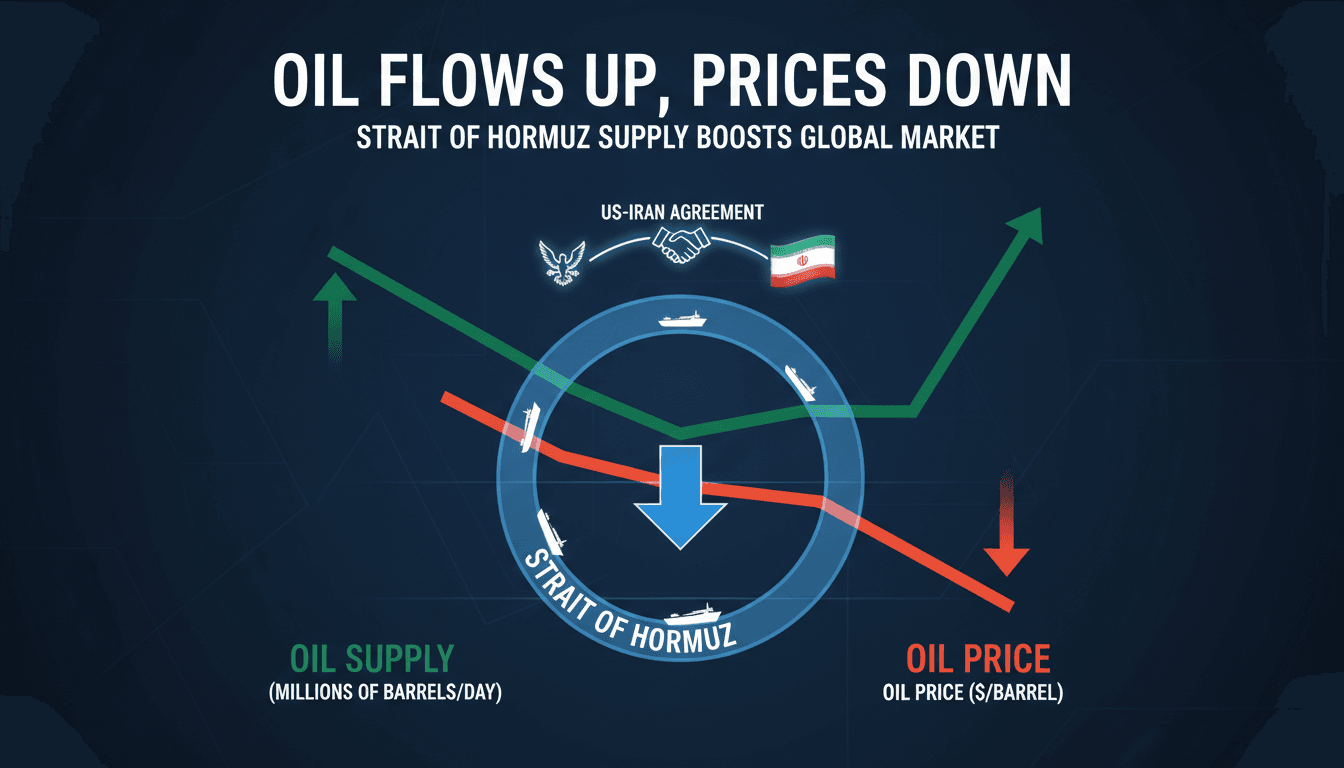
Oil prices decline as supply from the Strait of Hormuz increases following US-Iran agreement
Here's what it means for you.
The recent agreement between the US and Iran has led to a notable increase in oil supply from the Strait of Hormuz, resulting in a decline in oil prices. This shift indicates a bearish sentiment in the market, which could have implications for energy costs and economic stability. Stakeholders in the oil industry should prepare for potential fluctuations as geopolitical dynamics evolve. As more ships transit the Strait, the market may experience continued pressure on prices, influenced by supply-demand dynamics. Traders and policymakers will need to monitor these developments closely to navigate the changing landscape.
What happened
Oil prices have fallen as more ships transit the Strait of Hormuz, indicating increased supply. The oil market has shifted into a bearish structure following a US-Iran agreement that facilitates higher oil flows from the Middle East. This agreement has led to expectations of smoother crude flows, contributing to the downward trend in prices.
The market indicator has flipped to contango for the first time since February, reflecting a significant change in trader sentiment. Oil prices have extended their slide by more than 1%, showcasing the immediate impact of increased shipping activity in the region.
The Context
The Strait of Hormuz is a critical chokepoint for global oil supply, making developments in this region particularly significant. The recent US-Iran agreement has reopened pathways for oil transport, which is crucial for maintaining stability in the global oil market. As more vessels navigate this route, the implications for oil prices and market dynamics become increasingly pronounced.
The shift to a contango market structure indicates a bearish outlook, suggesting that traders expect prices to remain under pressure. This situation is compounded by the ongoing geopolitical tensions in the region, which can influence supply and demand in unpredictable ways.
Takeaway
The ongoing developments in the Strait of Hormuz could continue to impact oil prices and market dynamics. Stakeholders should monitor changes in oil supply and geopolitical developments closely, as these factors will play a crucial role in shaping future market conditions. Additionally, responses from oil-producing nations to the price decline may further influence the trajectory of oil prices.
As the situation evolves, the oil market will likely remain sensitive to both regional and global factors. Keeping an eye on these dynamics will be essential for understanding the broader implications for energy markets.
Markets desk coverage, trading insights, and investor updates.
"WSJ’s markets reporting provides in-depth analysis and context for investors."
— A47 Editor
Oil Extends Slide as More Ships Cross Strait of Hormuz
Oil prices have continued to decline as more ships transit through the Strait of Hormuz, a crucial maritime route for global oil shipments. This development comes amid ongoing geopolitical tensions in the Middle East, particularly between the U.S. an...
Regional and international reporting focused on Middle Eastern politics, diplomacy, and economics.
"Asharq Al-Awsat is a Saudi-owned international newspaper reflecting mainstream Gulf political perspectives."
— A47 Editor
Oil Extends Slide to More than 1% on Expectations of Smoother Crude Flows via Hormuz
Oil prices have extended their decline by more than 1% as expectations grow for smoother crude flows through the Strait of Hormuz, a vital maritime route for global oil shipments. This drop reflects ongoing market reactions to geopolitical developmen...
Global markets, investing, and macroeconomics from a premier financial newsroom.
"Bloomberg is respected for in-depth financial reporting and data-driven analysis."
— A47 Editor
Key Oil Spread Flips to Contango as Supply From Hormuz Climbs
The oil market has shifted into a bearish contango structure for the first time since February, driven by an increase in oil supply from the Strait of Hormuz following a US-Iran agreement to reopen the critical maritime route. This development has ra...