
Microsoft Launches MAI-Thinking-1 Reasoning Model at Build Conference
Here's what it means for you.
Microsoft's introduction of the MAI-Thinking-1 reasoning model signifies a pivotal moment in the AI landscape, enhancing its competitive edge. This move not only showcases Microsoft's commitment to advancing AI technology but also addresses critical data quality concerns. As these models roll out, they may reshape how developers and businesses leverage AI in their operations. The implications extend beyond technical capabilities, potentially influencing market dynamics and policy discussions around AI ethics and data usage. Stakeholders should closely monitor the adoption and performance of these models as they could set new standards in the industry.
What happened
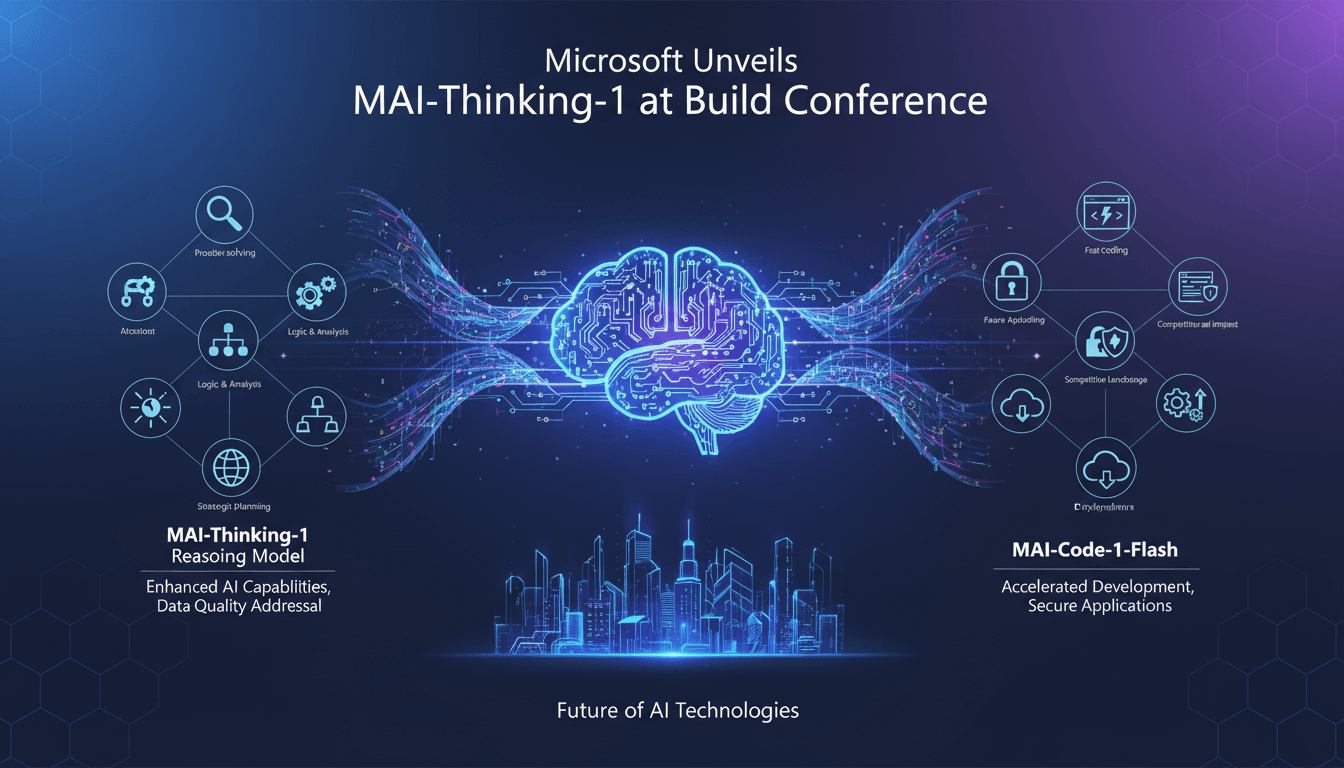
During the Build conference, Microsoft unveiled its first reasoning model, MAI-Thinking-1, alongside several other AI models. This announcement highlights the company's ongoing efforts to enhance its AI capabilities, particularly in coding, image processing, and voice functionalities. MAI-Thinking-1 boasts an impressive 1 trillion parameters, indicating its complexity and potential for advanced reasoning tasks.
Additionally, Microsoft introduced MAI-Code-1-Flash, designed specifically for GitHub Copilot and Visual Studio Code, featuring 137 billion parameters. Both models were trained on a proprietary dataset, with a focus on filtering out adult content and AI-generated material to ensure quality. These advancements reflect Microsoft's strategic direction in the AI domain.
The Context
The launch of MAI-Thinking-1 and MAI-Code-1-Flash comes at a time when AI technologies are rapidly evolving, and companies are increasingly focused on data quality and ethical considerations. Microsoft aims to position itself as a leader in this competitive landscape, addressing concerns that have arisen around AI applications. The timing of this announcement aligns with growing demand for more sophisticated AI tools in various sectors.
By leveraging advanced AI capabilities, Microsoft is not only enhancing its product offerings but also responding to the needs of developers and businesses seeking reliable AI solutions. The introduction of these models is expected to influence future developments in AI applications and set new benchmarks for performance and quality.
Takeaway
As Microsoft continues to innovate in the AI space, the success of MAI-Thinking-1 and MAI-Code-1-Flash will be crucial to watch. Early partners will provide insights into the performance and adoption of these models, which could shape future AI applications. Additionally, updates on the integration of MAI-Code-1-Flash into GitHub Copilot will be significant for developers.
The broader implications of these advancements may lead to shifts in the competitive landscape of AI technologies. Stakeholders should remain vigilant as Microsoft’s developments could redefine industry standards and practices.
Notes on data tools, LLMs, and open-source projects.
"Developer blog with deep dives on LLM tooling."
— A47 Editor
Microsoft's new MAI models
Microsoft has announced the launch of two new AI models, MAI-Thinking-1 and MAI-Code-1-Flash, during the Build 2026 conference. MAI-Thinking-1 is designed for advanced reasoning with 1 trillion parameters, while MAI-Code-1-Flash, with 137 billion par...
Big data technologies that power AI systems.
"Covers data platforms and analytics for AI workloads."
— A47 Editor
Microsoft's first reasoning model is one of 7 AIs just released at Build - what we know so far
Microsoft has unveiled MAI-Thinking-1, its first advanced reasoning AI model, during the Build 2026 conference, marking a significant step in the company's AI development strategy. This launch is part of a broader initiative that includes new coding,...
Business tech news, enterprise IT, and innovation analysis.
"ZDNet offers enterprise IT news, reviews, and strategy guidance."
— A47 Editor
Microsoft's first reasoning model is one of 7 AIs just released at Build - what we know so far
Microsoft has unveiled MAI-Thinking-1, its first advanced reasoning AI model, during the Build 2026 conference, marking a significant step in the company's AI development strategy. This launch is part of a broader initiative that includes new coding,...