
Moonshot AI launches Kimi K2.7-Code with claimed 30% efficiency improvement
Here's what it means for you.
The launch of Kimi K2.7-Code by Moonshot AI signifies a potential shift in coding efficiency within the tech industry. With a claimed 30% reduction in reasoning token usage, this update could lower inference costs and enhance productivity for developers. However, the validity of these claims hinges on independent benchmarks, which have yet to be established. As organizations increasingly seek efficient AI solutions, the adoption of K2.7-Code may influence coding practices and model integration across various platforms. The outcome of this release could reshape how teams approach AI coding in the future.
What happened
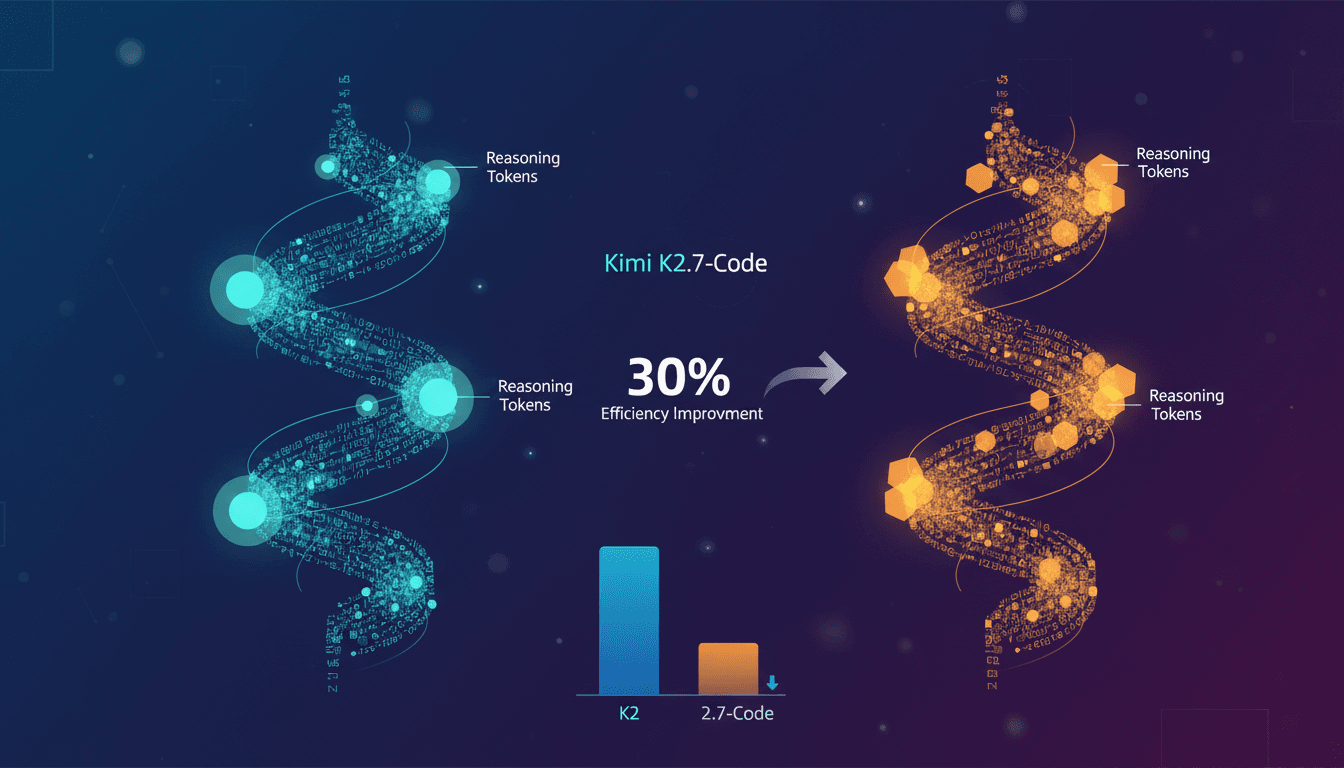
Moonshot AI has officially launched Kimi K2.7-Code, an open-source update to its K2 coding model. The company asserts that this new version offers significant improvements in token efficiency and performance metrics compared to its predecessor, K2.6. Specifically, K2.7-Code claims a 30% reduction in reasoning token usage, which could lead to lower inference costs for users.
The model is built on a trillion-parameter mixture-of-experts architecture and is available under a Modified MIT license. It can be integrated via an OpenAI-compatible API, making it accessible for developers looking to enhance their coding capabilities. However, independent benchmarks have not yet validated Moonshot AI's performance claims.
The Context
The release of Kimi K2.7-Code comes at a time when the demand for more efficient AI coding solutions is on the rise. K2.7-Code is positioned as a response to this demand, aiming to improve coding efficiency and performance. While the model has shown promising results, skepticism remains regarding the accuracy of the benchmarks used to support these claims.
K2.7-Code has reportedly achieved a 21.8% gain on Kimi Code Bench v2 and an 11% improvement on Program Bench. However, it has not yet been submitted to the more rigorous DeepSWE benchmark, which raises questions about the reliability of its performance metrics. The integration of K2.7-Code into existing workflows presents a low-risk opportunity for teams to evaluate its effectiveness.
Takeaway
The effectiveness of K2.7-Code will ultimately depend on its performance in real-world applications and the results of independent benchmarks. As the model is adopted, its true impact on coding efficiency and performance will become clearer. Observing user feedback and monitoring independent benchmark results will be crucial in assessing the model's capabilities.
The tech community will be watching closely to see if K2.7-Code lives up to its claims and how it influences coding practices moving forward. The outcome of this release could have lasting implications for AI model adoption in the industry.
Curated tech headlines including AI stories.
"Influential aggregator surfacing the day’s top tech/AI links."
— A47 Editor
Moonshot AI releases Kimi K2.7-Code, claiming 30% lower reasoning token usage compared to K2.6, available under a modified MIT license (Sean Michael Kerner/VentureBeat)
Moonshot AI has launched Kimi K2.7-Code, an open-source update to its K2 coding model, claiming a 30% reduction in reasoning token usage compared to its predecessor, K2.6. This new version is available under a modified MIT license, aiming to enhance ...
Focuses on transformative tech, AI, gaming, and startup innovation.
"VentureBeat is respected for its in-depth reporting on AI, startups, and disruptive technologies in Silicon Valley and beyond."
— A47 Editor
Kimi K2.7-Code cuts thinking tokens 30% — but practitioners say the benchmarks don't check out
Moonshot AI has launched Kimi K2.7-Code, an open-source update to its K2 coding model, claiming a 30% reduction in thinking-token usage and improved performance metrics. This model is designed to integrate seamlessly with existing systems using an Op...
Tech startup news, programming trends, and discussions shared by the developer community.
"Hacker News is a community-driven source highlighting influential tech discussions, startup launches, and programming insights."
— A47 Editor
Kimi K2.7-Code: open-source coding model with better token efficiency
Kimi K2.7-Code has been introduced as an open-source coding model that enhances token efficiency, marking a significant advancement in the realm of software development. This model aims to optimize the performance of coding processes, making it a val...