
U.S. oil shipments resume from Strait of Hormuz amid Iran negotiations
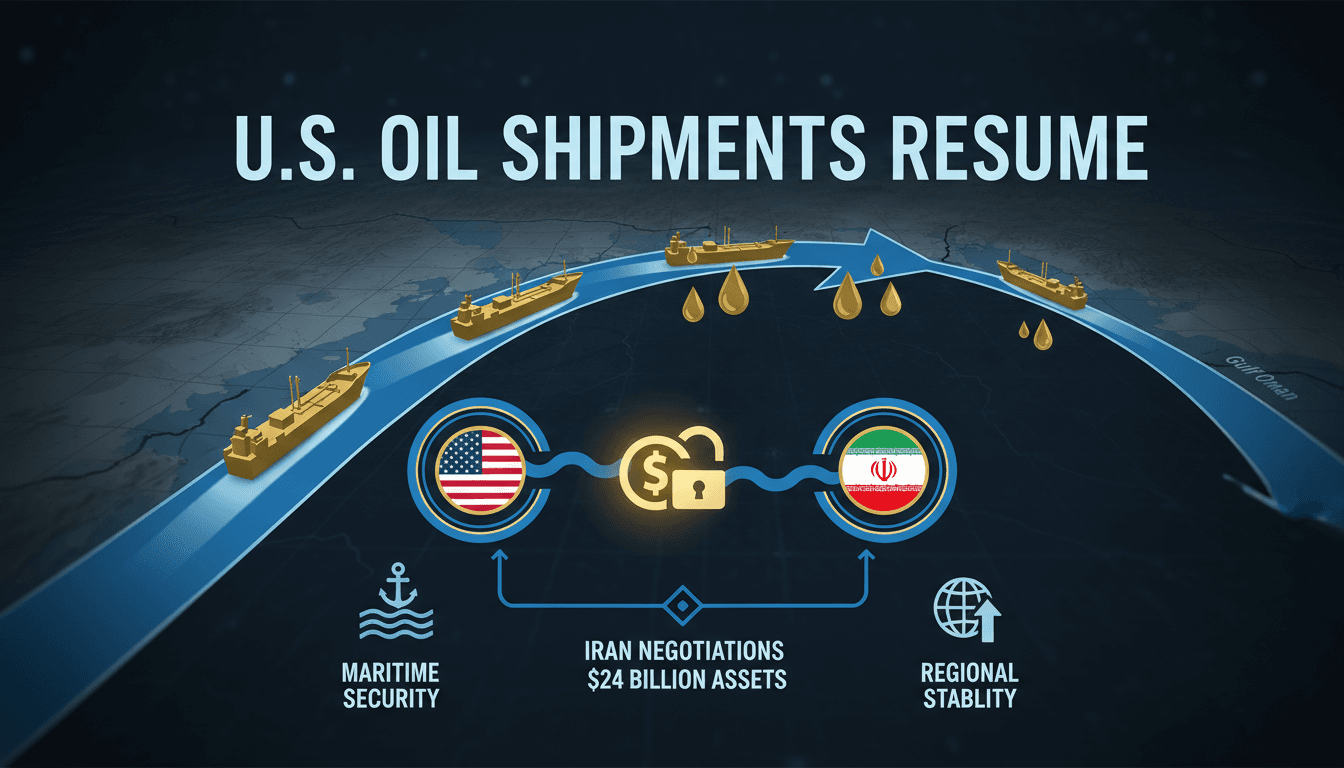
Here's what it means for you.
The resumption of oil shipments from the Strait of Hormuz indicates a significant step towards stabilizing maritime routes crucial for global oil supply. This development comes at a pivotal moment as the U.S. and Iran engage in negotiations that could reshape economic relations and regional security dynamics. The potential release of $24 billion in frozen Iranian assets is a key point of contention that could influence future diplomatic interactions. As the situation evolves, stakeholders in the energy market and international relations will be closely monitoring the outcomes of these negotiations. The implications for oil prices and regional stability could be profound, depending on the agreement's terms and the reactions from other regional players.
What happened
Ships loaded with oil have begun departing from the Strait of Hormuz, marking a return to normalcy in this vital maritime corridor. U.S. President Donald Trump announced this development, emphasizing the route's security. Vice President JD Vance also highlighted ongoing negotiations with Iran, which may lead to a significant agreement involving the release of frozen Iranian assets.
The U.S. government expects the Strait of Hormuz to remain open for navigation without restrictions, which is crucial for global oil transport. Iran's foreign ministry is reportedly finalizing details regarding the potential agreement, indicating that a resolution may be imminent.
The Context
The Strait of Hormuz is a critical chokepoint for oil shipments, with a significant percentage of the world's oil passing through this narrow waterway. The ongoing negotiations between the U.S. and Iran are centered around the release of $24 billion in frozen assets, a contentious issue that has implications for both nations. The U.S. aims to ensure that the Strait remains secure and navigable, while Iran seeks to regain access to its financial resources.
The timing of these negotiations is crucial, as regional stability is often influenced by U.S.-Iran relations. The outcome could affect not only the involved parties but also other regional stakeholders, including Israel and Gulf states, who are watching closely for any shifts in the balance of power.
Takeaway
As the U.S. and Iran approach a potential agreement, the implications for regional stability and maritime security will be significant. The signing of the agreement, expected soon, will be a critical moment that could alter the dynamics in the region. Observers should also pay attention to the reactions from Israel and other regional players, as their responses could further influence the situation.
The evolving landscape of U.S.-Iran relations will continue to be a focal point for international stakeholders, particularly in the context of energy markets and geopolitical stability. The situation in the Strait of Hormuz will remain a key area of interest as negotiations progress.
Arabic-language coverage of political affairs and current events.
"Okaz political coverage typically follows mainstream Saudi framing on national and regional affairs."
— A47 Editor
ترمب: النفط يعبر «هرمز».. فانس لإيران: لن تنالوا الأموال المجمدة
U.S. President Donald Trump announced that oil-laden ships have begun to exit the Strait of Hormuz, stating that they are navigating through a secure and clean southern route. Vice President JD Vance indicated that many details regarding the Iranian ...
Regional coverage and analysis focused on politics, diplomacy, and business across the Middle East.
"Al-Monitor is known for analytical reporting on Middle East politics and policy developments."
— A47 Editor
Trump says ships carrying oil are moving out of Strait of Hormuz
U.S. President Donald Trump announced that numerous oil-laden ships are beginning to exit the Strait of Hormuz, indicating a potential easing of tensions in this critical maritime route. Trump described the southern passage as safe and secure in a po...
Pan-Arab news coverage spanning politics, business, sports, and regional affairs.
"Asharq Al-Awsat reflects a broad Arab editorial perspective with strong attention to regional geopolitics."
— A47 Editor
فانس: مضيق هرمز سيظل مفتوحاً دون رسوم على المدى الطويل
U.S. Vice President J.D. Vance stated that the United States expects the Strait of Hormuz to remain open without tolls in the long term. This announcement reflects the U.S. commitment to maintaining free navigation in this critical maritime route.